
Infrared (IR) communication technologies are probably one of the most influential, yet also one of the least flashiest. The fact that IR communication tends to be highly directional and often limited to low data rate leads many people to scoff at it, deeming it barely worthy of more than making TV remotes work, perhaps along with some unloved industrial gear like the IR interface of electrical meters.
This is a shame, because TV remotes are a good example of why sometimes you want something that is directional, and anyone who has battled with Bluetooth pairing can attest to the value of things simply working by pointing it at the device. IR protocols also have the advantage of inherent privacy protection as walls and other obstacles will block the signal, unlike that of an exploitable Bluetooth device which happily advertises to your neighbors and passersby.
For reasons like the above – as well as their simplicity and hackability – IR protocols are worthy of a detailed look.
Remote Control
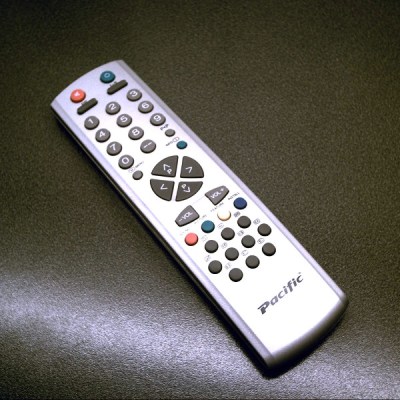 Naturally, one of the oldest uses of consumer IR protocols is that of the venerable IR remote control. Initially TVs used wired and ultrasonic remote controls, with the latter using simple ultrasonic tones to transfer a command, but with IR protocols and the advent of cheap MCUs it became possible to create extensive communication protocols. Of these the NEC, Sony IR (SIRC) and Philips protocols are probably the most well-known and most used.
These use an approximately 38 kHz carrier, with the common NEC protocol using pulse distance encoding – a form of amplitude-shift keying – and the Philips RC-5 protocol using Manchester encoding. Within this encoding, these protocols define various bit fields and other values that can be used by a receiver to determine whether it’s being targeted, and if so what command the user wishes to have performed.
When it comes to those cheap-and-cheerful remotes that you get with just about any RGB light strip and others gadgets these days, they tend to use the same NEC protocol, with many MCU-based projects around that can control these gadgets directly with a simple IR LED.
For example this STM32F0-based project by [eleksaggr] on GitHub that targets the common 24-key RGB remotes. This Infrared Remote Control Implementation application note by Texas Instruments for the MSP430, which contains a good overview of the modulation and encoding schemes, as well as how to implement a remote control.
Many smartphones have – or used to have – an IR blaster feature that can target the same carrier frequency and a range of protocols to control just about anything that is IR remote controlled. In a world of smartphones this would theoretically mean that everyone has a universal remote in their pocket at any time, if it wasn’t for IR blasters becoming pretty rare. If your recently purchased smartphone still has an IR blaster, it’s very likely a Chinese brand, which is a shame as IR remotes are still used for so many things.
IrDA
Of course, IR remotes are quite a specific use case, but you can send a lot more than just a basic set of commands to a device. The most well-known standard here is IrDA, which stands for Infrared Data Association, the association which defined the various standards.
The basic principles behind IrDA remain effectively the same as with the remote control protocols, just designed to be capable of far higher transfer speeds. This is accomplished through various types of encoding, modulation and other techniques also observed with non-IR forms of wireless communication. Using this a range of speeds are possible, defined as:
- SIR (115 kbit/s).
- MIR (1 Mbit/s).
- FIR (4 Mbit/s).
- VFIR (16 Mb/s).
- UFIR (96 Mbit/s).
- Giga-IR (512 Mbit/s – 1 Gbit/s).
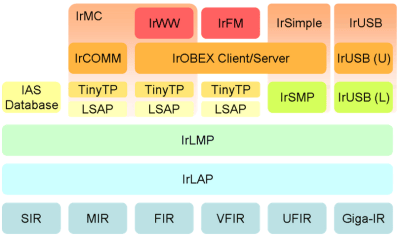
In addition a range of derived protocols exist such as IrSimple that allows for easy sharing of images between phones, printers, and displays. All of this uses generally the same IrDA software stack, though the special versions such as IrSimple optimize it to make transfers take less than a second for a 500 kB picture.
All communication generally happens in half-duplex, as the sending side tends to produce too much interference for the receiving side of the transceiver to reliably receive data. Distance between the two sides can be as much as two meters, though the lower power versions shrink that down to 20 cm or thereabouts.
Within this range of speeds you can pick whatever the device needs. Power meters, for instance, are plenty happy with the IrDA-SIR protocol, which is low-power and speed enough to bitbang on even a basic MCU in these meters with just a basic IR transceiver attached to its pins.
Power Meters
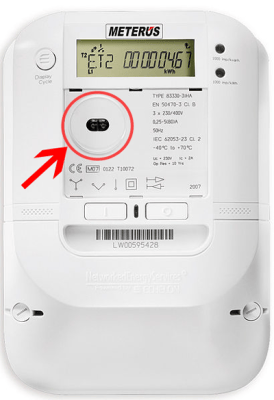
The humble power meter that lurks in your utility closet or wherever else it is installed has to be shielded from whatever environment it is installed in, ergo they require some kind of low-power, low-speed wireless interface. Using nothing but an IR-transparent window on the enclosure it is then possible for a read-out device to be pressed up to said window, where it’ll quickly query the device for the necessary information.
This same feature is also found on heat meters and other types of devices where such basic read-out functionality is required. Here security is managed by not only the short-distance, line-of-sight requirement of an IR communication link, but also by having a sign-on involving an encrypted password exchange.
Although IrDA-SIR was commonly used here, these days DLMS/COSEM, also known as IEC 62056, is much more common. While radio-based forms of automatic meter reading (AMR) are also used, short-range protocols like this have a definite privacy advantage, with the line-of-sight feature meaning that the reader has to be literally in front of the meter to work, unlike with RF wireless approaches.
Whether this privacy aspect is important depends on the situation, but it’s hard to argue with the low power requirements compared to stuffing a Bluetooth or Wi-Fi module into the meter and dealing with its implications.
Game Consoles
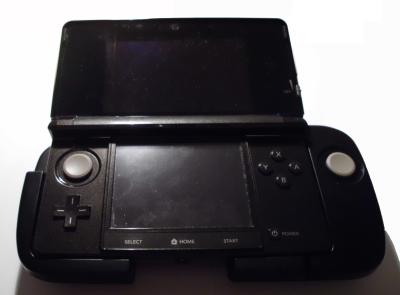
Although it may seem that handheld game consoles went straight from the Game Boy’s link cable to Wi-Fi transfers on the Nintendo 3DS beyond, it featured an IR communication port. This was intended to support peripherals like the Circle Pad Pro and the Amiibo reader/writer device for the original 3DS as it did not feature the NFC reader of the New Nintendo 3DS.
As it turns out, the 3DS uses irDA-SIR for this expansion feature, with e.g. the Circle Pad Pro using a 96000 baud rate. Since this peripheral merely is there to add a second circle pad to match the built-in left one, it doesn’t need a lot of bandwidth.
In the case of the external NFC reader, this was a similar low bandwidth application where it made a lot of sense to use this same IR port to provide this new feature to older 3DS consoles, instead of making it a New 3DS-exclusive feature. Although one could have used Bluetooth for this even back then, the 3DS console did not include Bluetooth, and when looking at e.g. the Joycons of the Nintendo Switch it’s clear that they are a tad more power hungry and complex circuitry-wise.
When low-power and line-of-sight are benefits rather than a potential source of confusion of which peripheral you’re trying to pair with, it can make a lot of sense.
DIY IR Transceiver
If you’re feeling like making your own IR receiver, receiver or even transceiver solution, there are many options. Perhaps the most exciting aspect is that even if you want to use something like IrDA, this feature is often part of the UART in many MCUs. In the case of Espressif’s ESP32 MCUs, for example, you can look at its list of potential UART modes and note that you can pick IrDA as well as RS485 in addition to plain UART functionality.
There are also dedicated IrDA encoder/decoder ICs, such as the MCP2120. This gets you IrDA-SIR support for any UART interface that does not directly implement this protocol. You can also use something like the Vishay TFDU4101 IrDA transceiver that integrates everything including the IR elements into a single package.
If you’re more about messing with NEC, Sony and Philips remote control protocols, then a common part like the VS1838b provides a similar solution to the Vishay part for 38 kHz applications. This IR receiver handles all the receiving, demodulating, amplification and other tasks, leaving it to the receiving MCU to parse the received data.
This of course just barely scratches the surface of everything IR communication-related, so feel free to chime in with your own info dumps and requests for additional topics to cover.












Still have my USB IrDA device, and even remember when my Samsung S4 had it built-in.
I sometimes dig out my infra red R Shack stereo headphones to check the operation of remotes.
Hooray for the china phone!!! I love being an annoying shit and turning TVs off wherever I go
Then get yourself a TV-B-Gone
https://en.wikipedia.org/wiki/TV-B-Gone
I need to figure out how to make one of those that turns off the 60fps frame interpolation customer hypnosis machine at restaurants and bars
Although it is now obsolete, Lego Power Functions used a well-documented IR protocol. You can still find implementations of that protocol here and there.
Calling them protocols would imply that there is any sort of consistency between the implementations, which is obviously false since ever single manufacturer makes their own implementation by playing around with carrier frequency, preamble, checksum, data format (I can’t fault this one) and some go as far as adding filters to block out other wavelength IR than what their transmitters support (or so I hear)
Ridiculous. But none can do anything against my cheap Chinese logic analyze
I thought that 802,11 — WiFi — got its start as an IR protocol used to transfer data between laptops.
That sentence mixes up different protocol layers. 62056 is primarily about the messages that contain the meter data, while IrDA-SIR is the physical layer. Btw., over here many meters talk SML instead of 62056.
Thank you for that clarification, it wasn’t immediately clear to me while reading up on it. Obviously I’m not (yet) into reading data from these meters :)
These protocols certainly improve speed and range, but very short distance IR communication, such as from a device to a cradle, can be done just by connecting an IR LED and photo transistor to a UART.
Yup. At heart, this was the common method in PCs, I think.
The cheap, built-in Infrared feature on ATX motherboards made use 16550 FiFo UARTs (RS-232 serial ports).
The UART was integrated into an Super I/O Chip (on ISA bus; used before LPC bus).
In CMOS Setup of the era it was possible to enable/disable infrared mode.
Btw, the rivaling platform, Macintosh used to have notable infrared support.
It was in the 90s, the pre-Jobs days, when Apple was a thought factory and when Mac clones/compatibles had been common, still.
In the Power PC era, basically. Mac OS 7 through 9 had good infrared support (IRTalk and IrDA). Mac OS X (being an OpenStep derivative) didn’t have that anymore.
https://lowendmac.com/2015/irtalk-irda-and-the-mac/
Last but not least, certain electronic organizers (aka digital diaries, databanks, pocket dictionaries etc) did utilize irDA or infrared, too.
Not just the advanced Palm Pilot style PDAs with touchscreen
and stylus but also the small ones running on CR2032 and AAA batteries.
The higher end ones, I mean. By late 90s/early 2000s cheaply made organizers flooded the market, I’m afraid.
https://en.wikipedia.org/wiki/Electronic_organizer
During the halogen lighting era, way back 15-20 years, IrDA transceivers were quite unreliable. Now those pesky, noisy IR emitters have mostly been replaced by LEDs. Are we in an IrDA renaissance? Mostly I don’t see these anymore, and TV remotes still use the 38kHz carrier, which can do 600 baud on a good day.
Hm, interesting. In my memory, I remember that halogen desk lights were a good thing, still.
They were an more power efficient alternative to using incandescent light bulbs (which were still the norm in the 90s).
But on a second thought, it seems plausible that halogen light sources might have been blinded the infrared sensores.
(Where I live, the horrible so-called “energy-saving light” bulbs, CFL, had been a thing in 2000s and early 2010s.
Their light spectrum was very harsh, un-natural, depressing,
making even the cheapest LED bulbs of today seem calmer.
At home, we called them “grave lights” because of the poor light quality.)
You must be European too. God I hated those bulbs
You missed Game Boy Color’s infrared port.
Hi, what also comes to my mind is Japan in flip phone era (somewhen between 2000 to 2010).
Back then, I once heard, there was this practice of exchanging virtual “business cards” over irDA.
That’s also why smartphone adoption was delayed over there, I think.:
The iPhone and other early touchscreen phones had lacked irDA feature (unlike PDAs earlier on).
A quick search on the interner hinted that this exchange of personal information was called “Keitai Meishi”
and that the file format was vCard (.vcf).
Nowadays, it rather uses QR codes or NFC or so it seems.
Send several contacts with my Nokia 7110(?) To different persons. And remember playing Snake2 over IR with a budy who hat an 6259(?) back than. So not only in Japan were they using IR on mobiles for better or funnier reasons.
What’s also great about IrDA in comparison to Bluetooth is the privacy aspect.
Infrared transmissions operate on sight, point-to-point, there’s no Man-in-the-Middle (MITM) issue.
So unless someone spied through the window, irDA commubications was safe.
That’s why infrared headphones (or receiver dongles) were less of a headache than their radio based counterparts, too.
The chance of the neighours getting to know about your taste of music by sheer accident was smaller. ;)
yes there is: he’s blocking the line of sight
“my neighbours listen to good music — if they want or not” :o)
YMMD! 😆
Don’t forget LiFi (IEEE 802.15.7), which uses IR (as well as visible light and UV).
Also, the original version of WiFi (802.11-1997) had a light-hosted mode. I wasn’t involved in wifi beyond work I did in 1994, but I remember active discussions about light as a carrier as there were a surprising (and honestly justified) number of discussions about the health effects of RF in office environments. We hadn’t really nailed down the frequency bands at that time. Some Soviet-era health standards really worried us, though, and this was before we could just email whoever owned those standards and ask for more details. We now know these weren’t a problem, but back then it seemed a sensible thing to do.
I remember reading somewhere the idea of using LED lighting for communications.
Great article! :-)
Also the HP95, HP100 and HP200 palmtops.
The Timex Datalink also (kinda) used something like it: Originally used the blinking light from a CRT, it also offered a RS232-IR adapter for those poor souls who only had an LCD monitor.
And the Palm V, which aired an ad showing two people exchanging contact info between two trains: https://www.youtube.com/watch?v=AZTF83KdLWI
I remember many gadgets I owned and many more I craved having a IR ports. I had Palm PDA’s, at least the III(a) and V had IR (not sure about the Tungsten), and my graphics calculator had it too. There were watches, phones (mainly ericsson?) and laptops which had them, but none in my posession. When it worked, I always found it an elegant protocol.
My current RPi-based home theater still uses a TSOP-family IR receiver and LIRC to receive IR signals.
I can see computers on the Moon in Faraday cages talk to one another with these devices so as to be more EMP resistant.
IR tech is easier to replace.
Indeed! IrDA over a laser link would be awesome! 😃
Not quite as elegant as AX.25 (packet radio protocol) but awesome!
It would be more efficient and reliable if you piped the laser down a fibre optic cable, at which point we’ve just re-invented fibre connections.
Or just replace the laser with this:
https://techxplore.com/news/2026-10-gigahertz-fast-energy-efficient-centers.html
SUBcarrier.
The carrier is in the 950nm band.
Infrared communication being directional and line of sight is a feature. Most of those cheap LED strip remotes are RF now. They are all coded alike and the signal goes through walls. That means you can only have one of them. I want to turn on the lights in the room I’m in, not every room in the house and possibly the neighbors too house of they are close enough.