
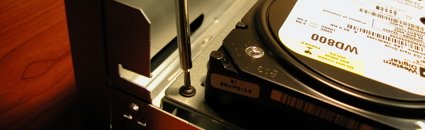
I came back from a quick road trip with a trunk full of hackable hardware. After grabbing a little caffeine this morning, I thought we’d try something different for those slow Sundays. I’m going to come up some interesting hacking kit, point out a few classic hacks for it, and challenge you guys to come up with something better. Every so often, we’ll be sending some of said hardware to the most worthy of commenters. Read on to check out our first ‘Hackit’ challenge.
home entertainment hacks809 Articles
High Power TVBGone
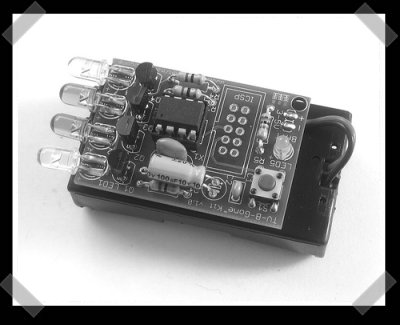
[Ladyada]’s been busy lately. [bladdo] wrote in to tell me that she put together an extra powerful kit version of the TVBgone. This one’s supposed to be good for over 100 feet. If you really, really want to get your ass kicked during the super bowl, this baby in a sports bar should do the trick. There’s an optional programming header, so you could program it to turn every TV onto the SciFi channel.
Remember, I want to hear about your hacks! Use the tips line to send ’em in.
Speaker Power Detection Circuit
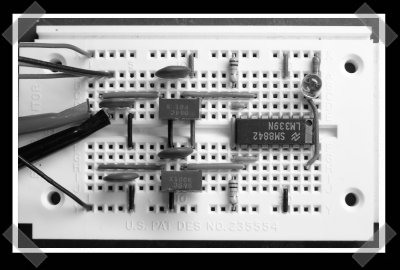
This is an interesting way to monitor your speakers. [Keith] put together this speaker line monitor after a commenter requested it on his blog. It’s designed to check for power on the speaker line and drive a logic/led output. Apparently there’s some risk of shorting your amp, so he’s planning to redesign the input stage. Still, it’s neat little hack to keep an eye on things. Personally, I’d just put em on their own class A amp and automate the power switching, but there are plenty of situations where this could be useful.
Roasting Pan Audio Amplifier
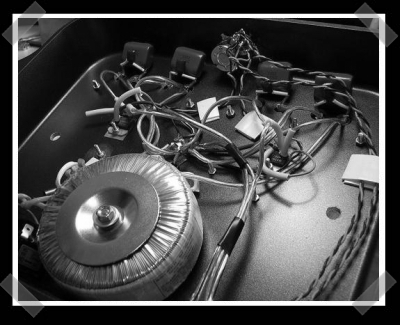
When you need a rigid, vibration-free chassis for your amplifier, look no further than a roasting pan. I’ve used cast cement for subwoofers, but using a cooking pan bolted to a heavy wooden chopping board is a cheap way to get a rigid surface on which to build audio gear. The amp circuitry used by [Mark] is not complex, but it gets the job done. The “oxygen free copper cable” and “pure silver wire” are not needed, just make sure you have a solid mechanical connection. In other words, just tin your wires, bend small “u” shapes at each end, hook them together, and apply solder to the heated ends. Alternatively, hold the ends of stranded wires parallel to each other and twist the ends together before tinning, then solder. Test everything with a multimeter while moving wire joints to make sure you have no weak connections. Now you won’t waste your money on hyped-up cabling materials.
Thanks to [Gio] (who seems to have some personal audio projects as well) for the tip.
Go International With Your Zune
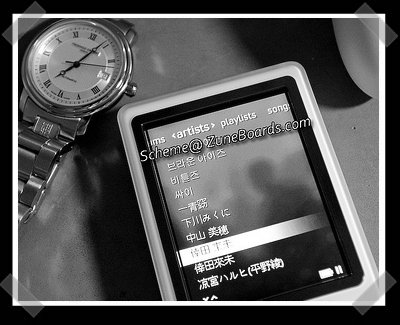
In a fit of apparent oddity, the Zune doesn’t support non-US characters. [Mike] sent in this how-to on modding the Zune software to speak other languages. We haven’t seen much on the Zunes, so it’s about time for something to come out.
Solid State Amp (with Style)
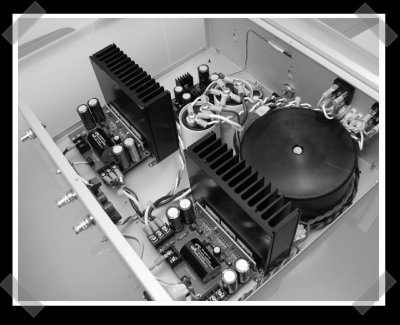
[Jesse] sent in this beautiful 300 watt amp project. It uses six LM3886 amps to create a pair of 150 watt amps that are bridged to create a single 300 watt amplifier. Usually I don’t mind my lack of multi-language ability, but many of the parts were sourced from this site. It looks like the cases were bought in Hong Kong, anybody know were I could get some in the US?
Movie Screen Mask Controller
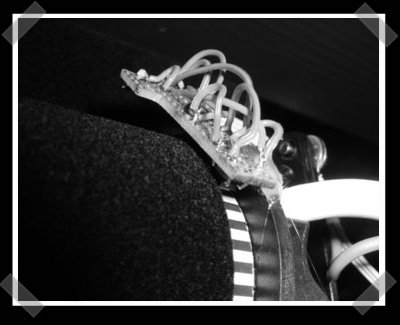
I was looking for some ideas for one of my little projects, and I ran across this screen mask controller that [Danny] was working on a while back. The roller drops a mask down, and an optical encoder lets the controller know the position of the mask. The final version is supposed to support ethernet, but I couldn’t find any updates on the project.









