Battle Born Explains How Its Battery Thermal Safety Works

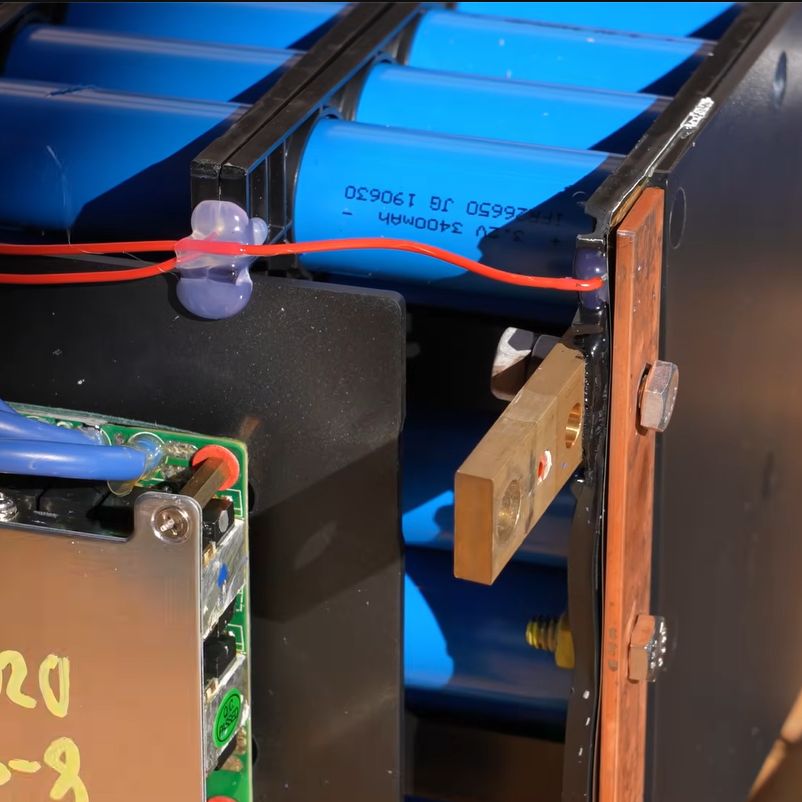
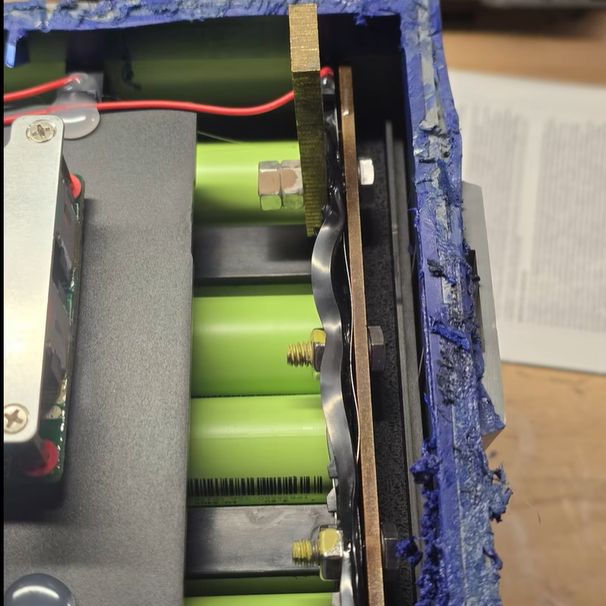
Autopsy of Battle Born LFP battery with the 'thermal safety' on the bus bar. (Credit: Will Prowse)
Autopsy of Battle Born LFP battery with the ‘thermal safety’ on the bus bar. (Credit: Will Prowse)

After users of Battle Born LFP batteries encountered issues such as a heavily discolored positive terminal and other signs of overheating, multiple autopsies showed that the cause appeared to be the insertion of a thermoplastic between the bus bar and the terminal. Over time thermal creep loosened the connections, causing poor contact and melting plastic enclosures. According to Battle Born, this is actually part of an ingenious thermal safety design, and in a recently published article they explain how it works.

The basic theory appears to be that if there’s a thermal event, the ABS thermoplastic will soften and reduce the pressure on the bolted-together copper bus bar and brass terminal. This then allows for an aluminium-oxide layer to form on the aluminium connecting bolt courtesy of the dissimilar copper/aluminium interface. Aluminium-oxide is non-conductive and thus interrupts the flow of current.

Of course, there are countless issues with that theory, least of all the many reports of in-field failures. We recently covered [Will Prowse] studying the death of one of these 100 Ah LFP batteries from brand-new to failure under controlled circumstances. This clearly shows the thermal creep loosening up the connection and causing poor contact between the bus bar, the bolt and the terminal, with poor contact and thermal issues resulting.

Continue reading “Battle Born Explains How Its Battery Thermal Safety Works”

Studying A Battle Born LFP Battery’s Death Under Controlled Conditions

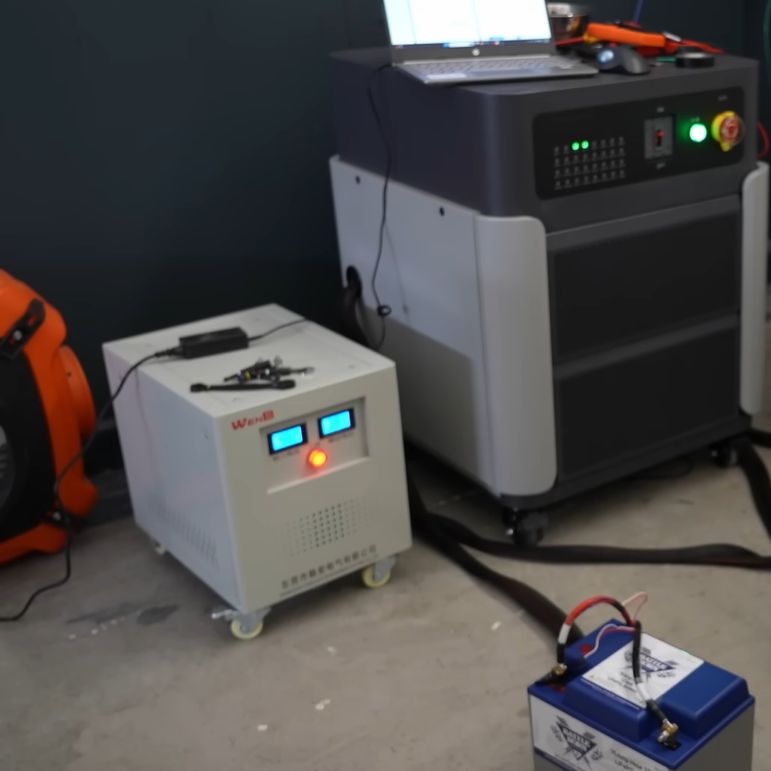
The test setup for the Battle Born LFP cycling. (Credit: Will Prowse, YouTube)

There has been quite a bit of news recently about the  Battle Born LiFePO4 (LFP) batteries and how they are dying in droves if not outright melting their plastic enclosures. Although the subsequent autopsies show molten plastic spacers on the bus bars and discolored metal in addition to very loose wiring, it can be educational to see exactly what is happening during repeated charge-discharge cycles at a fraction of the battery’s rated current. Thus [Will Prowse] recently sacrificed another Battle Born 75 Ah LFP battery to the Engineering QA Gods.

This time around the battery was hooked up to test equipment to fully graph out the charging and discharging voltage and current as it was put through its paces. To keep the battery as happy as possible it was charged and discharged at a mere 49A, well below its rated 100A.

Despite this, even after a mere 14 cycles the battery’s BMS would repeatedly disconnect the battery, as recorded by the instruments. Clearly something wasn’t happy inside the battery at this point, but the decision was made to push it a little bit harder while still staying well below the rated current.

Continue reading “Studying A Battle Born LFP Battery’s Death Under Controlled Conditions”

Performing An Autopsy On 15 Dead Battle Born LFP Batteries

More molten plastic spacers between the bus bar and terminal. (Credit: Will Prowse)

Because size matters when it comes to statistics, [Will Prowse] decided to not just bank on his handful of failed Battle Born LFP batteries when it came to documenting their failure modes. Instead he got a whole gaggle of them from a viewer who had experienced failures with their Battle Born LFP batteries for an autopsy, adding a total of 15 samples to the data set.

Interestingly, the symptoms of these dead batteries are all over the place, from a refusal to charge, some have the overheating terminal, some do not show any sign of life, others have charged cells but a non-responsive BMS, etc. As [Will] notes, it’s important to test batteries with a load and a charger to determine whether they are functional not just whether you can measure a charge.

Although some of the batteries still showed enough signs of life to be put aside for some load testing, the remaining ones were cut open to check their insides. This revealed the typical molten plastic at the terminals, but also a lot of very loose connections for the internal wiring. Another battery showed signs of corrosion inside, which could be due to either moisture intrusion or a cell having leaked its electrolyte.

While the full results will hopefully be released soon, the worrying thing about this latest batch of Battle Born LFP batteries is that they span quite a few years, with one being from 2018. Although it’s comforting that not every one of these batteries is necessarily going to catch on fire within its approximate 8-year lifespan, a lot seems to depend on exactly how you load and charge them, as [Will] is trying to figure out with the upcoming load testing. With the unit that he recently purchased for testing it turned out that lower currents actually made the melting problem much worse.

Between this video and the much awaited follow-up, [Will] actually got his hands on a troubled 300A-rated industrial Battle Born battery. During testing that one actually failed violently with a cell venting and the loose BMS rattling around in the case.

Continue reading “Performing An Autopsy On 15 Dead Battle Born LFP Batteries”