
Getting The VIC-20 To Speak Again

The Commodore Amiga was famous for its characteristic Say voice, with its robotic enunciation being somewhat emblematic of the 16-bit era. The Commodore VIC-20 had no such capability out of the box, but [Mike] was able to get one talking with a little bit of work.

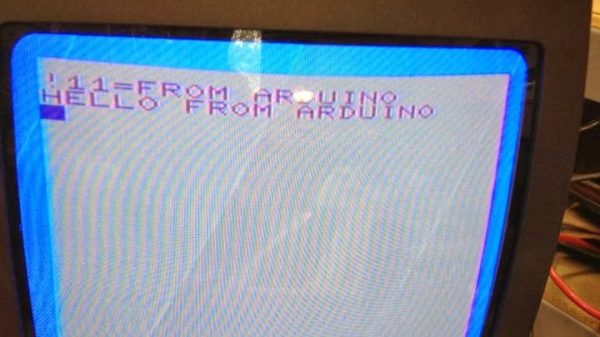
The project centers around the Adventureland cartridge, created by Scott Adams (but not the one you’re thinking of). It was a simple game that was able to deliver speech with the aid of the Votrax Type and Talk speech synthesizer box. Those aren’t exactly easy to come by, so [Mike] set about creating a modern equivalent. The concept was simple enough. An Arduino would be used to act as a go between the VIC-20’s slow serial port operating at 300 bps and the Speakjet and TTS256 chips which both preferred to talk at 9600 bps. The audio output of the Speakjet is then passed to an LM386 op-amp, set up as an amplifier to drive a small speaker. The lashed-together TTS system basically just reads out the text from the Adventureland game in an incredibly robotic voice. It’s relatively hard to understand and has poor cadence, but it does work – in much the same way as the original Type and Talk setup would have back in the day!

Text to speech tools have come a long way since the 1980s, particularly when it comes to sounding more natural. Video after the break.
Continue reading “Getting The VIC-20 To Speak Again”

A VIC-20 Emulator In Your Browser

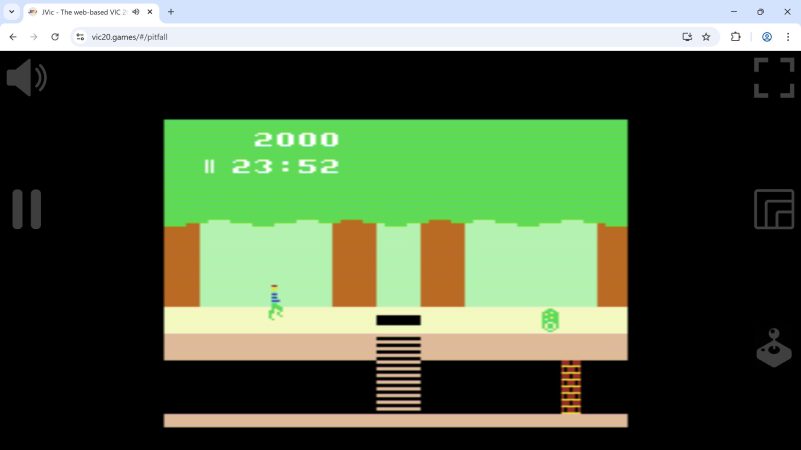
The Commodore VIC-20 was a solid microcomputer that paved the way for the legendary Commodore 64 to come. If you’re a fan of the machine and want to revisit its glory days, you could hunt one down on an auction site and hope that it’s in working order. Or you could just emulate the VIC-20 in your browser thanks to the work of [Lance Ewing].

The project is called JVic—because it’s a VIC-20 emulator written in Java. It’s primarily intended for playing old VIC-20 games, and is designed with mobile devices front of mind—so it works well on a phone screen. You can enjoy the built-in library of games, or you can even direct JVic to boot up a ROM from a ZIP file hosted on a given URL or attached to a forum post. You can also install it on your own device rather than running it online, if so desired. [Lance] provides a range of setup options for running it locally or putting it on your own web server if that’s how you like to do things. Files are on Github for those eager to dive in.

We get lots of VIC-20 hacks around these parts. Even if it’s not the most popular machine that Commodore ever built, it’s certainly up there in the rankings. If you want to learn Forth, or even build a VIC-20 from scratch, we’ve explored that before. If you’ve got your own retrocomputer hacks kicking around, don’t hesitate to let us know!

[Thanks to Stephen Walters for the tip!]








