
Reviving A Cursed Sun SPARCstation IPX

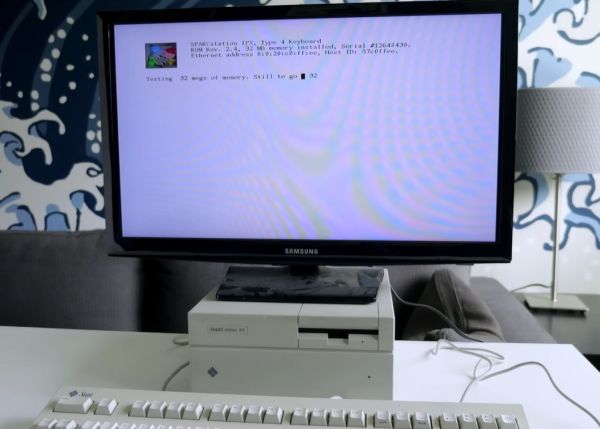
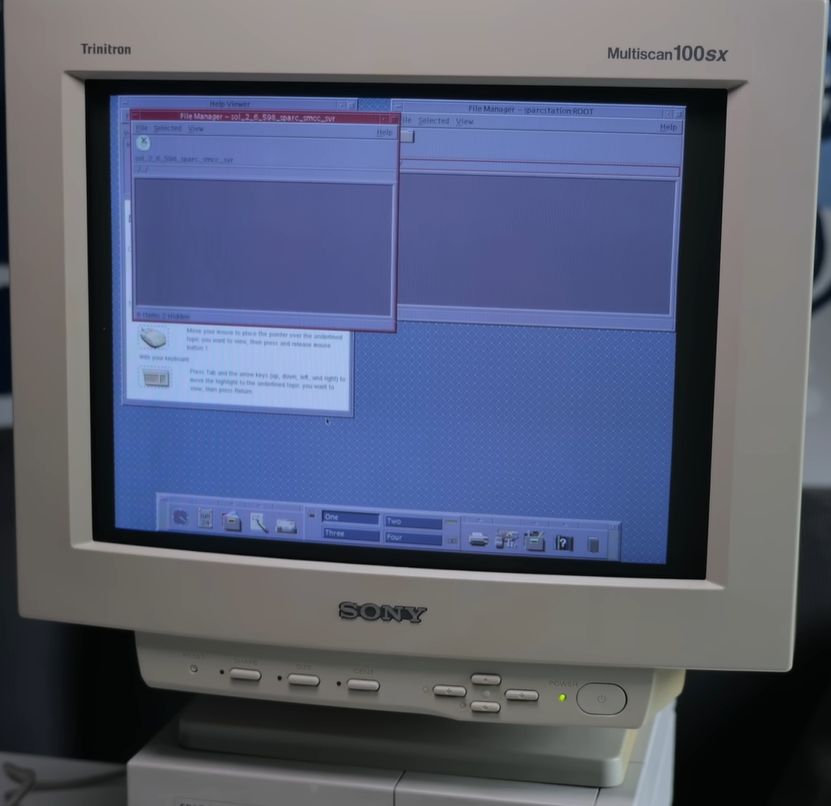
SPARCstation IPX running Solaris 2.6. (Credit: This Does Not Compute, YouTube)

The best part about retro computing is the idea that you’ll save some poor system from being scrapped and revive it to a working state, at which point you can bask in the glory of a job well done. That’s when reality often strikes hard, and you find yourself troubleshooting a maddening list of issues as you question everything about your life choices. Such was the case with [This Does Not Compute] over at YouTube with a Sun SPARCstation IPX that decided to put up a big fight.

This is the second video of a series. In the first installment, the PSU was repaired, and a boot failure was diagnosed. The system’s onboard diagnostic led to the assumption that one of the 8 kB SRAM ICs was defective.  You can readily get SRAM replacements, so it seemed to be an easy fix. Unfortunately, the fun was only beginning as the system reported the exact same error after the SRAM was replaced.

After flipping a virtual table, the mainboard was swapped with a donor one from a scrapped laptop system. With this, it booted, but the video output showed only vertical lines. Obviously, the solution here was to insert a replacement video card, which not only fixed the display output but also demonstrates once again that you can fix many vintage computing issues by simply replacing hardware.

Continue reading “Reviving A Cursed Sun SPARCstation IPX”

Relive The Glory Days Of Sun Workstations

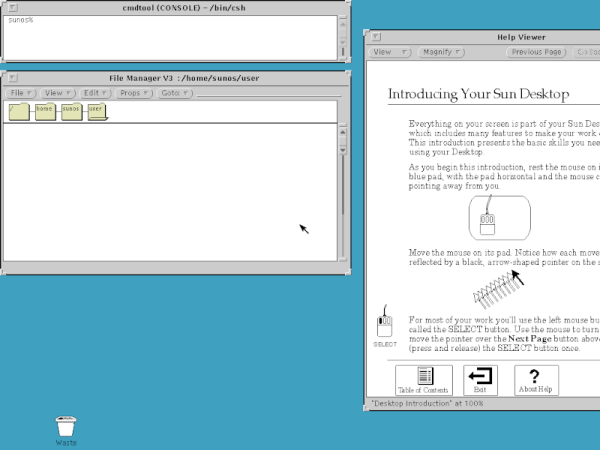
When the IBM PC first came out, it was little more than a toy. The serious people had Sun or Apollo workstations. These ran Unix, and had nice (for the day) displays and network connections. They were also expensive, especially considering what you got. But now, QEMU can let you relive the glory days of the old Sun workstations by booting SunOS 4 (AKA Solaris 1.1.2) on your PC today. [John Millikin] shows you how in step-by-step detail.

There’s little doubt your PC has enough power to pull it off. The SUN-3 introduced in 1985 might have 8MB or 16MB of RAM and a 16.67 MHz CPU. In 1985, an 3/75 (which, admittedly, had a Motorola CPU and not a SPARC CPU) with 4MB of RAM and a monochrome monitor cost almost $16,000, and that didn’t include software or the network adapter. You’d need that network adapter to boot off the network, too, unless you sprung another $6,000 for a 71 MB disk.  The SPARCstation 1 showed up around 1989 and ran from $9,000 to $20,000, depending on what you needed.

Continue reading “Relive The Glory Days Of Sun Workstations”








