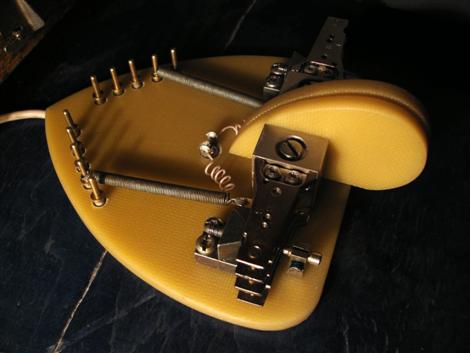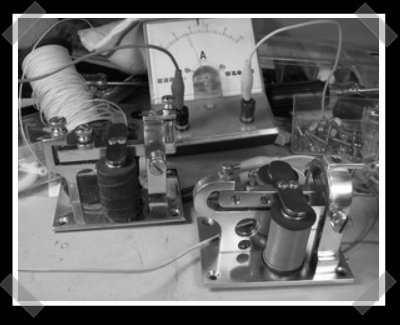
When most people think about a telegraph key, a piece of 1890s tech with a lever that moves up and down comes to mind. These ‘straight keys’ were terrible for telegraphers and led to repetitive stress injuries like carpel tunnel syndrome..Iambic keys came along and move the contacts to a horizontal position. If you ever see a HAM playing with his CW rig, chances are they’re using an iambic key. It’s great, then, that you can build your own iambic key in five minutes using parts you have lying around.
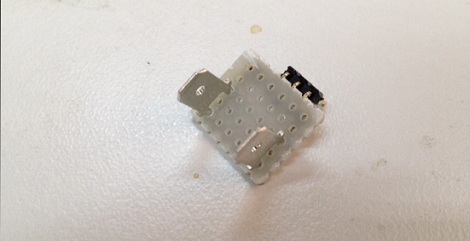
The build [Dimitris] put up is dead simple – just two metal contacts with a pair of 470K pullup resistors. All this connects to three pins on an Arduino. All the micocontroller needs to do is measure the rise time a touch sensor pin when a voltage is applied. If there’s a finger on the pin, the capacitance increases and the rise time is longer. After that, just assign one sensor as ‘dit’ and the other as ‘dah’ and you’ve got an iambic key.
[Dimitris] put all the code for his project up on his blog. His iambic key seems like the perfect project after a tiny Morse trainer. Check out the video of the key in action after the break