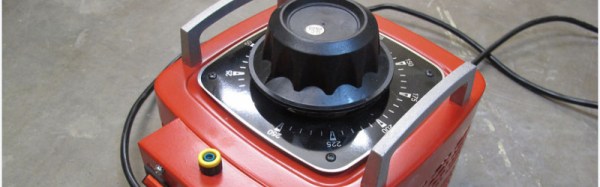
The folks at TOG, Dublin Hackerspace, have a large variac. A variac is a useful device for testing some fault conditions with AC mains powered equipment, it allows an operator to dial in any AC output voltage between zero, and in the case of TOG’s variac, 250V.
Their problem was with such a magnificent device capable of handling nearly 3KW, it presented an inductive load with a huge inrush current at power-on that would always take out the circuit breakers. Breakers come with different surge current handling capabilities, evidently their building is fitted with the domestic rather than the industrial variants.
Their solution was a simple one, they fitted an NTC surge limiter in series with the variac input. This is a thermistor whose resistance falls with temperature. Thus on start-up it presented an extra 12 ohm load which was enough to keep the breaker happy, but soon dropped to a resistance which left the variac with enough juice.
This is a simple fix to a problem that has faced more than one hackerspace whose imperfect lodgings are wired to domestic-grade spec. In a way it ties in neatly with our recent feature on mains safety; making the transformer no longer a pain to use means that it is more likely to be used when it is needed.
Via: TOG, Dublin Hackerspace.