
Synthesizing sounds from scratch is all well and good, you just use a bit of maths. However, the latest build from [Daisy] eschews such boring concepts as additive or subtractive synthesis, instead going for a sample-based approach.
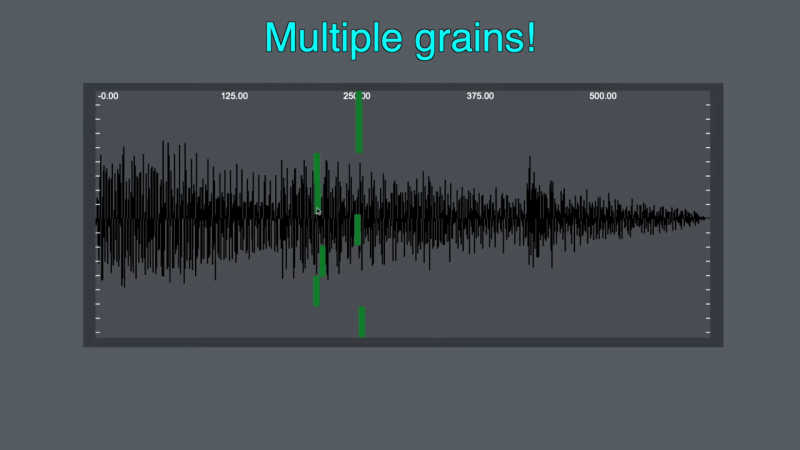
This build is based around the Daisy Seed microcontroller platform. It was actually inspired by an earlier project to create a ribbon synth, which we covered previously. In this case, the ribbon potentiometer has been repurposed, being used to control the playback position of a lengthy recorded sample. In this build, the Daisy Seed is running its audio playback system at a rate of 48,000 samples per second. It’s capable of storing up to 192,000 samples in memory, so it has a total of 4 seconds of sample storage. The Daisy Seed uses an analog-to-digital input to record two seconds of audio into the sample buffer. It can then be replayed by placing a finger on the ribbon at various points. Playback is via granular synthesis, where small sections of the overall sample buffer are used to synthesize a new tone. The video explains how the granular synthesis algorithm is implemented using the Plugdata framework. Design files are available for those eager to replicate the build.
Once you start tinkering in the world of synthesis, it’s easy to fall down the rabbit hole. Video after the break.












Now this I like. Thank you for sharing!
hate to go off-topic but that is a cool shirt!
far out man
Daisy Seed / Patch is a fun platform. There’s Electrosmith’s Pod, Synthux Touch 2 kit, Cleveland Music’s Hothouse Digital Signal Processing Pedal Kit, and I’m sure many others.
omsinserial on tindie uses the Daisy Patch as the basis for a few of their Eurorack modules and are very reasonably priced considering the functionality.
I’ve seen people making sample players (multisampler even), granular synth, reverb, tape delay, wave table oscillators, and more. The chip has a decent amount of processing power, and there is a 1MB and 65MB version of the Daisy Seed, in case you want some serious buffering for your effects or lookups for wavetables or samples. Technically there’s enough memory to hold some simple Llama inference model in case you want to invent some kind of AI for automatic note or rhythm generation. (probably pushing the limits, but I the napkin math says it’s possible)
Nice hack! Thanks for documenting it and for publishing it on Hackaday!
Does sometime being more granular mean finer, or courser?
Granular refers to a type of synthesis that involves using smaller grains of the larger sample to create tones and textures. You’ve probably heard this effect quite a bit because it’s super popular in music and has been for at least thirty years or so. Nine Inch Nails, The Downward Spiral was probably the first time I’d heard it. Tool, Aenima made use of this approach as well. Nowadays it’s a pretty common feature with software synths. Arturia Pigments has a granular synth built in.
Plugdata/PD is just the design frontend. The implementation is done using the Heavy Compiler that converts the PD code into C/C++ and wraps it with libDaisy.