
A friend of mine is producing a series of HOWTO videos for an open source project, and discovered that he needed a better microphone than the one built into his laptop. Upon searching, he was faced with a bewildering array of peripherals aimed at would-be podcasters, influencers, and content creators, many of which appeared to be well-packaged versions of very cheap genericised items such as you can find on AliExpress.
If an experienced electronic engineer finds himself baffled when buying a microphone, what chance does a less-informed member of the public have! It’s time to shed some light on the matter, and to move for the first time in this series from the playback into the recording half of the audio world. Let’s consider the microphone.
Background, History, and Principles
A microphone is simply a device for converting the pressure variations in the air created by sounds, into electrical impulses that can be recorded. They will always be accompanied by some kind of signal conditioning preamplifier, but in this instance we’re considering the physical microphone itself. There are a variety of different types of microphone in use, and after a short look at microphone history and a discussion of what makes a good microphone, we’ll consider a few of them in detail.
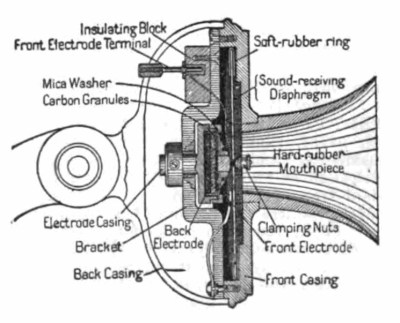
The development of the microphone in the late 19th century is intimately associated with that of the telephone rather than the phonograph, as these recording devices were mechanical only and had no electrical component. The first practical microphones for the telephone were carbon microphones, a container of carbon granules mechanically coupled to a metal diaphragm, which formed a crude variable resistor modified by the sound waves. They were especially suitable for the standing DC current of a telephone line and though they are too noisy for good quality audio they continued in use for telephones into recent decades. The ancestors of the microphones we use today would arrive in the early years of the 20th century along with the development of electronic amplification and recording.
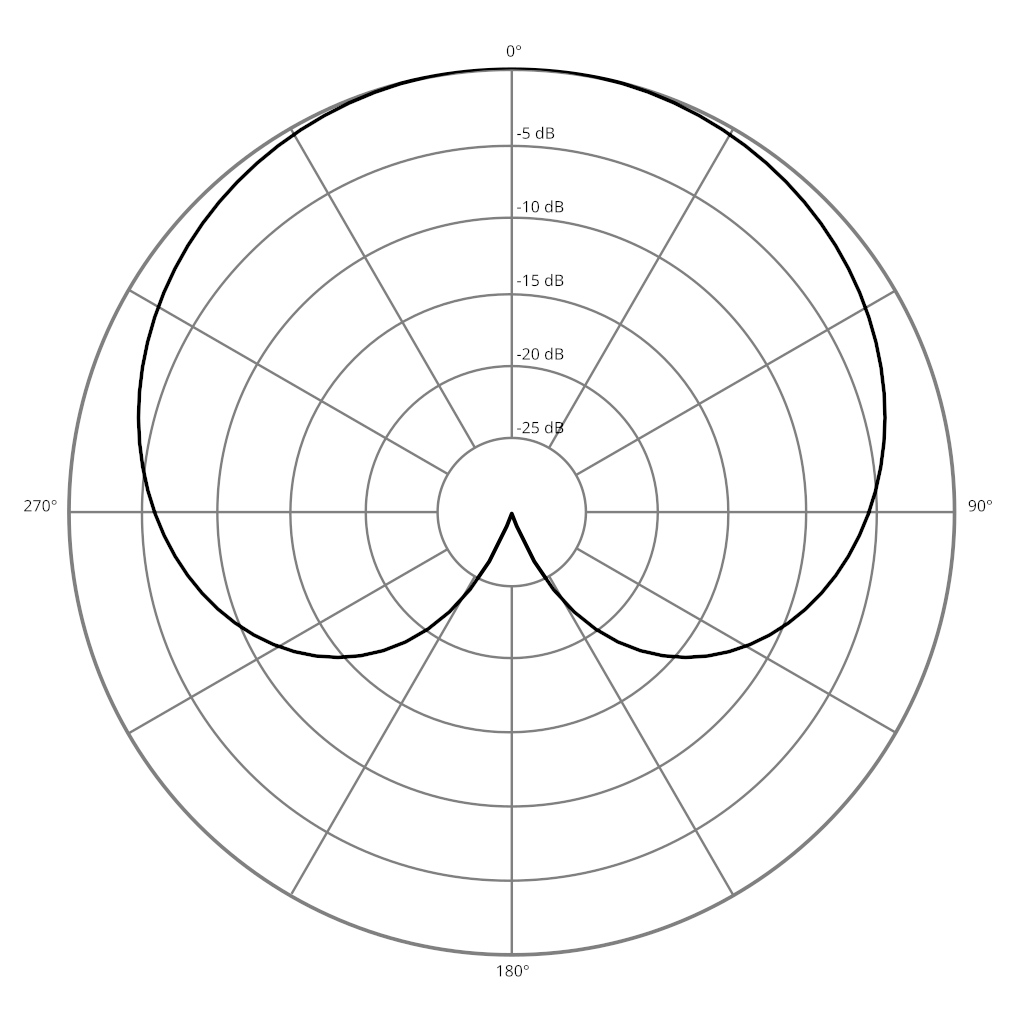
The job of a microphone is to take the sounds surrounding it and convert them into electrical signals, and invariably that starts with some form of lightweight diaphragm which vibrates in response to the air around it. The idea is that the mass of the diaphragm is as low as possible such that its physical properties have a minimal effect on the quality of the audio it captures. This diaphragm will be surrounded by whatever supporting structure it needs as well as any other components such as magnets, and the structure surrounding it will be designed to minimise vibration and shape the polar pattern over which it is sensitive.
Depending on the application there are microphone designs with a variety of patterns, from an omnidirectional when recording a room, through bidirectional figure-of-eight used in some studio environments, to cardioid microphones for vocals and speech with a kidney-shaped pattern, to extremely directional microphones used by filmmakers. Of those the cardioid pattern is the one most likely to find itself in everyday use by someone like my friend recording voice-overs for video.
Having some idea of microphone history and principles, it’s time to look at some real microphones. We’re not going to cover every single type of microphone, instead we’re going to cover the three most common, to represent the ones you are likely to find for affordable prices. These are dynamic microphones, condenser microphones, and their electret cousins.
Dynamic Microphones
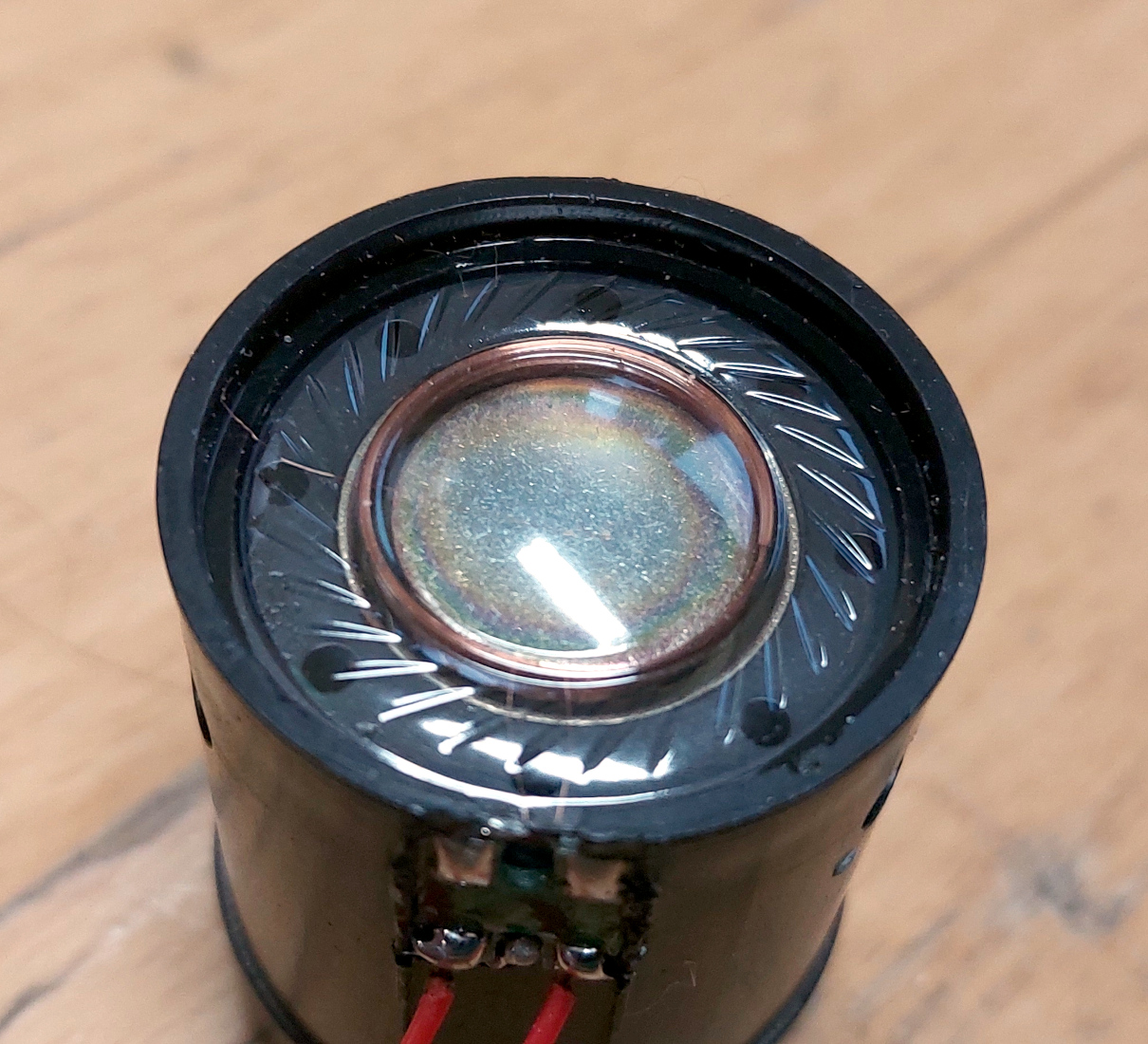
A dynamic microphone takes a coil of wire and suspends it from a diaphragm in a magnetic field. The diaphragm moves the coil, and thus an audio voltage is generated. The diaphragm will typically be a polymer such as Mylar, and it will usually be suspended around its edge by a folded section in a similar manner to what you may have seen on the edge of a loudspeaker cone. The output impedance depends upon the winding of the coil, but is typically in the range of a few hundred ohms. They have a low level output in the region of millivolts, and thus it is normal for them to connect to some kind of preamplifier which may be built in to a mixing desk or similar. The microphone cartridge pictured is from a cheap plastic bodied one bundled with a sound card. You can see the clear plastic diaphragm, as well as the coil. The magnet is the shiny metal object in the centre.
Capacitor Microphones
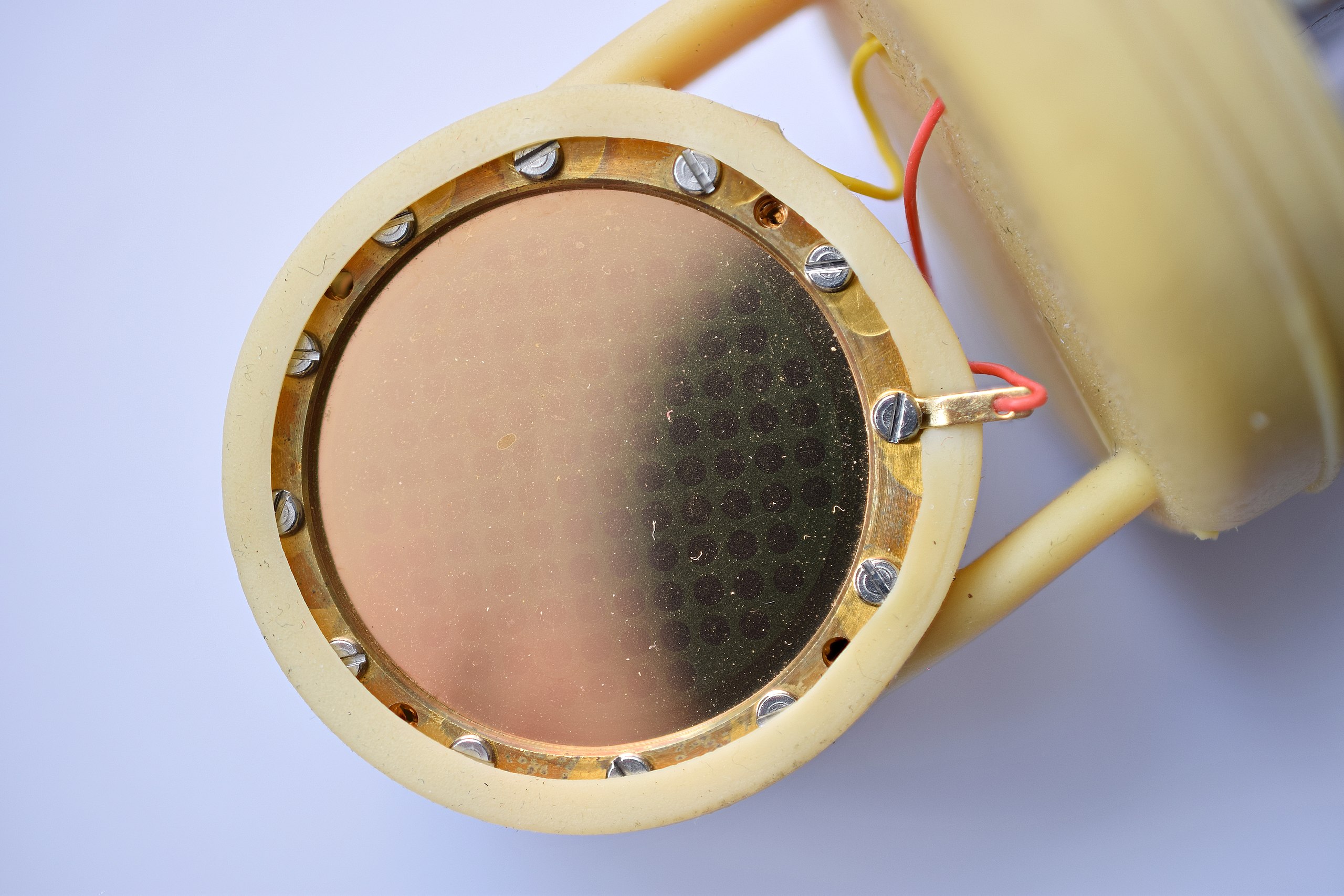
A capacitor microphone is, as its name suggests, a capacitor in which one plate is formed by a diaphragm.This diaphragm is usually an extremely thin polymer, metalised on one side.
The sound vibrations vary the capacitance of the device, and this can be retrieved as a voltage by maintaining a constant charge across the microphone. This is typically achieved with a DC voltage in the order of a few hundred volts. Since the charge remains constant while the capacitance changes with the sound, the voltage on the microphone will change at the audio frequency. Capacitor microphones have a high impedance, and will always have an accompanying preamplifier and power supply circuit as a result.
Electret Microphones
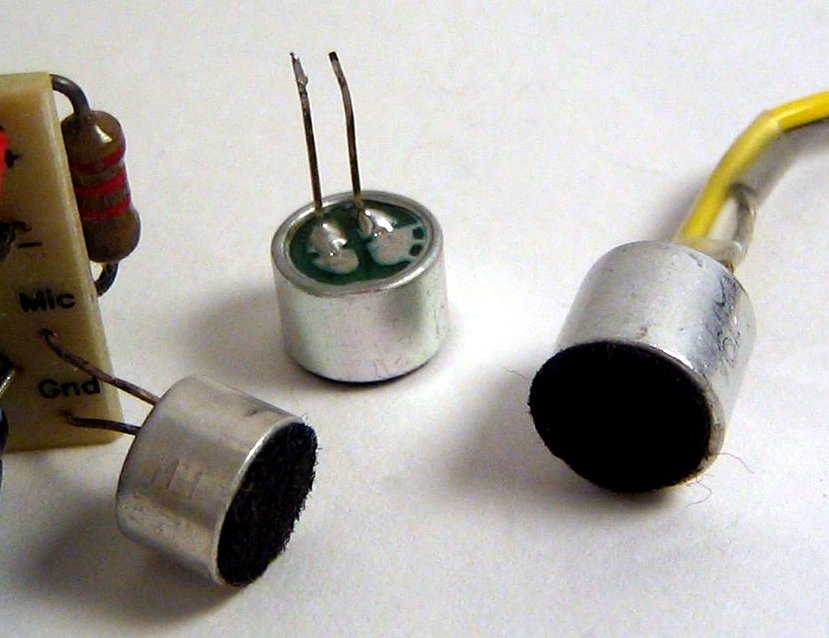
Electret microphones are a special class of capacitor microphone in which the charge comes from an electret material, one which holds a permanent electric charge. They thus forgo the high voltage power supply for their DC bias, and usually have a built-in FET preamp in the cartridge needing a low voltage supply such as a small battery. The attraction is that electret cartridges can be had for very little money indeed, and that the cheap electret cartridges are of surprisingly high quality for their price.
That’s All Very Well, But Which One Should I Buy?
So yes, even knowing a bit about microphones, you’re still left just as confused when browsing the options. The questions you need to ask yourself aside from your budget then are these: what do I want to use if for, and what do I want to plug it in to? Let’s talk practicalities.
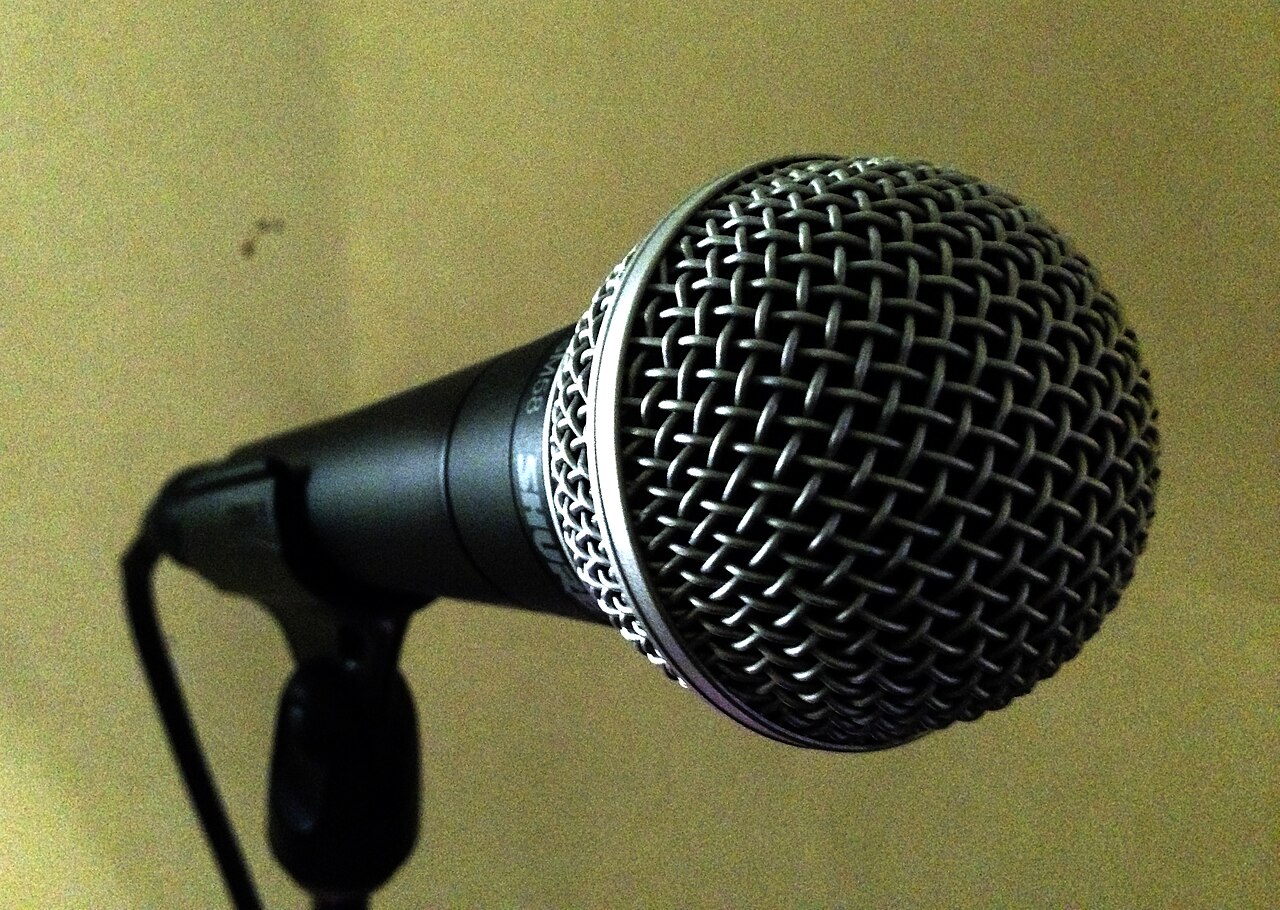
There are a variety of different physical form factors for microphones, usually at the cheaper end of the market a styling thing emulating famous more expensive models. Often the ones aimed at content creators have a built-in desk stand, however you may prefer the flexibility of your own stand. There are also all manner of pop filters and other accessories, some of which appear to be more for show than utility.
You will need to ask yourself what polar pattern you are looking for, and the answer is cardioid if you are recording your speech — its directional pattern rejects background noise, and focuses on what comes out of your mouth. You might also think about robustness; are you taking this microphone out on the road? A stage microphone makes a better choice if it will see a hard life, while a desktop microphone might make more sense if it rarely leaves your computer.
In front of me where this is being written is my microphone. I take it out on the road with me so I needed a robust device, plus I like the look of a traditional handheld microphone. The standard stage vocal dynamic microphones is unquestionably the Shure SM58, a robust and high-performance device that has stood the test of time. At £100, it’s out of my price range, so I have a cheaper mic from another well-known professional audio manufacturer that is obviously their take on the same formula. It is plugged in to a high-quality musician’s USB microphone interface, a USB sound card and mixer all-in-one. It serves me well, and if you’ve caught a Hackaday podcast with me on it you’ll have heard it in action.
If you’re not going to invest into an audio interface, you will be looking for something with a built-in amplifier and ADC, and probably something that plugs straight into USB. These are myriad, and the quality varies all over the place. For voice recording, a cardioid pattern makes sense, and an amplifier with low self-noise is desirable. If the amplifier picks up the USB bus noise, move on.
So in this piece I hope I’ve answered the questions of both my friend from earlier, and you the reader. It’s no primer for equipping a high-end studio, but if you’re doing that it’s likely you’ll already know a lot about microphones anyway.












What about MEMS microphones? How about ribbon microphones or those weird old carbon microphones in Bakelite telephone handsets?
The point of this piece is to address microphones you might be expected to use for recording. Both of those are cool, neither is generally used in the application I am talking about.
So what is this other manufacturer? What about non travel (USB) mics?
Where is the rest of the article? It started so good and now leaves me hanging, unless I go with a sm98. More lost now as before :(
You can definitely do better than an SM-58 for podcasts. For starters, most condenser microphones, even in the same price range sound “crisper.” If you are making a how-to video, you are probably moving your head around (and you want your hands free too, of course), so a headset mic is totally the way to go. My main issue with cardioid “vocal mics” like the ‘58 is that people see singers “eating the mic” and think that’s how far away it should be (which yes, it should be… in a nightclub). When the mic stays still, and you move your head around, the amount of bass changes significantly. But, if the mic is always the exact same distance from your mouth, you can EQ the constant bass boost to your taste. This doubly recommends using a headset mic. Last but not least, position the headset mic to the side of your mouth, not directly in front of it! (Look up the term-of-art “plosives.” That’s what you will avoid by doing this.)
I agree, headset mics are great. Good ones however are not cheap. My 58 copy cost me only a few tenners, the boom mic I’d get for that would sound awful.
I do quite a few presentations at hacker camps etc, and I always hold the mic about the length of my hand away from my mouth. I have mixed live audio, and I am making the person on the mixer’s life easier.
What is the 58 copy?
Thanks for sharing your on-stage audio experience with the group. IMHO, inexpensive lavlier mics these days sound pretty darned good, and Rode makes a gadget that turns any lavalier mic into a headset mic. Shure makes a great headset mic that only costs like $58, but it uses a proprietary connector that goes only to their wireless body pack.
Depends on what you want doesn’t it – I have a nice wide pickup fairly high quality sensitive mic above my monitor as it does let me use it as if I’m sat right at the desk anywhere in the room, which suits what I tend to want better than the headset (though I do have a reasonable one of those too – options to suit your needs at the time are nice if you can have them, and a microphone or headset if it was decent quality in the first place is something that will last basically forever.)
What about array mics?
Could be a good choice too, though likely eat some CPU cycles to really perform well with the ability to reject noise from outside a zone etc can be a good choice no doubt. I’m also not aware of any array you can just buy with really good sensors to capture that full range of human hearing. But nothing to stop you making your own if you need more that just the vocal ranges in your array.
+1 SM58 is pile of shite. Condensor mic much better option and yes, they have that ‘crispness’ you mentioned.
I’ll definitely second the suggestion for a condenser mic if you’re doing podcasts where you’re sitting at a desk. They require a 48v phantom power source and are more delicate than dynamic mics tend to be. But in exchange for dealing with their fussiness, you’ll be rewarded with an increased sensitivity and better frequency response (the “crispness” that the original poster referred to).
Of course quality of the mic matters as well, as does microphone discipline. But it’s hard to beat the sound you get out of a quality condenser mic when used correctly.
There’s also the point that condenser microphones, while being more expensive, are also more fragile than dynamic microphones. I think the author’s point was that the SM-58 is considered a bar, not the ceiling. Most mics under an SM-58 are going to be garbage.
If you’re a starting podcaster just beginning, an SM-58 will do just fine. Your recording environment is also a big part of the equation. Believe it or not, there are musicians who make their music sound absolute trash on expensive gear.
It’s strange to contemplate that at some point in the future people will be trying to recharge the electret in microphones when they restore what will eventually be vintage technology. Saying that a lot of devices are going down the men’s route now as the components have gotten cheaper and devices have become smaller. Perhaps they’ll be replaced by some sort of magnetostrictive solid state device eventually if light based processors take over electronics.
Mems, damned auto correct.
In 2007 memes were Epic Fail Guy and Pedobear, now it’s some head in a toilet. The younger the generation, the bigger the cringe.
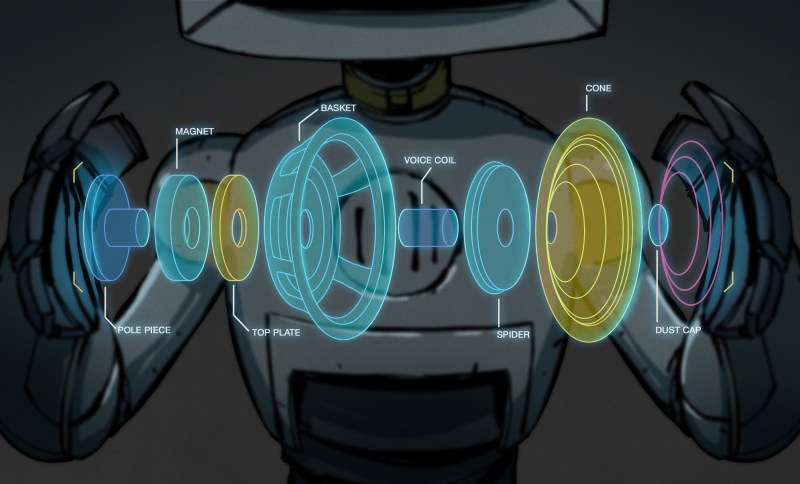
The artwork at the top of the article is a speaker not a microphone.
Speaker is not a microphone. And this post has not hack at all either.
Many speakers can be microphones, if the sound is loud enough. I once recorded an effect with a pair of cheap headphones.
I’d cut Jenny some slack. She works hard. Besides I recorded an entire jazz fusion nightclub set using a pair of Walkman headphones. The tape came out great.
Because the artwork was developed for the column and article is part of that column.
Wow. Another “no hack at all” post…
Pretty disappointing almost content-free post. Started out well but then suddenly ended. Thankfully the comments have more content than the article…
I agree that the SM58 is a good tool for a wide range of situations as mentioned.
There is another knowledgable review here if you need a second opinion from non-commenteers.
https://soundref.com/shure-sm58-review-vocal-mic/
Article left me hanging. Started out good, but failed to say which of the three types discusses was better and why. After that, the author picked a mic, but failed to mention what type it is and why it was chosen
She said dynamic – SM58 clone – and an interface. It’s a solid choice, IMO.
“Better” depends on the mic application and other parameters, including budget and what you’re connecting it to. Shure SM58 or a good clone of one is a pretty good, bombproof choice for presentations, announcing, singing, etc.
True condenser mics are awesome, and many electret mics are also excellent and being used professionally. But they require powering (usually +48v phantom), need more protection from wind and breath, and can be fragile or fussy.
If you’re a hacker (HaD, hellooo), it’s fun to build and modify mics.
https://groups.io/g/MicBuilders/topics
https://groupdiy.com/forums/microphones.29/
If someone needs a mic but can’t or won’t invest the time into learning about mic technology and applications, my suggestion is to go to a good music or AV store, and just ask. Some of the online music/gear stores also provide good advice.
Great topic. I’ve read countless articles about speakers, cross over networks, enclosures and frequency response,. I’ve also read a lot about how microphones work. Having spent much of my career in industrial measurement & control and related signal processing, I have always been curious about microphone frequency response. Without a microphone with a flat, or at least clearly defined, and thus correctable frequency response, how can I measure the frequency response of a speaker system? To ask the question another way, can I buy a microphone with a wide frequency response, guaranteed to conform to a well defined response curve, within a realistic budget? And next, of course, how about a flat frequency response way up to ultrasonic frequency ranges?
I just bought a room compensation system that came with a calibrated MEMS microphone for analysis.
When you’re using a mic to assess the frequency response of a speaker, you’re also assessing the acoustic warts of the room you’re in, unless you have access to an anechoic chamber. Or you can try to do the test outside, but you’re still up against reflections from the ground, nearby buildings or walls, etc. So there are already sources of inaccuracy to contend with, even before considering the mic.
The good news is that electret omni capsules with decently flat response curves are inexpensive. There are “measurement” mics at different price points, many of which have been calibrated against a known reference. Use your search engine of choice to look for “calibrated measurement microphone”.
I don’t know the model (dynamic) but NPR once decreed that all member stations use that mic only. At our local station they had to retire venerable RCA ribbon mics that made men sound like men. I think that rule seems to have gone by the way now for all the nasal tinny gag-me-with-a-spoon commentators now on the air.
Our local was bought out by Indianapolis and the measly 2 hours of local content are being done at home with hum and room sound. Worst of all is content from built-in mics in desktop gear like screens and speakerphones. You can hear the cubicle and the room it’s in! This hard to hear stuff is featured on national news programs. Plosives especially from women announcers sound like distant artillery bombardment when you have a sub.
I have a pair of “birdcage” mics a ribbon type which I restored the position of the fragile ribbon and nothing says bass and warmth better. Bass and drum, I can sing the bass part like synths do, all the way down. You can feel it live in the room without feedback. The bi-directional ribbon can null out the room’s bass. There is a picture of Churchill addressing the world at war on radio with this mic across the table. Great mic great speaker too!
I recall videos where people just make their own from the transducers. I think it was DIY perks where the transducer for a $500 mic was under $15 and just used a pre-amp kit or some inexpensive usb preamp and wired it up, all pretty in a metal housing, but nothing you can’t do by hand. Just making a ribbon mic is simple, although there is a large element of skill / attention to detail. I don’t know why those sound nice to me.