
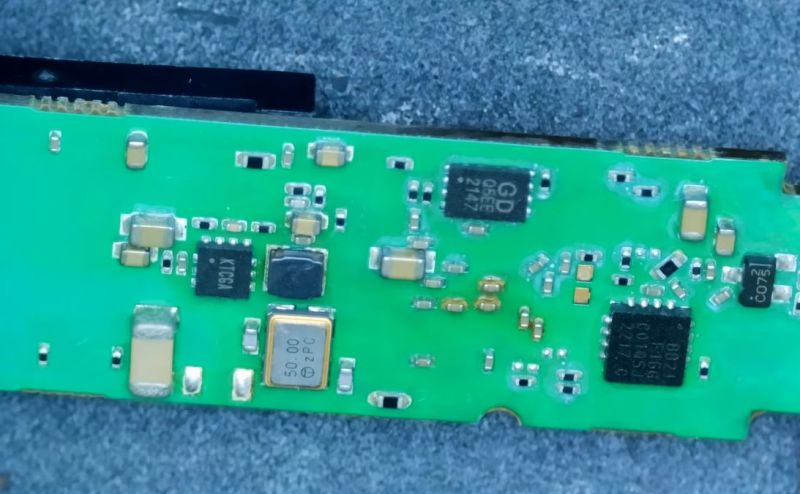
With the advent of affordable 2.5 Gbit, 5 Gbit, and 10 Gbit consumer networking gear, more and more people are taking advantage of these higher networking speeds, with [This Does Not Compute] having used 10 Gbit SFP+ modules over regular Cat-5e copper to connect to a NAS in the next room. Only problem was that after a while these SFP+ modules began to start dropping frames. On taking a closer look at these modules, he found that they were running pretty hot: 40°C while idle. A teardown of one of these modules showed severe discoloration due to heat.
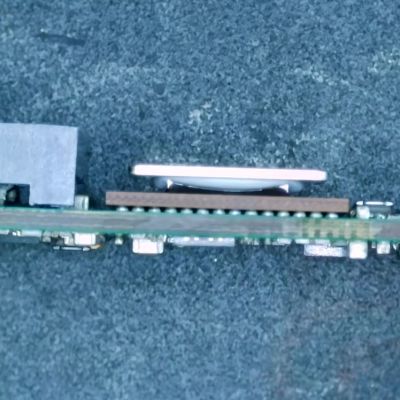
Inside these 10Gbit modules is the Marvell-branded Alaska X 88X3310/40P PHY, which despite the ‘low-power’ claims have a metal heatsink glued onto the actual IC and thermally coupled to the module’s metal enclosure. The other side of the PCB was quite discolored, further indicating how hot these modules run in operation. Some digging revealed that this can go up to around 2.5 watts.
Perhaps the most fascinating part of this teardown is the discovery of an 8051-based MCU that’s responsible for telling the switch the module is put into that it is a 30-meter multi-mode fiber module, presumably for compatibility purposes. It’s definitely an interesting feature of these FS-branded SFP+ modules.
These old modules were replaced with Wiitek-branded modules that are supposed to use only up to around 1.5 watts in operation courtesy of a newer chipset, in the hope that these wouldn’t fry themselves. At idle these do however still run at 30 °C. As noted in the comments, it might be a good idea to have active airflow over high-speed networking gear like this, as they generally can get pretty hot and sometimes crispy.
The final solution for the video’s networking problem was to just run single-mode fiber to the room and use appropriate SFP+ modules for that, also because these run noticeably cooler. If you still have room in your cable ducts, that would seem to be the optimal solution.












The newest option which uses very little power and stays cool utilizes the realtek RTL8127 chipset. I am using one with the sfp+ cage in one of my PCs and it has been fantastic so far.
Please just don’t use copper 10G (10GbaseT) modules in any SFP port which doesn’t specifically claim compatibility with 10GbaseT. The copper rj45 modules all use a lot more power and generate more heat than fibre or DAC. Regardless of FS compatibility tricks, if it doesn’t support any copper modules, then it won’t have the power and heat dissipation capacity required.
It’s best to buy NICs and switches with integrated copper multi-gig ports.
The cards with integrated rj45 ports sometimes run hot too, depending on the chipset. I may or may not have accidentally fried a PCIe port on a Dell VRTX this way…and also melted the little plastic shields dell had between the ports. Fan offset is turned up now 🤪
Just one tiny kink in the cable and power consumption can go through the roof. Avoid 10GbaseT if possible. Fiber is the more reliable and often cheaper option.
Short run I’d go DAC.
The premade AOC cables have been great for me, kind of a pain to pull through the attic with the pre-attached module, but once they are in place they work great. I’ve been slowly changing the backbone of the house over to 10g sfp+ AOC and it has been way more stable for us, even with cheapo 2.5g POE+ switches on the ends in each corner of the house.
Chris is spot on here: early 10GBASE-T modules pulled more power than the MSA allowed, and were actually out of spec. Speaking as someone who worked at a network device manufacturer, we actually had to do a ton of thermal simulations and considerations like maximum numbers of 10G copper SFP+’s were discussed but rejected. We eventually bit the bullet and just had to do the design work.
10G runs at very close to the Nyquist limit, and the amount of signal processing done at the physical layer is huge. I think it was in a Hotchips presentation that Aquantia, one of the earliest manufacturers of 10G PHYs stated that the 10G PHY circuitry on their chip was 140x the die area of the 1G PHY (going from memory here). My personal opinion is simple: 10GBASE-T is a fundamentally stupid idea in most situations and if you need 10G run MM or SM fibre.
We learned the hard way that many Cisco switches won’t even let these turn on. Was easier to get an SFP+ NIC and AOC cable than to get the existing copper NIC in our machines to talk to the switch at 10gig
I was overheating my mini PC that had two SFP+ cages and was my Linux firewall with 10G modules.
Swappi to short DAC runs was cheaper and used significantly less energy. Stayed cool. I even added a 25 Gbps card with two SFP ports and used DAC with those too. Great choice. No more heat issues in that tiny chassis.
Fiber is also cheap for interconnects of my switches. Including a 100 meter run to my guest house. Less than $100 for that run including both modules.
I’m slowly getting away from RJ45 wherever I can, but most of the house is 6A or 7, so I’m stuck there.
I wonder if the end is near for traditional Ethernet ports and patch cables.
No, too many devices that have one. But segment all that onto one router, and leave the high-speed for different router..
If nothing else, PoE will continue to be useful.
Although I suppose it is possible to send enough light down a fibre to be harvested as power at the other end. It would be pretty dangerous though, to both devices and people. Imagine if you accidentally broke a fibre!
The early ones (~ a decade ago) used Aquantia PHYs and the reach was limited to 30m (down from the usual 100m cable length specification) just to limit the power dissipation in the PHY in the SFP module. The PHYs adjust the transmit power to achieve a certain SNR at the receiver. Shorter, lower loss cables actually cause the PHYs to use less power, run at lower temperatures and last longer.
Aquantia was later bought by Marvell.
Ideal way would be to state the delta T from ambient. Saying that they run at 30°C doesn’t tell much. Would it still run at 30°C when ambient is 30°C?
It’s an internal temp measurement, so it’s not really a delta. A chip that runs 20C while idle at room temp is going to be close to 30C whether the ambient temp is 20C or 5C. A higher ambient temp might goose it a few degrees higher, but the ambient heat is dwarfed by the heat generated internally.
Put a fan on it, and the ambient temp starts to matter more.
I meant “…a chip that runs 30C while idle…”, of course. Typo.
Uh, no, that’s not how heat generation works at all. Delta temp is commonly used because a certain power consumption will cause a certain temperature rise – the ambient temperature is very relevant.
I’ve never needed anything more than consumer grade equipment with 1Gbps ethernet ports. I am tempted to try out 10Gbit but right now my NAS is storage speed limited, not network limited even at 1Gbps.
That said, I do wonder why I can’t find any USB3.1 ethernet adapters that can do 10Gbps or even 5Gbps. I mean USB3.1 gen 2 can theoretically do 10Gbps, and USB3.0 can do a max of 5Gbps. Shouldn’t these be more common? All I see on amazon are 1Gbps USB2.0 ones
Yes there are, on Amazon! I like my 2.5g. Lots of 5g, but the 10g are expensive at $100. Remember, ethernet is full duplex. Clipped from an Amazon vendor of a 10g adapter: “Q1: What type of USB port is required to achieve 10Gbps speed? A: A USB-C port is required. For full 10Gbps performance, your device must support USB 3.2 Gen 2×2 (20Gbps bandwidth). Lower-spec ports will result in reduced speeds.”
USB3 is also full duplex, 10Gbps NIC requiring 20Gbps USB is just overhead.
There are pasive SFP to copper cables… why you adding aditional layer in converter?