
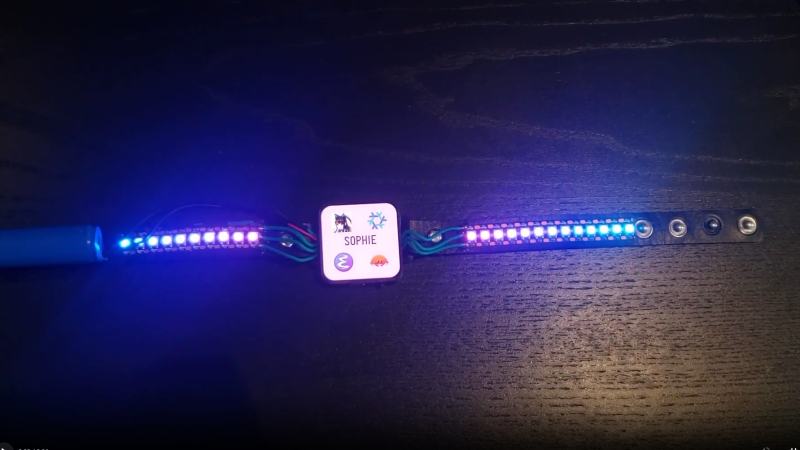
Nifty little AMOLED screens are easy to get nowadays, and [Sophie D] demonstrates they are both thin and light enough to be worn with OpenChoker, a design for a choker necklace that was a hit at DEF CON.
The choker consists of an AMOLED touchscreen flanked by short RGB LED strips. Behind the display is the PCB which contains an RP2350 and micro SD card slot for external storage, and at the rear of the choker is an 18650 cell to power it all. The display plays an eye-catching animation that gets generated on the fly while the LEDs sparkle away.
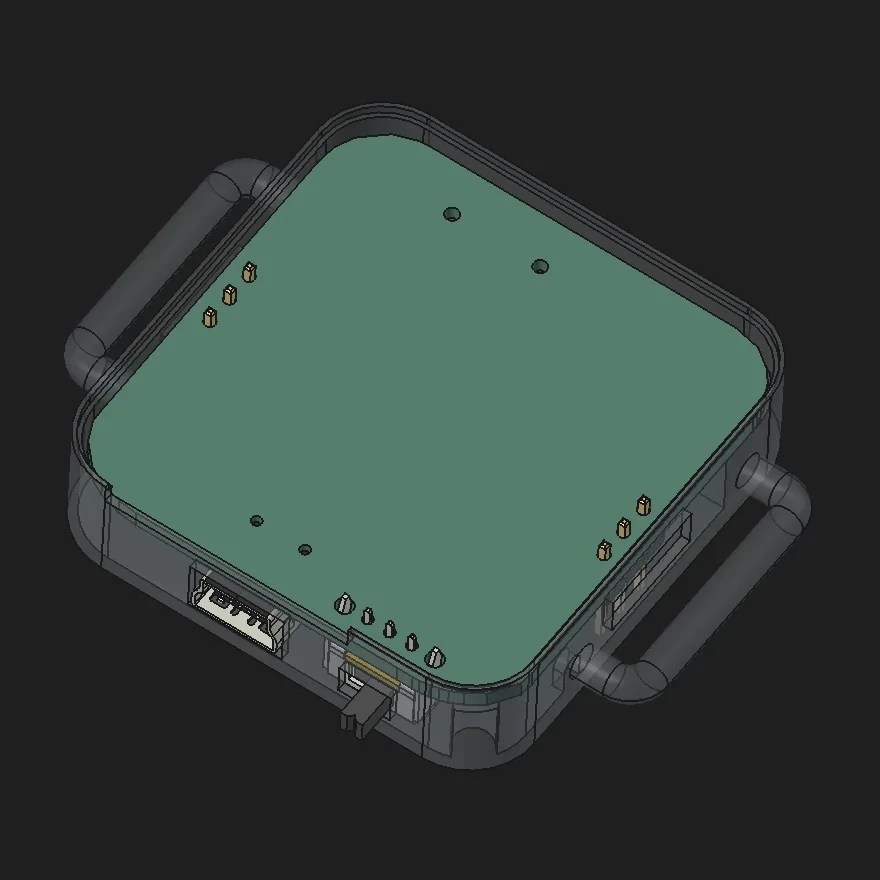
[Sophie] shares a number of interesting takeaways from designing and building this device. One is that the bulk of the PCB design work was interfacing to the display, since no existing footprint or reference design could be found. So if you find yourself with a Hello Lighting HL020E21-02 2.14″ touchscreen display you’re hankering to use in your own project, do yourself a favor and check out [Sophie]’s board design instead of starting from scratch.
Battery life was more than enough for a device like this. A single 18650 cell powered the choker effortlessly for a 16-hour stretch and still the cell measured a robust 3.7 V. While a light-up choker used indoors isn’t a great candidate for wearable solar power, it’s encouraging that there’s no need for a tethered battery pack.
Another tip to consider relates to the screen’s touch sensitivity. In short, the capacitive touch screen responded perfectly when plugged into a development computer, but when mounted and isolated on the choker it responded so poorly as to be useless. It didn’t keep the rest of the choker from doing its job, but it might be worth keeping in mind as something to watch out for with a device like this.
There’s one final mystery [Sophie] ran into: with only one day to spare, glue used to affix some wires ended up melting away the wire insulation, revealing bare copper. We’re not sure what happened there, but if nothing else it’s a reminder that Murphy’s Law is always ready to strike when one is on a deadline.












Does not beat this wearable entry to the Laser Contest of few weeks ago: https://hackaday.io/project/206003-laser-buttplug-how-i-won-kink-halloween-contest
The emacs icon makes me imagine someone attempting to use emacs on this with no keyboard or, worse, some sort of successor to emacs-deldo that tightens as you nest more and more parentheses / layers of indentation.
Wearing an 18650 cell around your neck seems – uncomfortable?
My girlfriend wears a leather dog collar that looks less comfortable than that, but she loves it.
Everyone is different.
Sure, everyone is different.
But most people are still normal.
God help us when they are not…
There is no universal “norm” and God does not exist yet, but AI companies are working on it.
“normal” people are boring. i’m very glad i have friends who meow and bark instead of friends who ask if i’ve opened up a 401k yet. once you stop caring about trying to fit in, you’ll be free.
The touch behavior is likely due to the fact that this module is designed for integration into a phone. The touch front end parameters are tuned based on a specific chassis capacitance.
Here since the enclosure is small and made of plastic, the chassis capacitance is small and cause the touch to misbehave. Another indicator this is the issue is the fact that she observes a better performance when the device is close to her body or connected to a computer.
One way to help (it doesn’t look like the touch controller is tunable) would be to line the bottom of the case with copper tape connected to the system ground. It may help but may not be sufficient.
Extending that ground under the two RGB LED modules may help a little more.
In short more copper area is better in this case.
Another cause for poor touch response can be the LED strips. They are like antennas, coupling the PWM noise into the user’s body and thus their finger.
Years back when debugging some LED strip project I noticed that my laptop touchpad wouldn’t work if an RGB LED strip was too close to it.
Pointless if you can’t buy the magic AMOLED display: https://www.hello-lighting.com/oled/49.html
Attaching a Lion battery to your neck certainly makes certain things clear to the onlooker.