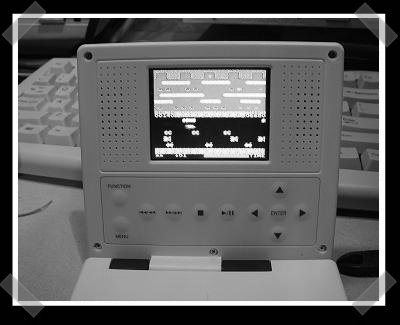
[Jeff] sent in this nice how-to on gutting the 2.5″ LCD from a $20 mini dvd player. After removing the player hardware, he shows where you’ll need to tap the circuit to feed it composite video. Looks like just the thing for those portable console projects.
Misc Hacks4026 Articles
Monday Retinal Extra

Look ma, it’s my retina. Here’s a short collection of hacks to make yours happy.
[Brian] sent in this odd collection of information he calls the open source biohack kit. The info is interesting, but everything is inside a giant zip file. I think it could benefit from a better online presentation.
[insomartin] sent in a simple design to create a USB piezo drum pad controller. The parts count is pretty low and the drum pads are created using the usual DIY piezo speaker sensor.
[Emilio] sent in his Nokia phone turned SMS remote control project.
[Ian] over at diylife put together a handy USB analog gauge interface.
[Jock] sent in something similar, but this time the project uses gauges from a car for driving games.
In order to continue mocking Boston, [doug] sent in his moononite project.
DIY Actuated Ball Valve

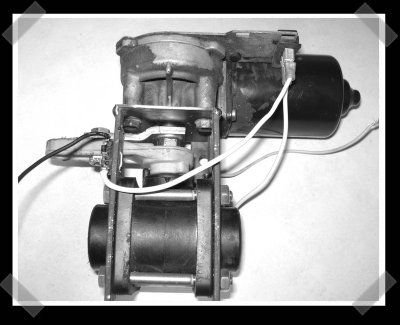
[Derek] sent in this electric ball valve he built for his bio-diesel reactor. If you haven’t checked, the commercial versions are pretty expensive. His solution was to mate a salvaged saturn wiper motor (sans control board) with a polypropylene bolted ball valve.
Oh, and happy birthday to me.
Voice Controlled Game Controller

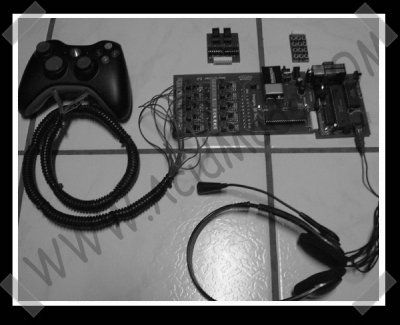
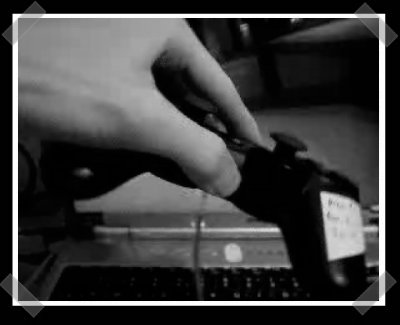
[] sent in this voice controlled video game project. The idea is simple and honorable: make gaming accessible to the physically limited. [Cyberpyrot] used a voice recognition kit and interfaced it with a bog standard XBox 360 controller. Looks like a fairly easy project if you’re familiar with the pointy end of a soldering iron.
Tengu Clone Redux

Remember the open source Tengo clone? [jfmateos2] sent in his version, with a custom candles game designed for birthday giving. It’s a nice piece of work, and I love it when we inspire new projects! He sent in a nice write-up of the features he added, so I decided to post it in its entirety:
[Hello, my nick is jfmateos2 and this video http://www.youtube.com/watch?v
The video is in Spanish but subtitled in english. When I first saw the cloned Tengu developed by Alex featured in Hackaday blog, I thought it was a proper project for learning the use of PIC microcontrollers´ specific functions like A/D converters, interrupts and timers. After studying the features of the original Tengu developed by Crispin Jones, I started to specify the requirements of my own clone. I decided to include a basic game intended to transform it into a personalized birthday gift; my sister´s birthday was near.
Its usage is very easy. After connecting PIC-Tengu to a USB port, it will switch on in a sleep state. Blowing on its face he will wake up. Then PIC-Tengu yawns and, if and only if it is the first time we use it, it will start the candles game. The aim of this game is to blow out the candles one by one, so it can become quite boring if the person being honoured is over a certain age, although less painful than pulling his/her ears. Fortunately, my sister is only 25 years old. A personalized scrolling message appears when the game is over. Next, PIC-Tengu starts to imitate every noise it hears. There are four sets of faces available: aquiline-nose, snub-nose, no-nose and Luciano. The active set of faces changes blowing or with a strong noise. Pic-Tengu´s Auditive acuteness is configurable through the back potentiometer. Pressing this button toggles between the imitate mode and the scrolling message mode. If we keep the button pressed more than 2 seconds, PIC-Tengu will reset, recovering the same state as if it had never been used before; this implies that the candle games will appear again after awakening it.
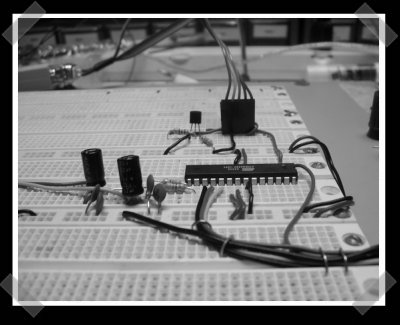
Last, if there is no activity in the imitate mode for more than 5 minutes, PIC-Tengu will fall slept. The brain of this project is a PIC18F2455, whose pins directly activate the LEDs matrix´s rows. There is only one LED column active at any given instant, also determined by the PIC18F2455´s pins, but this time using an intermediary ULN2803. The signal captured by the microphone is amplified using an LM358 before reaching an analog input in the PIC.
The firmware is written in CCS C, and the PIC has been burned using the parallel port version of GTP Lite and WinPIC800.
Electronic schematic, PCB artwork, source code and compiled firmware are available for download in www.villatic.org/carpetaJuanfe
All comments and suggestions are welcome in jfmateos@lycos.es
SMD Component Strip Cutter
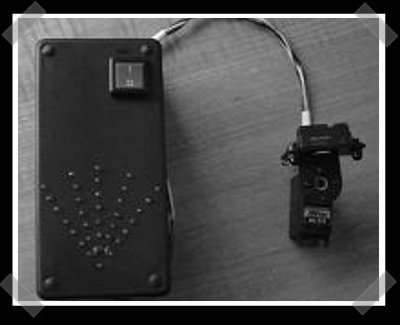
[ErikH] sent in this sweet little device that he and a studymate put together from some spare parts to measure and cut strips of SMD resistors for one of their student organizations. The stepper motor and LCD were salvaged from a printer, an ATMega8 drives it, and a servo drives the cutting mechanism. The video’s not very exciting, but it shows a decent demo of the device.
Grid Enabled USB Microscope

[Jock] sent in this photo gallery showing a Lego Mindstorm automated microscope. I dug up the paper that was published about this hack to find out just what the idea was. It’s a proof of concept showing off automated data collection – the Mindstorms are used to allow the intel QX3 microscope to take data over a grid area. It’s an interesting idea for collecting time series data. The computer interface is a bit overly complex, but the Lego’s make this sort of project accessible to the amateur roboticist.