Quieting Noisy Resistors

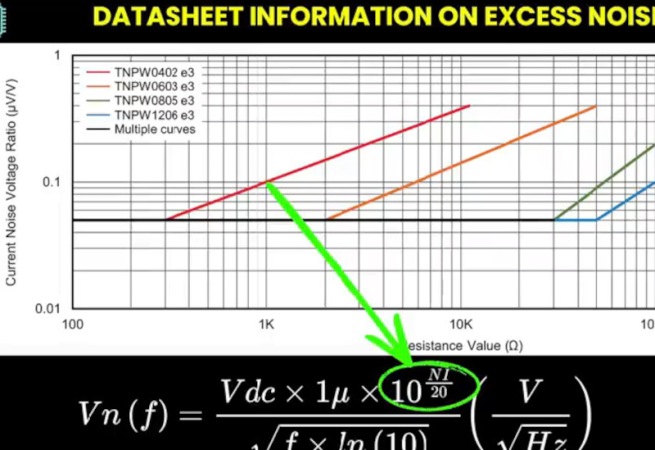
[Hans Rosenberg] has a new video talking about a nasty side effect of using resistors: noise. If you watch the video below, you’ll learn that there are two sources of resistor noise: Johnson noise, which doesn’t depend on the construction of the resistor, and 1/f noise, which does vary depending on the material and construction of the resistor.

In simple terms, some resistors use materials that cause electron flow to take different paths through the resistor. That means that different parts of the signal experience slightly different resistance values. In simple applications, it won’t matter much, but in places where noise is an important factor, the 1/f or excess noise contributes more  to errors than the Johnson noise at low frequencies.
Continue reading “Quieting Noisy Resistors”

Graphene Biosensors Are Extra Quiet

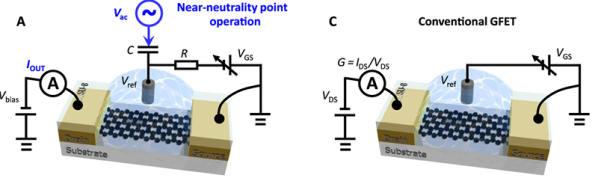
Graphene has attracted enormous interest for electrically detecting chemical and biological materials. However, because the super material doesn’t act like a normal semiconductor, transistors require multiple layers of the material, and that’s bad for 1/f noise especially when the transistors operate at maximum transconductance. Researchers have found a way to operate graphene transistors at a neutral point, significantly reducing 1/f noise while not impacting the sensor’s response.

The team created a proof-of concept sensor that could detect an HIV-related DNA hybridization. The sensor was able to detect very tiny concentrations of the material.

Continue reading “Graphene Biosensors Are Extra Quiet”