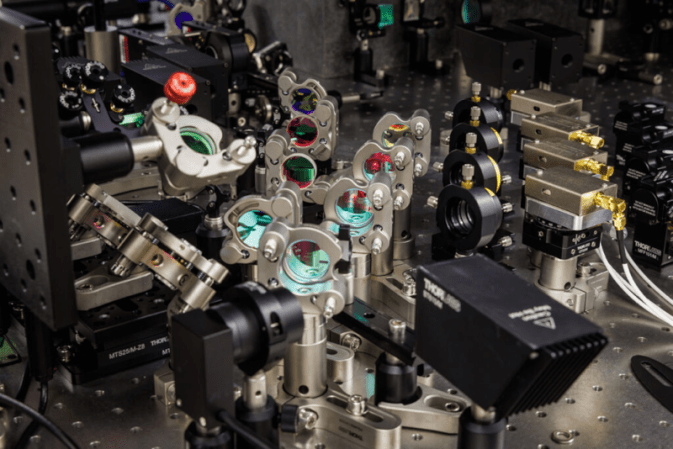
You see it all the time in science fiction: the heroes find old data, read it, and learn how to save the day. But how realistic is that? Forget aliens. Could you read a stack of punch cards or a 9-track tape right now? Probably not, and those are just a handful of decades in the past. Fast forward a few centuries, and punch cards will decay, and tapes will lose their coating. More modern storage is just as bad. It simply isn’t made to last for thousands of years. Microsoft has Project Silica, which aims to store data in quartz glass with a potential lifetime of many thousands of years.
As you might expect, this is a write-once technology. Lasers write the data, and polarization-sensitive microscopes read it back. Electromagnetic fields don’t matter. You can’t accidentally change the data while reading. A square glass platter the size of a DVD can hold about 7 TB of data.
While the program is not a new one, they’ve recently published results using ordinary borosilicate glass (like your Pyrex baking dish is made from) as a storage medium. They say writing is also more efficient, and reading now requires only one camera instead of the three in the original system. The paper identifies birefringent voxel writing, phase voxels, and more.
Obviously, this isn’t for the casual project. But we have to wonder if hackers could do something similar with lower densities, for example. Unlike other methods we’ve seen, no DNA is involved.