Acoustic Drone Detection On The Cheap With ESP32

We don’t usually speculate on the true identity of the hackers behind these projects, but when [TN666]’s accoustic drone-detector crossed our desk with the name “Batear”, we couldn’t help but wonder– is that you, Bruce? On the other hand, with a BOM consisting entirely of one ESP32-S3 and an ICS-43434 I2S microphone, this isn’t exactly going to require the Wayne fortune to pull off. Indeed, [TN666] estimates a project cost of only 15 USD, which really democratizes drone detection.
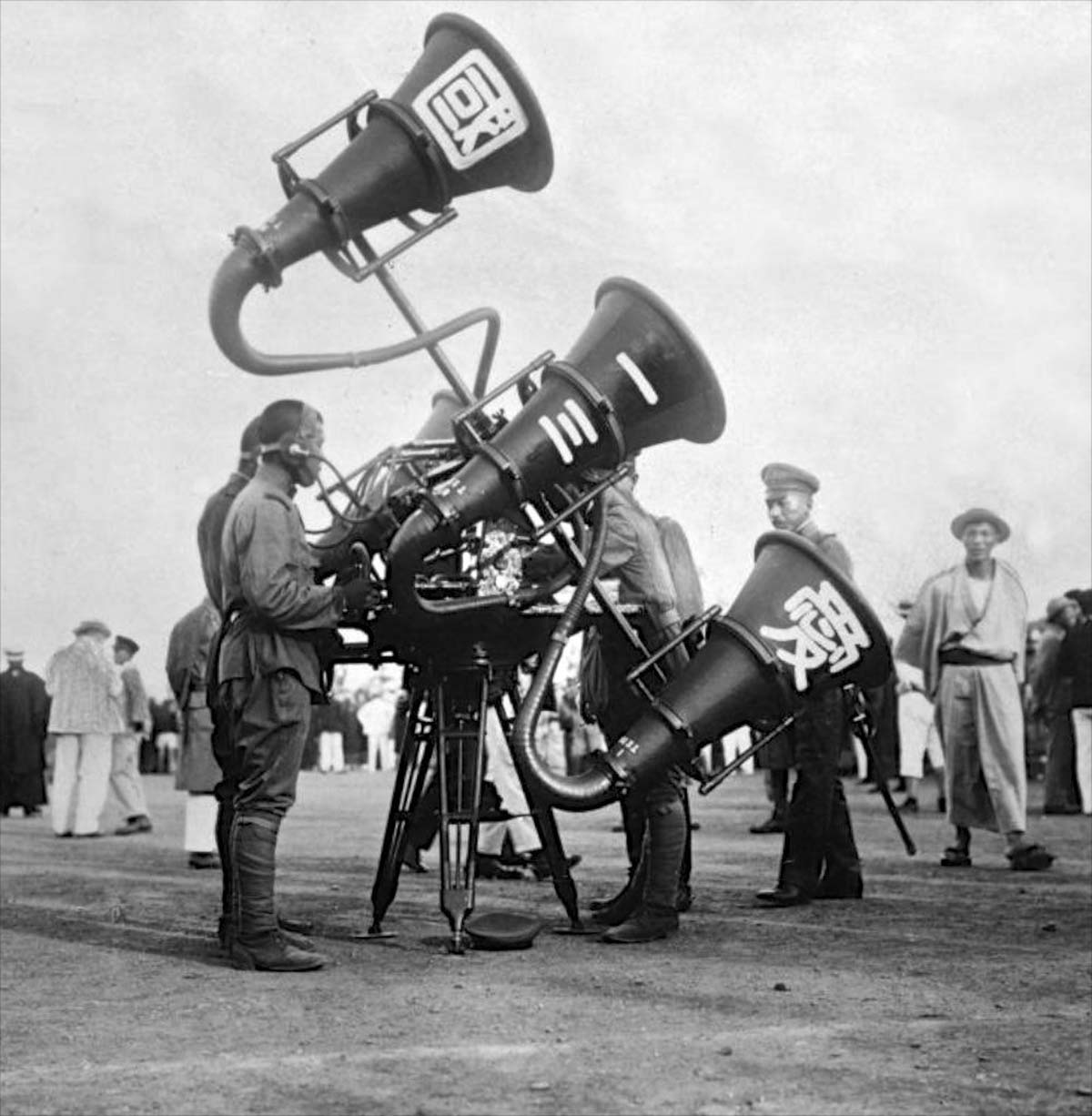
It’s not a tuba–  Imperial Japanese aircraft detector being demonstrated in 1932. Image Public Domain via rarehistoricalphotos.com

The key is what you might call ‘retrovation’– innovation by looking backwards. Most drone detection schema are looking to the ways we search for larger aircraft, and use RADAR. Before RADAR there were acoustic detectors, like the famous Japanese “war tubas” that went viral many years ago. RADAR modules aren’t cheap, but MEMS microphones are– and drones, especially quad-copters, aren’t exactly quiet. [TN666] thus made the choice to use acoustic detection in order to democratize drone detection.

Of course that’s not much good if the ESP32 is phoning home to some Azure or AWS server to get the acoustic data processed by some giant machine learning model.  That would be the easy thing to do with an ESP32, but if you’re under drone attack or surveillance it’s not likely you want to rely on the cloud. There are always privacy concerns with using other people’s hardware, too. [TN666] again reached backwards to a more traditional algorithmic approach– specifically Goertzel filters to detect the acoustic frequencies used by drones. For analyzing specific frequency buckets, the Goertzel algorithm is as light as they come– which means everything can run local on the ESP32. They call that “edge computing” these days, but we just call it common sense.

The downside is that, since we’re just listening at specific frequencies, environmental noise can be an issue. Calibration for a given environment is suggested, as is a foam sock on the microphone to avoid false positives due to wind noise. It occurs to us the sort physical amplifier used in those ‘war tubas’ would both shelter the microphone from wind, as well as increase range and directionality.

[TN] does intend to explore machine learning models for this hardware as well; he seems to think that an ESP32-NN or small TensorFlow Lite model might outdo the Goertzel algorithm. He might be onto something, but we’re cheering for Goertzel on that one, simply on the basis that it’s a more elegant solution, one we’ve dived into before. It even works on the ATtiny85, which isn’t something you can say about even the lightest TensorFlow model.

Thanks to [TN] for the tip. Playboy billionaire or not, you can send your projects into the tips line to see them some bat-time on this bat-channel.
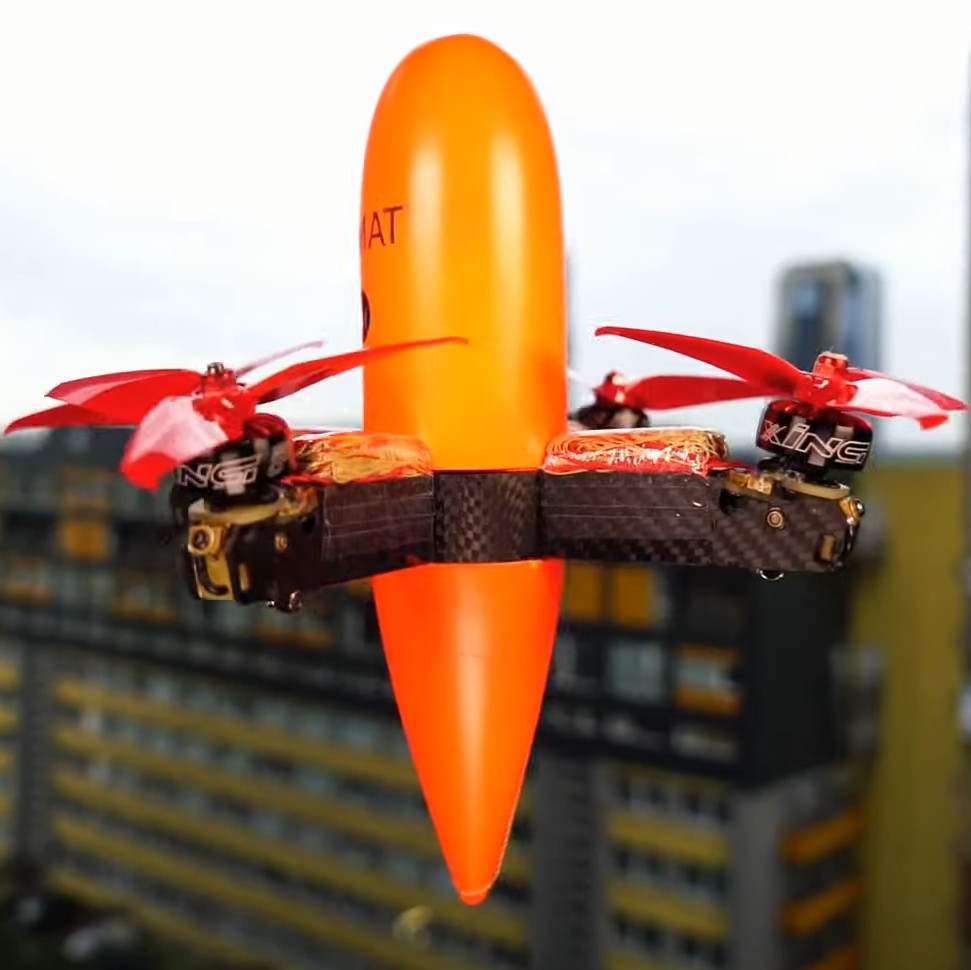
Modular Anti-Drone Drone Sacrifices Itself For Self Defense

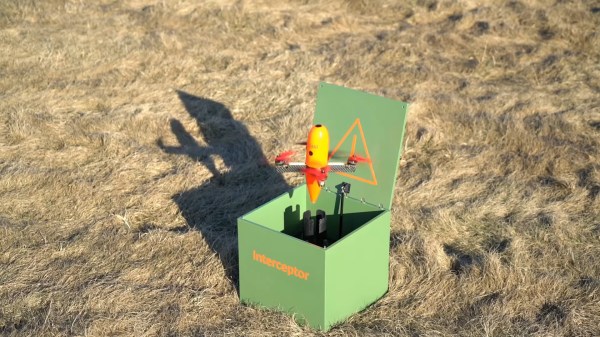
Part Racing Drone, Part RC Airplane, Part Rocket…all Menace. How else could you describe a quadcopter that shoots off at high speed and is designed for taking down other small quadcopters? The Interceptor Drone by [Aleksey] borrows elements from all of the aforementioned disciplines of flying things.

Built with standard racing drone parts, [Aleksey] assures that no prohibited parts are used in its construction. Instead, the Interceptor Drone relies on a very powerful motors and a light weight frame to keep the power to weight ratio in the “rocketing into the sky” category.

A close up shows the details: Detachable motors and rotors and the stowed net.

But what Interceptor Drone would be complete without a way to take its target out of the sky? This is where the biggest divergences begin. The motors are all oriented to point away from the center-line of the craft. Upon command, these motors actually detach from the frame, each spreading out and deploying the corner of a net that’s designed to entangle the rotors of the target, causing its battle with gravity to come to a grinding halt.

How does the Interceptor Drone survive the attack? Without its motors, the core of the quadcopter falls to the earth. Arresting the fall is a parachute much like those used in model rocketry. An audio beacon sounds the alarm to help somebody to find it — a move taken straight from the RC aircraft hobby.

There’s certainly a lot of room to discuss legalities in localities, but regardless of opinion about the craft’s intended use, the system looks very slick, and there are some great hacks baked right in. Don’t want to build a drone-killing-drone? Maybe all you need is a pumpkin and good (bad?) timing.

Continue reading “Modular Anti-Drone Drone Sacrifices Itself For Self Defense”

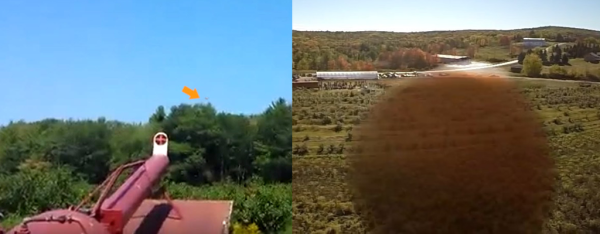
Shoot Down Drones With Pumpkin Cannons

Are you worried about the inevitable drone invasion? Have you been waiting for a defense system that you can trust? Look no further. This video shows just how effective the system is — no smoke and mirrors. Just results.

Forget RF jamming or WiFi hacking. If those devices work at all, they’re probably only good for stopping consumer devices. If you want to be sure that a drone is taken down, you’ll need a pumpkin cannon.

Continue reading “Shoot Down Drones With Pumpkin Cannons”

Radio Jamming Rifle Claimed To Disable Drones

[Battelle], an Ohio-based non-profit R&D firm has just unveiled a device they call the DroneDefender — a long-range anti-drone defense weapon. It almost sounds like they’ve brought the fictional drone hunter’s RF cannon to life. But does it really work?

According to the site, it uses radio frequency disruption to blast unwanted drones out of the sky. Cool concept, but does it actually work? Unlike the hackable MAVLink protocol used by Parrot AR, ArduPilot and a handful of other consumer drones, this weapon uses brute radio signal force to disable any(?) consumer drone.

There’s a video after the break demonstrating a simulated use of the technology, which leaves us a bit confused. They show the drone slowly landing all nicely after being “guided” down by the rifle. If the system is jamming both GPS and the 2.4 GHz control link, the behavior will all depend on the software loaded on the drone. Some will go to a fail-safe mode, which is low throttle or motor power off, assuming the pilot has set fail-safe. Others may attempt to loiter on IMU sensors only.

Continue reading “Radio Jamming Rifle Claimed To Disable Drones”