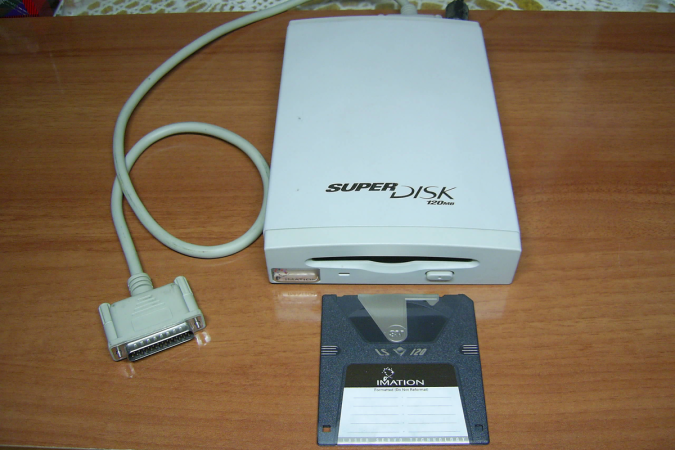
SuperDisk: The Better Floppy That Never Caught On

Once the microcomputer era got going in earnest, the floppy disk quickly supplanted the tape as the portable storage method of choice. They were never particularly large, but they were fine for the average user to get by.

At the same time, it wasn’t long before heavier-duty removable storage solutions hit the market for power users who needed to move many megabytes at a time. In the 1980s, these were primarily the preserve of big print shops, corporate users, and governments. By the 1990s, even the mildly savvy computerist was starting to chafe against the tyrannical 1.44 MB limit of the regular 3.5″ diskette. Against this backdrop launched the SuperDisk—the product which hoped to take the floppy format to the next level, yet faltered all the same.

Continue reading “SuperDisk: The Better Floppy That Never Caught On”
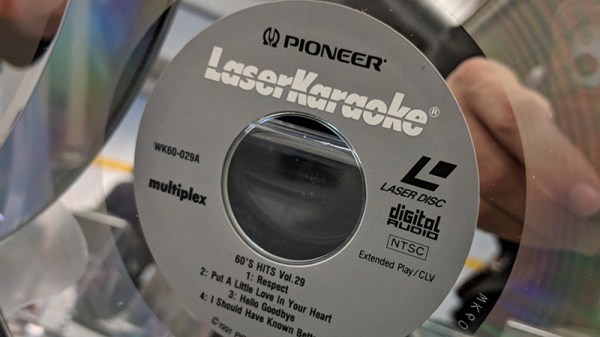
VCF West: All The Floptical Disks

Nowadays, if you want to transfer a file from one computer to another, you’d just send it over the network. In those rare occasions where that won’t work, a USB thumb drive will do. It wasn’t always this way, and it was much more confusing; back in the day when we had floppy drives. We had floptical drives. A single unlabeled 3.5″ floppy disk could be formatted as 360, 720, or 1440k IBM drive, a 400, 800, or 1440k Macintosh drive, an Apple II volume, or an Amiga, or an Acorn, or a host of other logical formats. That’s just one physical format of a floppy disk, and there are dozens more.

For this year’s VCF West, [Foone], hardware necromancer and collector of rare and esoteric removable storage formats, brought out the goods. He has what is probably the most complete collection of different floppy drive formats on the planet, and they were all out on display this weekend.

Continue reading “VCF West: All The Floptical Disks”