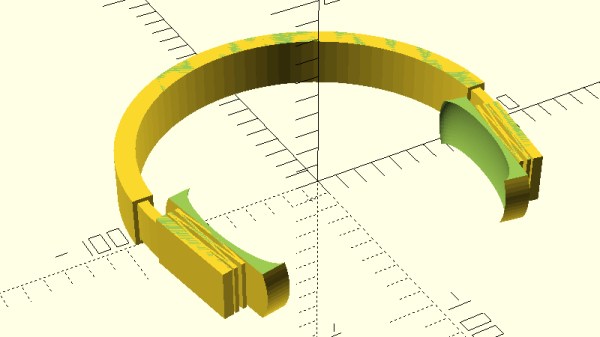
I started writing this from a commuter train passing at speed through the outskirts of London, and my headset had just broken. The flexible joint that attaches one earpiece to the headband has snapped, leaving the earpiece dangling on its cable. This is annoying on its own, but what is annoying me enough to write about it is that this isn’t the first time. This is only the latest in a succession of headsets I’ve taken on the road with me has broken, not because of rough treatment, but simply due to flimsy or bad design. What on earth can I do about this?
Failure Built-In
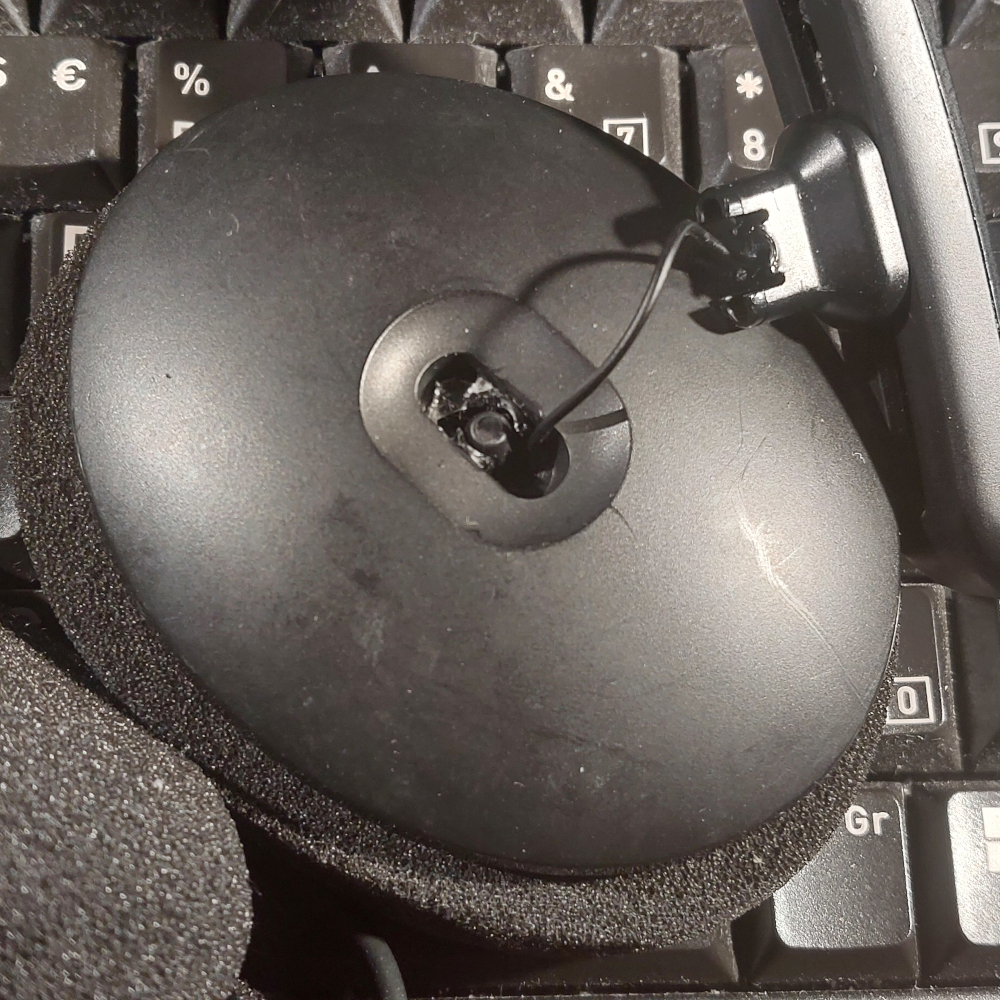
The most recent three have been a JVC whose rotating joint allowing the earpiece to lie at a slight angle with my ear has failed, a quite expensive Logitech whose ear sponges failed closely followed by its USB cable, and now an EPOS whose ball joint has failed.
I repaired the JVC and got a bit more life out of it and I’ll have a go at repairing this EPOS, but that’s hardly the point. I’m paying not inconsequential money and I’m getting good sound quality and electronics, but I’m not getting anywhere near the mechanical quality I need. I could buy a set of tough DJ headphones such as the Sennheiser HD25, but they don’t come with a microphone, they’re not a headset.
So if I can’t buy a decent headset without spending military grade money on one from an F16 fighter, what can I do to make my own? I’m an engineer, damnit!
At its most basic, a headset is a springy band that goes over the head, with an earpiece at its end. But a human head is not a cube with vertical parallel sides, it’s a complex shape and every one is different. So those earpieces have to have some “give” in them in order to fit comfortably against the ear. In the simplest case this is achieved by giving the earpiece a soft surround that moulds itself to the ear, but most headsets incorporate some articulation. The earpiece must rotate a little around a vertical line parallel with the ear, and also with a horizontal line at right angles to the axis of the ear. The EPOS managed both axes by means of a ball joint, while the JVC had a stirrup with pins to achieve the horizontal motion, and a circular joint — the part which broke — for the vertical. In both case the weak point was a thin part of the plastic moulding which broke, on the EPOS a short stalk for the ball in the ball joint, and in the JVC a similar stalk for the circular joint. Any design I come up with must avoid this type of weak point, and spread the load of an earpiece over considerably more material than my broken headset. Continue reading “A Headset Fit For A Hackaday Writer”