
Oceanography As Open As The Seas

With Earth in the throes of climate change and no suitable Planet B lined up just yet, oceanography is as important now as it has ever been. And yet, the instruments relied upon for decades to test ocean conditions are holding steady within the range of expensive to prohibitively expensive. Like any other area of science, lowering the barrier of entry has almost no disadvantages — more players means more data, and that means more insight into the inner workings of the briny deep.
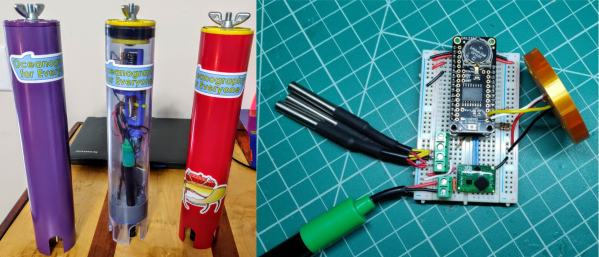
[Oceanography for Everyone] aims to change all that by showing the world just how easy it is to build an oceanographic testing suite that measures conductivity (aka salinity), temperature, and depth using common components. OpenCTD is designed primarily for use on the continental shelf, and has been successfully tested to a depth of 100 meters.

An Adalogger M0 and RTC Featherwing run the show from their waterproof booth in the center of the PVC tube. There’s a 14-bar pressure sensor for depth, a trio of DS18B20s for temperature averaging, and a commercial conductivity probe that gathers salinity data. These sensors are fed through a 3D-printed base plate and ultimately potted in stainless steel epoxy. The other end of the tube is sealed with a mechanical plug that seats and unseats with the whirl of a wingnut.

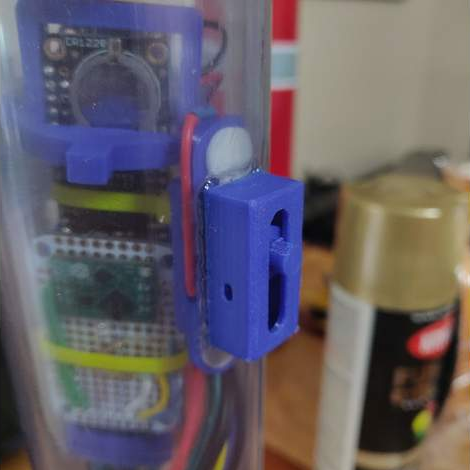
We particularly like the scratch-built magnetic slide switch that turns OpenCTD on and off without the need to open the cylinder. If you’d like to build one of these for yourself, take a deep dive into [Oceanography for Everyone]’s comprehensive guide — it covers the components, construction, and calibration in remarkable detail. The switch is explained starting on page 50. You can find out more about the work Oceanography for Everyone is doing at their site.

As far as cheap waterproof enclosures go, PVC is a great choice. It works well for underwater photography, too.
Retrotechtacular: This Boat Isn’t Sinking… It’s Doing Research

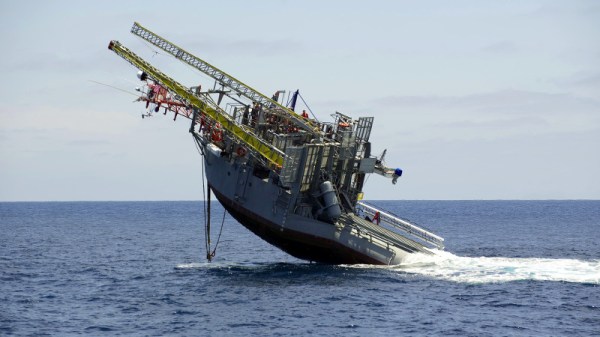
It looks like a ship when it is in port or in transit, and when it use you’d think it’s about to sink. The RP FLIP (for “FLoating Instrument Platform)  is an unpowered research buoy with a very special design designed to provide the most stable and vibration-free platform possible for scientists studying the properties of the sea.

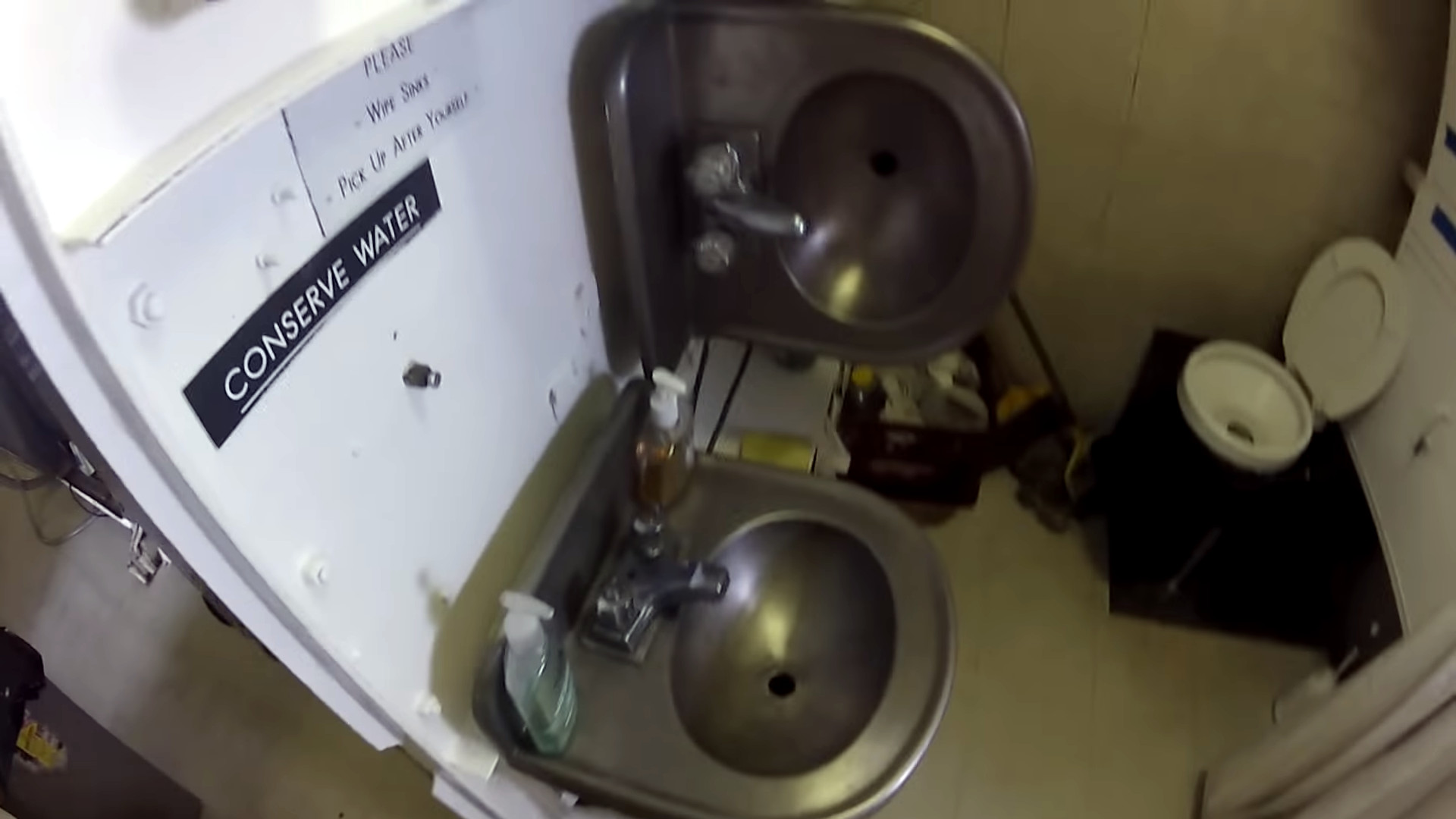
RP FLIP interrior bathroom design has two sinks mounted at 90 degree angles.

Scientific research often places demanding requirements upon existing infrastructure, requiring its own large projects tailored to their individual task. From these unusual needs sometimes come the most curious buildings and machinery. RP FLIP is designed to provide the most stable and vibration-free platform possible for scientists studying the properties of the sea. By flooding tanks in its bow it transfers from horizontal and floating on the surface to vertical and half-submerged when it is deployed. With its stern protruding from the water and pointing skywards it has the appearance of a sinking ship. What’s really neat is that its interior is cleverly designed such that its crew can operate it in either horizontal or vertical positions.

The original impetus for FLIP’s building was the US Navy’s requirement to understand the properties of sound waves in the ocean with relation to their submarines and presumably also those of their Soviet adversaries. Research submarines of the 1950s were not stable enough for reliable measurements, and the FLIP, launched in 1962, was built to address this by providing a far more stable method of placing a hydrophone at depth. Since then it has participated in a significant number of other oceanographic studies as diverse as studying the propagation of waves across the Pacific, and the depth to which whales dive.

The videos below should give a good introduction to the craft. The first one is a glossy promotional video from its operator, the Scripps Institution Of Oceanography, on its 50th anniversary, while the lower of the two is a walkaround by a scientist stationed aboard. In this we see some of the features for operating in either orientation, such as a toilet facilities mounted at 90 degrees to each other.

It appears that FLIP is in good order and with continuing demand for its services that should see it still operating well into the future. Those of us who live near Atlantic waters may never see it in person but it remains one of the most unusual and technically intriguing vessels afloat.

FLIP is not the only 1960s oceanographic research buoy we’ve covered, should you have an interest in such things.

Continue reading “Retrotechtacular: This Boat Isn’t Sinking… It’s Doing Research” →







