

Age-Verification And The World Before Social Media

Although it may be hard to believe for current generations, there was a time when the Internet and the World Wide Web were not as integrated into society as it is today. The only forms of online ‘social media’ that existed came in the form of IRC, forums, BBSes, newsgroups and kin, while obtaining new software for your PC involved generally making your way over to a physical store to buy a boxed copy, at least officially.

In this era – and those before it – age-verification already existed, with various goods ranging from tobacco and alcohol to naughty adult magazines requiring you to pass some form of age check. Much like how movies also got age-gated, so did video games, with a sales clerk taking a very good look at you before selling you that naughty puzzle game or boxed copy of Quake 3.

Today we’re seeing a big fuss being made about online age-verification, with the claim being that it is ‘for the children’, but as any well-adjusted adult can attest to, this is essentially a big bucket of hogwash.

Continue reading “Age-Verification And The World Before Social Media”
Credit: Xinmei Liu

The US Surgeon General’s Case For A Warning Label On Social Media

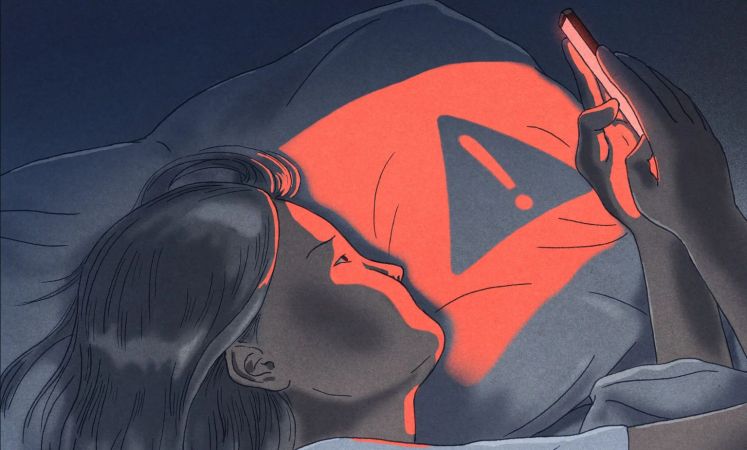
The term ‘Social Media’ may give off a benign vibe, suggesting that it’s a friendly place where everyone is welcome to be themselves, yet reality has borne out that it is anything but. This is the reason why the US Surgeon General [Dr. Vivek H. Murthy] is pleading for a health warning label on social media platforms. Much like with warnings on tobacco products, it’s not expected that such a measure would make social media safe for children and adolescents, but would remind them and their parents about the risks of these platforms.

While this may sound dire for what is at its core about social interactions, there is a growing body of evidence to support the notion that social media can negatively impact mental health. A 2020 systematic review article in Cureus by [Fazida Karim] and colleagues found anxiety and depression to be the most notable negative psychological health outcomes. A 2023 editorial in BMC Psychology by [Ágnes Zsila] and [Marc Eric S. Reyes] concurs with this notion, while contrasting these cons of social media with the pros, such as giving individuals an online community where they feel that they belong.

Ultimately, it’s important to realize that social media isn’t the end-all, be-all of online social interactions. There are still many dedicated forums, IRC channels and newsgroups far away from the prying eyes and social pressure  of social media to act out a personality. Having more awareness of how social interactions affect oneself and/or one’s children is definitely essential, even if we’re unlikely to return to the ‘never give out your real name’ days of  the pre-2000s Internet.









