
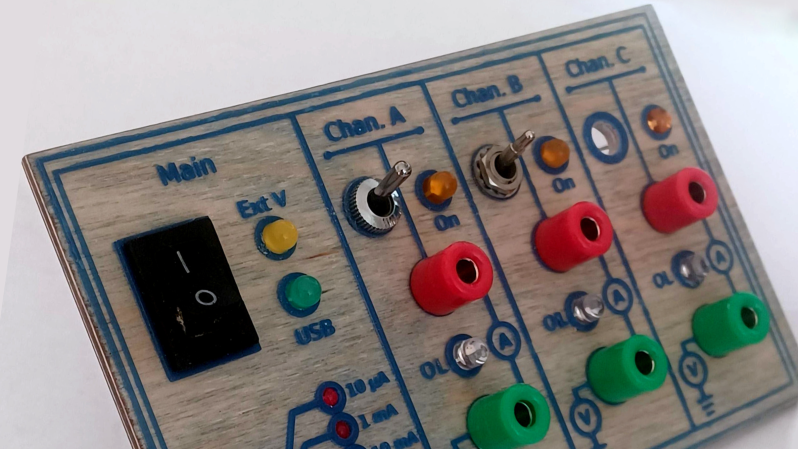
We haven’t seen an instrument panel quite like [bluesyann]’s, which was made by curing UV resin directly onto plywood with the help of a 3D printer and a bit of software work. The result is faintly-raised linework that also makes hand drilling holes both cleaner and more accurate.
The process begins by designing the 2D layout in Inkscape, which has the advantage of letting one work in 1:1 dimensions. A 10 mm diameter circle will print as 10 mm; a nice advantage when designing for physical components. After making the layout one uses OpenSCAD to import the .svg and turn it into a 3D model that’s 0.5 mm tall. That 3D model gets loaded into the resin printer, and the goal is to put it directly onto a sheet of plywood.
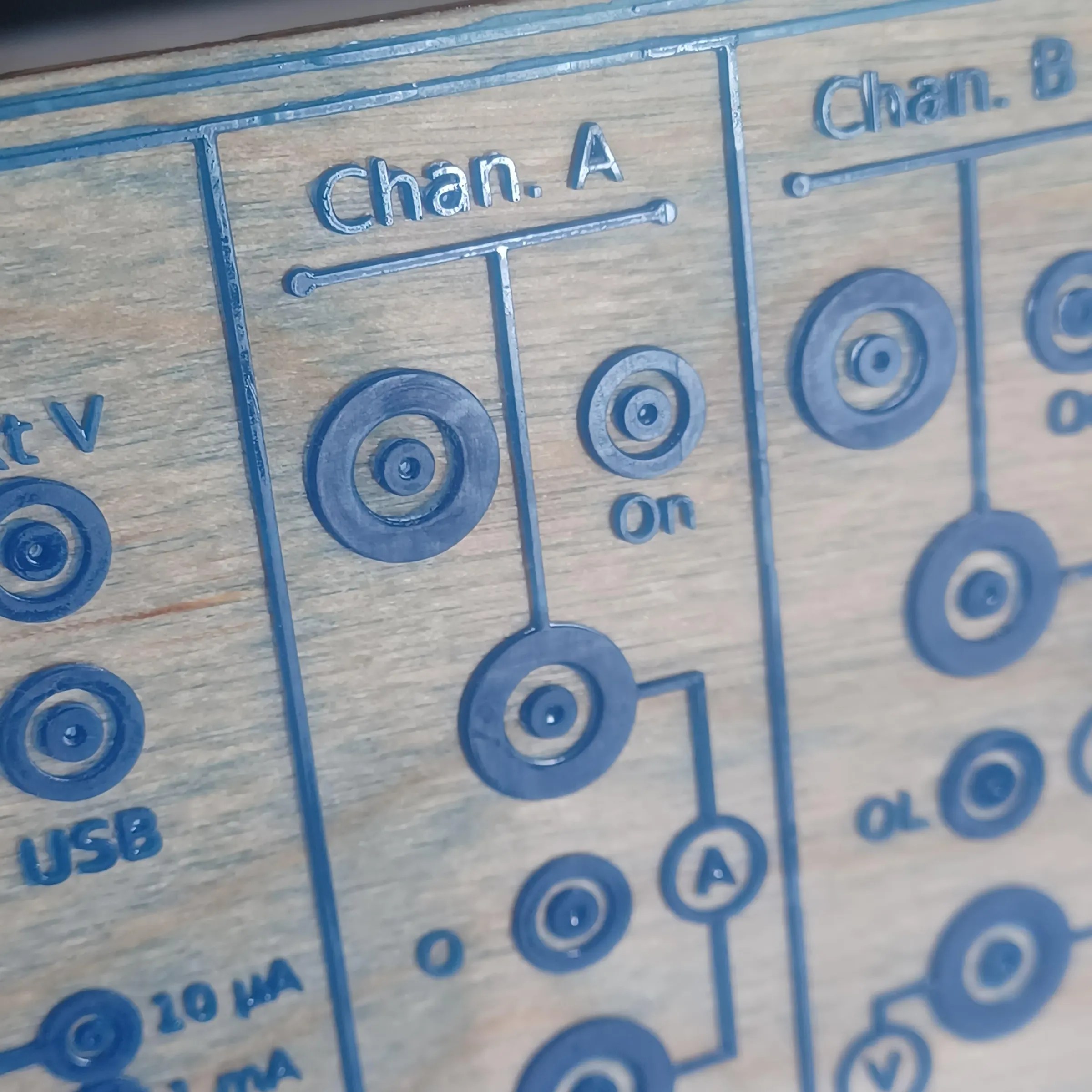
To do that, [bluesyann] sticks the plywood directly onto the 3D printer’s build platform with double-sided tape. With the plywood taking the place of the usual build surface, the printer can cure resin directly onto its surface. Cleanup still involves washing uncured resin off the board, but it’s nothing a soak in isopropyl alcohol and an old toothbrush can’t take care of.
[bluesyann] has a few tips for getting the best results, and one of our favorites is a way to make drilling holes easier and cleaner. Marking the center of a drill hit with a small donut-shaped feature makes a fantastic centering guide, making hand drilling much more accurate. And adding a thick ring around the drill hole ensures clean edges with no stray wood fibers, so no post-drilling cleanup required. Don’t want the ring to stick around after drilling? Just peel it off. There’s a load of other tips too, so be sure to check it out.
A nice front panel really does make a project better, and we’ve seen many different approaches over the years. One can stick laminated artwork onto an enclosure, or one can perform toner transfer onto 3D printed surfaces by putting the design on top of the 3D printer’s build surface, and letting the heat of molten plastic do the work of transferring the toner. And if one should like the idea of a plywood front panel but balk at resin printing onto it, old-fashioned toner transfer works great on wood.












No video of it in action? Then who cares.
Really hard to tell if that’s sarcasm.
I would think vinyl transfer, or even toner transfer or an iron-on tee shirt transfer setup would be alternative approaches.
I’m kind of partial to laser cutting myself,
I read the article. Once they talked about having to re-print the mount so you don’t destroy the screen I was done. No thanks. That’s an expensive repair and not worth it.
Why couldn’t you do the same with fdm?
Change the z stop with some scrap plywood.
I’ve done exactly that, albeit onto a 3d printed plate. I left it affixed to the bed after I printed it, swapped filaments, and printed the labels onto it. I was quite pleased with how it turned out.
Printing onto a previous print also had the advantage of not having to align anything.
What I do is print my labels 0.3 mm high. Then without removing them, I print my panel with cutouts for the labels. I set the first layer height for the panel to 0.3mm and disable elephants foot compensation.
The panel prints around the labels and the two parts fuse together very well. It makes a nice looking panel if you use a textured build plate.
They put the entire plywood piece into the resin bath and then rinsed it off in IPA? It is going to smell like uncured resin for decades. This is an extremely bad idea.