Virus-Based Thermoresponsive Separation Of Rare-Earth Elements

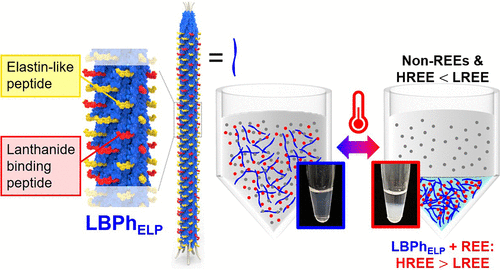
Although rare-earth elements (REEs) are not very rare, their recovery and purification is very cumbersome, with no significant concentrations that would help with mining. This does contribute to limiting their availability, but there might be more efficient ways to recover these REEs. One such method involves the use of a bacteriophage that has been genetically modified to bind to specific REEs and release them based on thermal conditions.

The primary research article inĀ Nano Letters is sadly paywalled, but the supporting information PDF gives some details. We can also look at the preceding article (full PDF) by [Inseok Chae] et al. in Nano Letters from 2024, in which they cover the binding part using a lanthanide-binding peptide (LBP) that was adapted from Methylobacterium extorquens.

With the new research an elastin-like peptide (ELP) was added that has thermoresponsive responsive properties, allowing the triggering of coacervation after the phages have had some time in the aqueous REE containing solution. The resulting slurry makes it fairly easy to separate the phages from the collected REE ions, with the phages ready for another cycle afterwards. Creating more of these modified phages is also straightforward, with the papers showing the infecting of E. coli to multiply the phages.

Whether the recovery rate and ability to scale makes it an economically feasible method of REE recovery remains to be seen, but it’s definitely another fascinating use of existing biology for new purposes.

Unobtanium No More; Perhaps We Already Have All The Elements We Need

It’s been a trope of the news cycle over the past decade or so, that there’s some element which we all need but which someone else has the sole supply, and that’s a Bad Thing. It’s been variously lithium, or rare earth elements, and the someone else is usually China, which makes the perfect mix of ingredients for a good media scare story. Sometimes these things cross from the financial pages to the geopolitical stage, even at times being cited in bellicose language. But is there really a shortage?

The Colorado School of Mines say perhaps not, as they’ve released a paperĀ  from an American perspective pointing out that the USA already has everything it needs but perhaps doesn’t realize it. We’re surprised it seems to have passed unnoticed in a world preoccupied with such matters.

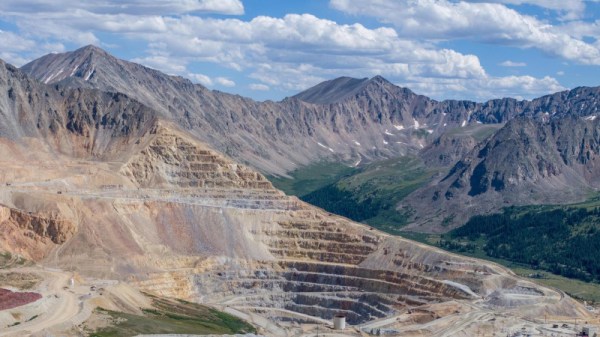
We’ve covered a few stories about mineral shortages ourselves, and some of them even point to the same conclusion reached by the School of Mines, that those mineral riches lie not in the mines of China but in the waste products closer to American industry. In particular they point to the tailings from existing mines, a waste product of which there is a huge quantity to hand, and which once stripped of the metal they were mined for still contain enough of the sought-after ones to more than satisfy need.

The history of mining from medieval lead miners processing Roman tailings to 19th century gold miners discovering that their tailings were silver ore and on to the present day, includes many similar stories. Perhaps the real story is economic both in the publicity side and the mining side, a good scare story sells papers, and it’s just cheaper to buy your molybdenum from China rather than make your own. We’ll keep you posted if we see news of a tailings bonanza in the Rockies.

Recycling Will Be Key To The Electric Vehicle Future

Electric vehicles have become a mainstay in the global automotive marketplace, taking on their gasoline rivals and steadily chewing out their own slice of market share, year after year. Government mandates to end the sale of polluting internal combustion engine vehicles and subsidies on cleaner cars promise to conspire to create an electric vehicle boom.

The result should be much cleaner air, as generating electricity in even the dirtiest power plants is far cleaner and more efficient than millions of individual engines puttering about the place. However, if the electric car is to reign supreme, they’ll need to be built in ever greater numbers. To do that is going to take huge amounts of certain materials that can be expensive and sometimes in very limited supply. Thus, to help support the EV boom, recycling of these materials may come to play a very important role.

Continue reading “Recycling Will Be Key To The Electric Vehicle Future”