A Farewell To Hackaday’s Favorite Falcon 9 Booster

With the notable exception of the Space Shuttle, rockets and spacecraft have always been considered disposable. It’s a slow and expensive way to travel, akin to building a new airliner for every flight, but it was the easiest option. These vehicles have always represented the pinnacle of engineering and material science of their time, and just surviving the trip to space once was an incredible accomplishment. To have another go around would have been asking too much of the technology. Even looking back on the Space Shuttle program, there’s plenty of debate about whether or not the reusable design really paid off in the end.

So SpaceX’s ability to land, refurbish, and refly the first stage of their Falcon 9 booster is no small accomplishment. After demonstrating the idea was possible in 2017, the company made numerous changes to the latest iteration of the rocket with reusability in mind. Known as Block 5, this version of the Falcon 9 is designed to be more survivable and require minimal servicing between flights. The company says its cheaper and faster to reuse the Block 5 than it would be to build a new one for each flight, allowing the company to approach spaceflight more like commercial aviation.

Falcon 9 launch and landing streaks
Falcon 9 launch and landing streaks. (Source: SpaceX)

With a fleet of Block 5 boosters now in rotation, SpaceX has given them serial numbers not unlike an airplane’s tail number. It might not be the kind of thing the general public would normally be aware of, but these serial numbers have allowed a dedicated community of space aficionados to keep track of the missions each booster has flown.

Unfortunately the story of one of these rockets, officially referred to as “Cores” in SpaceX parlance, was recently cut short. Core B1056, returning from the Starlink 4 mission on February 17th, failed to land on the autonomous spaceport drone ship (ASDS) Of Course I Still Love You and splashed down in the ocean. It’s still unclear what condition the booster was in after its soft landing in the water, but when the recovery ships returned to port empty handed, there was no question as to the fate of B1056.

From a purely business standpoint, the failure of any of SpaceX’s boosters means lost time and revenue. But in some ways B1056 had established itself as the vanguard of the fleet, managing to either set or break a number of records in its relatively short life. The destruction of the most thoroughly flight proven Block 5 booster is a stark reminder that there’s very little about spaceflight that could be called routine.

Continue reading “A Farewell To Hackaday’s Favorite Falcon 9 Booster”

Rocket Lab Sets Their Sights On Rapid Reusability

Not so very long ago, orbital rockets simply didn’t get reused. After their propellants were expended on the journey to orbit, they petered out and fell back down into the ocean where they were obliterated on impact. Rockets were disposable because, as far as anyone could tell, building another one was cheaper and easier than trying to reuse them. The Space Shuttle had proved that reuse of a spacecraft and its booster was possible, but the promised benefits of reduced cost and higher launch cadence never materialized. If anything, the Space Shuttle was often considered proof that reusability made more sense on paper than it did in the real-world.

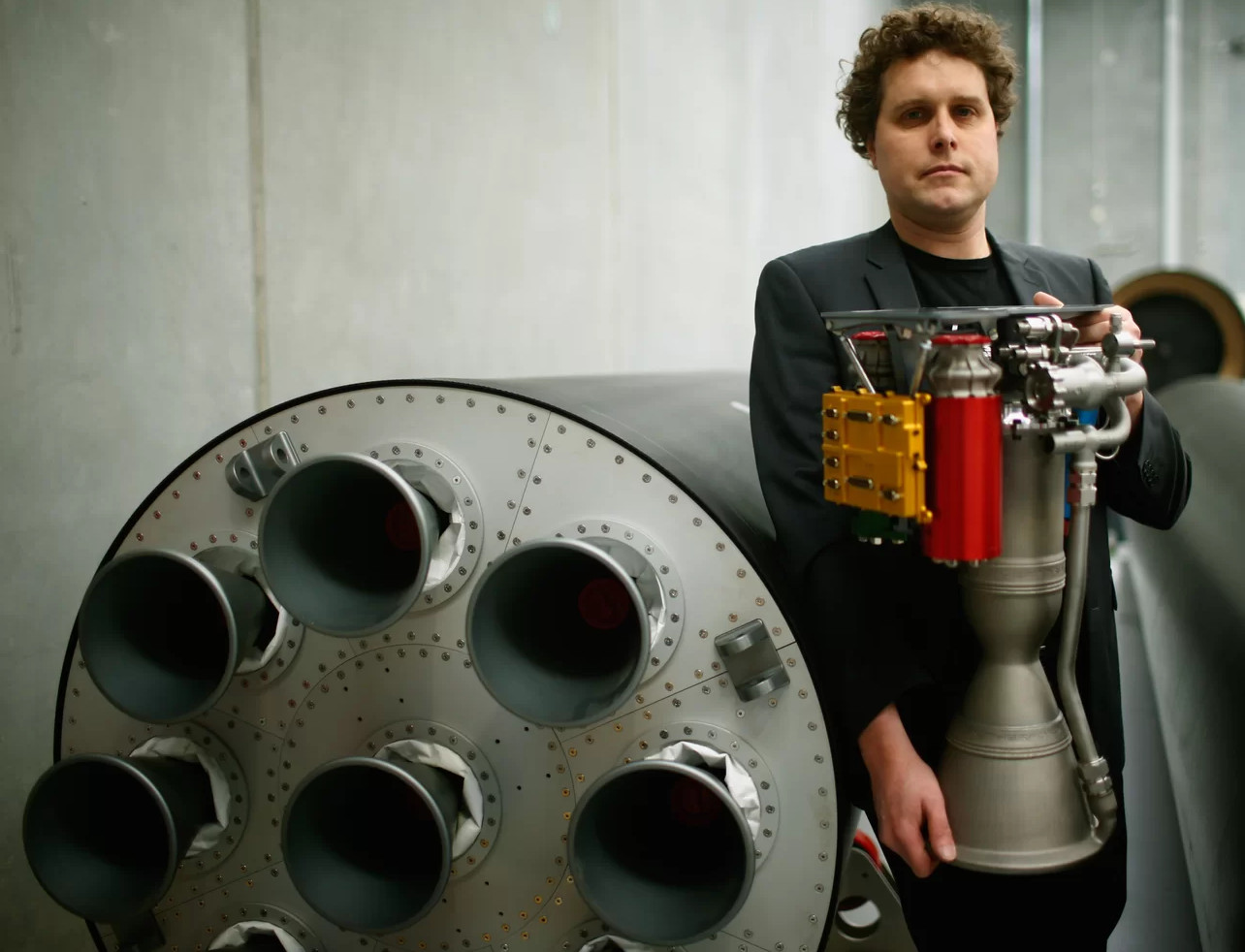
Rocket Lab CEO Peter Beck with Electron rocket

But that was before SpaceX started routinely landing and reflying the first stage of their Falcon 9 booster. Nobody outside the company really knows how much money is being saved by reuse, but there’s no denying the turn-around time from landing to reflight is getting progressively shorter. Moreover, by performing up to three flights on the same booster, SpaceX is demonstrating a launch cadence that is simply unmatched in the industry.

So it should come as no surprise to find that other launch providers are feeling the pressure to develop their own reusability programs. The latest to announce their intent to recover and eventually refly their vehicle is Rocket Lab, despite CEO Peter Beck’s admission that he was originally against the idea. He’s certainly changed his tune. With data collected over the last several flights the company now believes they have a reusability plan that’s compatible with the unique limitations of their diminutive Electron launch vehicle.

According to Beck, the goal isn’t necessarily to save money. During his presentation at the Small Satellite Conference in Utah, he explained that what they’re really going after is an increase in flight frequency. Right now they can build and fly an Electron every month, and while they eventually hope to produce a rocket a week, even a single reuse per core would have a huge impact on their annual launch capability:

If we can get these systems up on orbit quickly and reliably and frequently, we can innovate a lot more and create a lot more opportunities. So launch frequency is really the main driver for why Electron is going reusable. In time, hopefully we can obviously reduce prices as well. But the fundamental reason we’re doing this is launch frequency. Even if I can get the stage back once, I’ve effectively doubled my production ratio.

But, there’s a catch. Electron is too small to support the addition of landing legs and doesn’t have the excess propellants to use its engines during descent. Put simply, the tiny rocket is incapable of landing itself. So Rocket Lab believes the only way to recover the Electron is by snatching it out of the air before it gets to the ground.

Continue reading “Rocket Lab Sets Their Sights On Rapid Reusability”

Refillable Canned Air


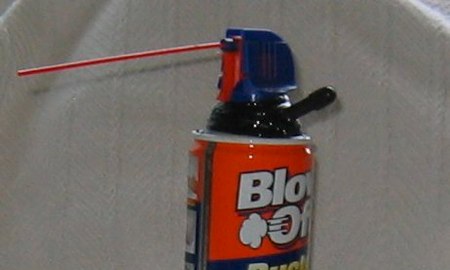
While not very technical, [3eff_Jeff] posted an interesting modification to an empty air canister that makes it refillable. He was tired of drilling holes in the ozone, so he carefully drilled a hole into the top of the can instead. In the name of caution, he made sure the can was completely empty first by tying the trigger down with a rubber band. After waiting a while he carefully drilled the hole using an oil lubricant, and then epoxied in a Schrader valve from a leftover bike tire tube.

Due to compression of the air as it is pumped into the can, it becomes quite warm. He found that if the can is allowed to cool to room temperature, the air would become very cold once leaving the canister, which would cause condensation problems. So he uses it right after filling, and then empties it out when not in use.

We do not recommend anyone trying this, but it is a unique way to make a commonly used disposable resource in the computer field reusable. If we can use something more than once, we’re definitely for it. That’s why we support recycling components that would otherwise make their way to the landfill.