Rooftop Camper For Roofless Vehicle

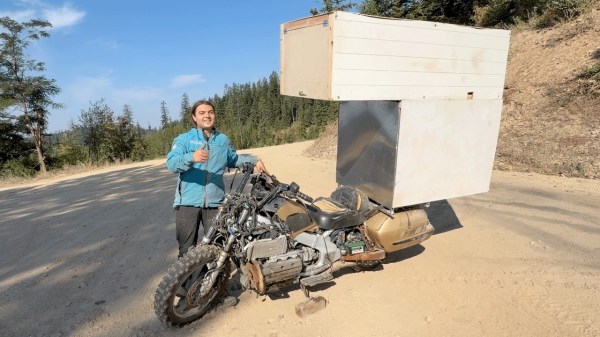
The Honda Goldwing is one of the more famous motorcycles ever produced. It’s known for its reliability and comfort, but also for being one of the first motorcycles Honda rolls out new technology with. It was the first to have a factory-installed airbag as well as integrated GPS, and is now largely associated for being a sort of two-wheeled RV with how many creature comforts it supports for long-distance riders. [Matt] has a Goldwing of his own, and is taking that RV-like feeling to the extreme with a rooftop camper for this motorcycle.

Of course, motorcycles don’t have roofs, but if this Goldwing had one this camper would definitely be above that. Goldwings are already heavy enough without an enormous weight dramatically increasing the center of gravity, and [Matt] certainly had his problems with that along the way. But before this adventure he had modified it into a hill climber, removing a lot of the extraneous equipment from it. Attaching some metal frame and a lightweight camper shell to it didn’t seem like too much of a stretch from there, so he got to work with a welder. At the end he has a box that’s just barely big enough for him to sleep in but is more or less functional as a camper.

Perhaps unsurprisingly, [Matt] dropped this more than once on its maiden voyage, and one of those falls damaged a wiring harness that caused his battery to drain in the night. Luckily he was not too far from home on the test drive. We’d tend to think that this camper won’t be one that [Matt] keeps working on (although we’d imagine a tricycle kit might solve his center of gravity issues) but since he’s built some other interesting campers in the past we’re not too sure we’d count this one out just yet.
Heating A Home With Sunlight… And Water

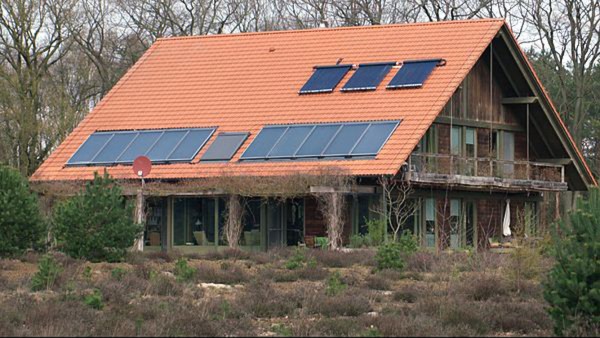
The sun is a tremendous source of energy, and while photovoltaic panels are an easy way to harvest some of that energy especially now that prices for them are incredibly low, there are plenty of other ways to tap into that free energy as well. [Engelbert] was looking for alternative ways to heat his house since traditional methods were prohibitively expensive, and ended up building a heat exchanger using solar-heated water to cover his home heating needs. (Google Translate from Dutch)

The system uses several large roof-mounted hot water heating panels. The heat captured by them is then pumped into an underground pipe network which is able to warm up a large area of earth in the summer. In the winter, that heat is able to be extracted back out of the earth and used to heat his home. The system includes almost three kilometers of pipe which are buried two meters below grade, so this will probably not be a weekend project, but it still cost much less than the €80,000 to install gas heating in his home.

[Engelbert] is able to use this self-built system to keep his home and another smaller building at a constant 23°C all year. He actually overbuilt the system slightly and has since disconnected almost half of the pipes, but we certainly understand the desire to over-engineer things around here. The only problem he has had is with various government entities that are slow to adopt energy-efficient systems like these. Perhaps the Dutch government can take some notes from the Swiss when it comes to installing geothermal systems like these.

Thanks to [Jero] for the tip!

Long Range WiFi Broadcasts Open-Source Video Conferencing

WiFi is an ubiquitous feature of the modern landscape, but due to power restrictions on most hardware alongside the high-frequency signal it’s typically fairly limited in range. This of course leads to frustration where a WiFi signal can be seen, but the connection is unreliable or slow. While most would reach for a range extender or other hardware bridge, [tak786] was able to roll out a better solution for his workplace by using a high-gain antenna and a single-board computer which gets him an amazing kilometer-wide WiFi network.

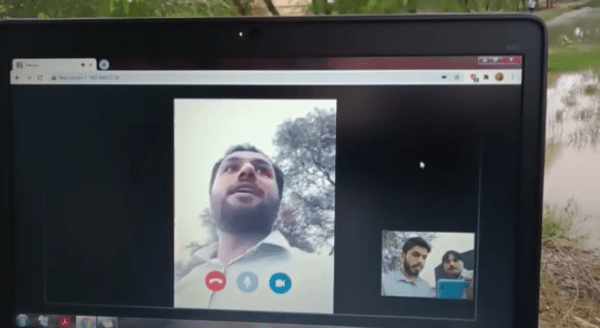
The build uses a 10 dBi antenna from TP-Link that’s rated for outdoor use and a single-board computer which acts as a sort of router. The antenna is placed at the top of a building which certainly helps with the extreme range as well. This setup doesn’t actually broadcast an open Internet connection, though. [tak786]’s employer needed a teleconferencing solution for their building, and he also created a fully open-source video conferencing solution called trango that can run on any LAN and doesn’t require an Internet connection. The WiFi setup in this build is effectively just a bonus to make the conferencing system more effective.

[tak786] is planning on releasing a whitepaper about this build shortly, but for now you can access the source code for the video conferencing system at his GitHub page. And, before anyone jumps to conclusions, apparently this is well within FCC rules as well. Some of the comments in the linked Reddit post suggest that with an amateur radio license this system could be pushed much further, too. If you need more range than a kilometer, though, it’s not too much more difficult to do once you have all the right hardware.