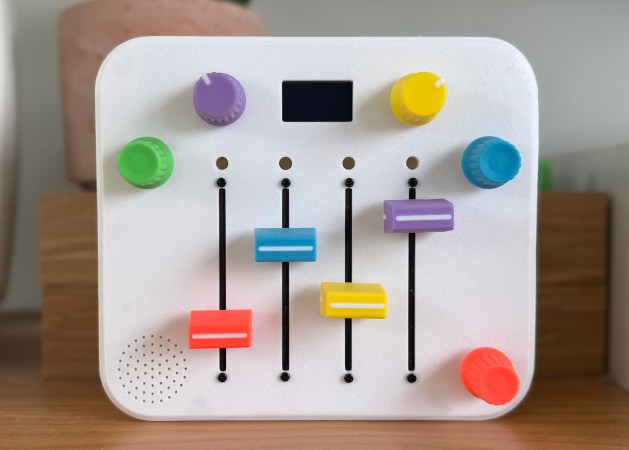
A small, colorful synth built for a 3-year-old. It has five pots, four sliders, and a tiny screen.

Baby’s First Synth Was Daddy’s First Project

We absolutely adore inspired labor-of-love tales such as this one. [Alastair] wanted to build a synth for his daughter’s third birthday in spite of having no prior hardware knowledge. It became the perfect excuse to learn about CAD, microcontrollers, PCB design, and of course, 3D printing.

So, why a synth for a toddler? Aside from plain old ‘why not?’, the story goes that she received a Montessori busy-type board which she seemed to enjoy, and it reminded [Alastair] of the control surface of a synth. He wondered how hard it could be to build something similar that made sound and didn’t require constant button presses.

[Alastair] began his journey by dusting off a 15-year-old Arduino Inventors Kit. The initial goal was to get potentiometer readings and map them to 12 discrete values, and then emit MIDI messages. This was easy enough, and it was time to move to a synth module and an Elegoo Nano.

The full adventure is definitely worth the read. Be sure to check out the pink version in action after the break. You really don’t wanna miss the lil’ panda bear. Trust us.

Continue reading “Baby’s First Synth Was Daddy’s First Project”
Arduino Synthesizer Uses Modified Slide Pots

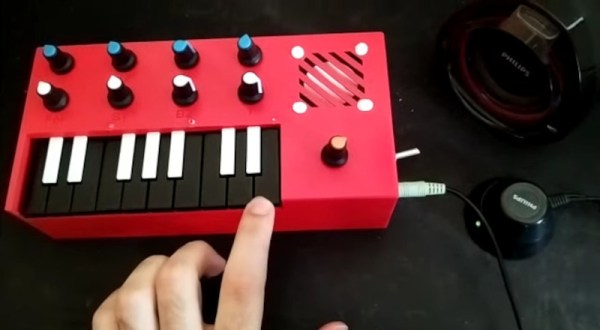
There comes a point in every Arduino’s life where, if it’s lucky, it becomes a permanent fixture in a project. We can’t think of too many better forever homes for an Arduino than inside of a 3D-printed synthesizer such as this 17-key number by [ignargomez] et al.

While there are myriad ways to synthesizer, this one uses the tried-and-true method of FM synthesis courtesy of an Arduino Nano R3. In addition to the 17 keys, there are eight potentiometers here — four are used for FM synthesis control, and the other four are dedicated to attack/delay/sustain/release (ADSR) control of the sound envelope.

One of the interesting things here is that [ignargomez] and their team were short a few regular pots and modified a couple of slide pots for circular use — we wish there was more information on that. As a result, the 3D printed enclosure underwent several iterations. Be sure to check out the brief demo after the break.

Don’t have any spare Arduinos? The BBC Micro:bit likes to make noise, too.

Continue reading “Arduino Synthesizer Uses Modified Slide Pots”

Tune Into The Bonnaroo That No One Gets To Go To

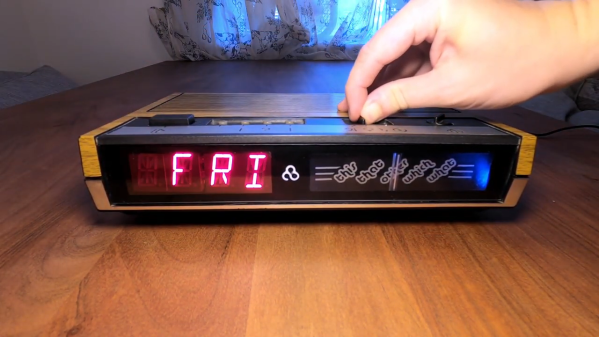
Just like everything else in 2020, the four-day, multi-stage festival of music and art known as Bonnaroo has been cancelled. This would have been [Guy Dupont]’s fifth year making the journey to Tennessee with his friend. Since they couldn’t go, [Guy] decided to build an interactive Bonnaroo mix tape into an 80s clock radio as a birthday present.

[Guy] was able to re-purpose all the original buttons and dials to navigate through the schedule of acts that would have performed across four days and five stages. The conveniently four-way function slider is used to choose the day, and the radio tuning dial selects the stage, complete with delightful static between the positions. The rest of the buttons move back and forth through the scheduled set times, and one will scroll the track and artist name across the 16-segment displays. The snooze button has the honor of being the play/pause button.

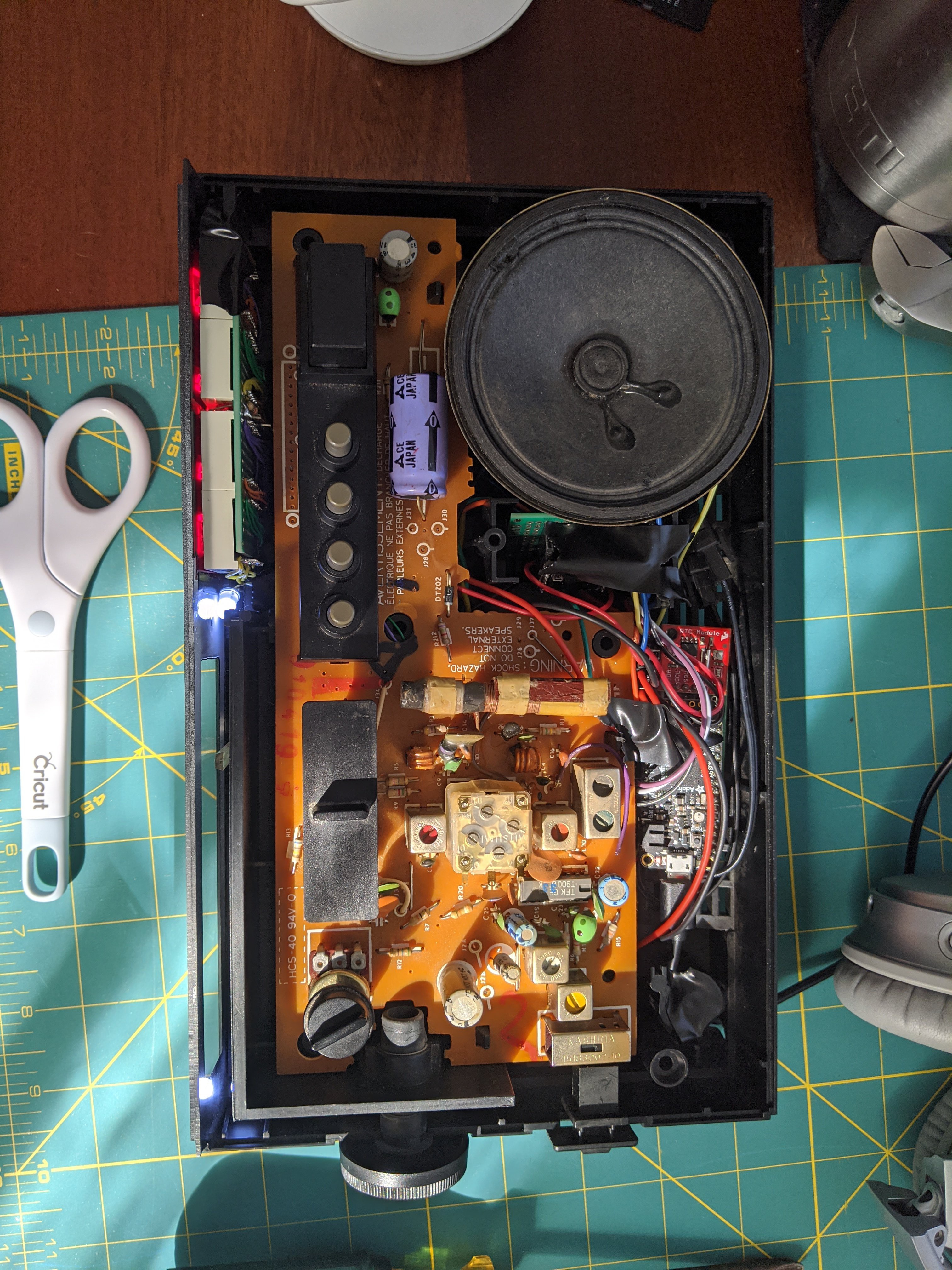
All the inputs are controlled with a Feather M4 express, and the music comes through a DFPlayer Mini. We love that [Guy] was able to repurpose the analog tuning dial by coupling it to a slide potentiometer that fit perfectly in a slot on the underside of the plastic. Stay tuned for a great video that starts with an explanation and demo and then goes into the build.

Though the utility of the clock radio may have been supplanted by cell phone alarms and doomscrolling, that just means that there are theoretically more of them to gut and turn into other things, like this Fallout-inspired luggable Pip-Boy.

Continue reading “Tune Into The Bonnaroo That No One Gets To Go To”