Tolerating Delay With DTN

The Internet has spoiled us. You assume network packets either show up pretty quickly or they are never going to show up. Even if you are using WiFi in a crowded sports stadium or LTE on the side of a deserted highway, you probably either have no connection or a fairly robust, although perhaps intermittent, network. But it hasn’t always been that way. Radio networks, especially, used to be very hit or miss and, in some cases, still are.

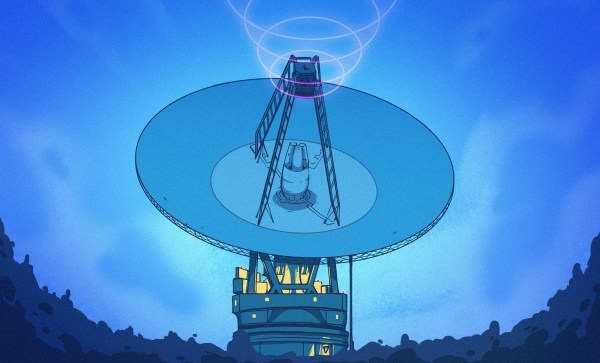
Perhaps the least reliable network today is one connecting things in deep space. That’s why NASA has a keen interest in Delay Tolerant Networking (DTN). Note that this is the name of a protocol, not just a wish for a certain quality in your network. DTN has been around a while, seen real use, and is available for you to use, too.

Think about it. On Earth, a long ping time might be 400 ms, and most of that is in equipment, not physical distance. Add a geostationary orbital relay, and you get 600 ms to 800 ms. The moon? The delay is 1.3 sec. Mars? Somewhere between 3 min and 22 min, depending on how far away it is at the moment. Voyager 1? Nearly a two-day round trip. That’s latency!

Continue reading “Tolerating Delay With DTN”

Hands On With Boondock Echo

Perhaps no words fill me with more dread than, “I hear there’s something going around.” In my experience, you hear this when some nasty bug has worked its way into the community and people start getting whatever it is. I’m always on my guard when I hear about something like this, especially when it’s something really unpleasant like norovirus. Forewarned is forearmed, after all.

Since I work from home and rarely get out, one of the principal ways I keep apprised of what’s going on with public health in my community is by listening to my scanner radio. I have the local fire rescue frequencies programmed in, and if “there’s something going around,” I usually find out about it there first; after a half-dozen or so calls for people complaining of nausea and vomiting, you get the idea it’s best to hunker down for a while.

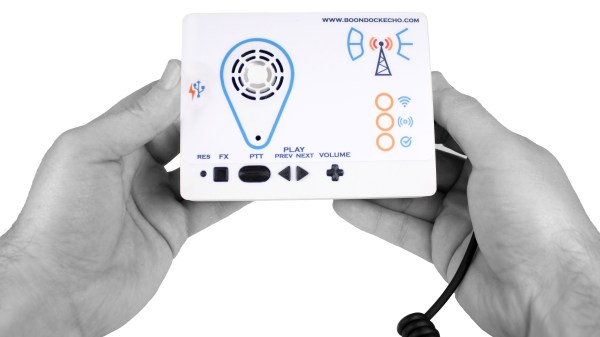
I manage to stay reasonably well-informed in this way, but it’s not like I can listen to my scanner every minute of the day. That’s why I was really excited when my friend Mark Hughes started a project he called Boondock Echo, which aims to change the two-way radio communications user experience by enabling internet-backed recording and playback. It sounded like the perfect system for me — something that would let my scanner work for me, instead of the other way around. And so when Mark asked me to participate in the beta test, I jumped at the chance.

Continue reading “Hands On With Boondock Echo”