
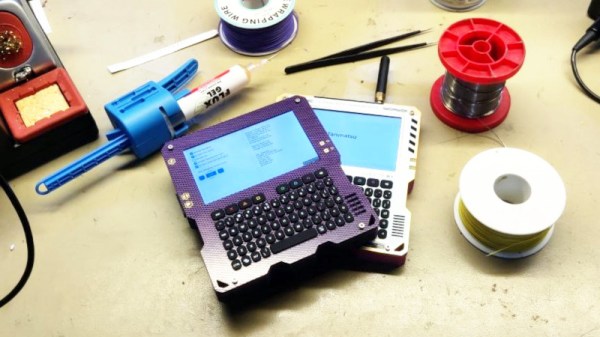
Review: The Tanmatsu, A Year On

About 18 months ago, we brought you a sneak peek at a handheld that started life in the Dutch conference badge scene. At the time it showed promise, but its software wasn’t ready for a fair review. Now it has both a stable operating system and a growing software library. It’s time to put it through its paces and see what it can do.

A Handheld Computer For Hackers
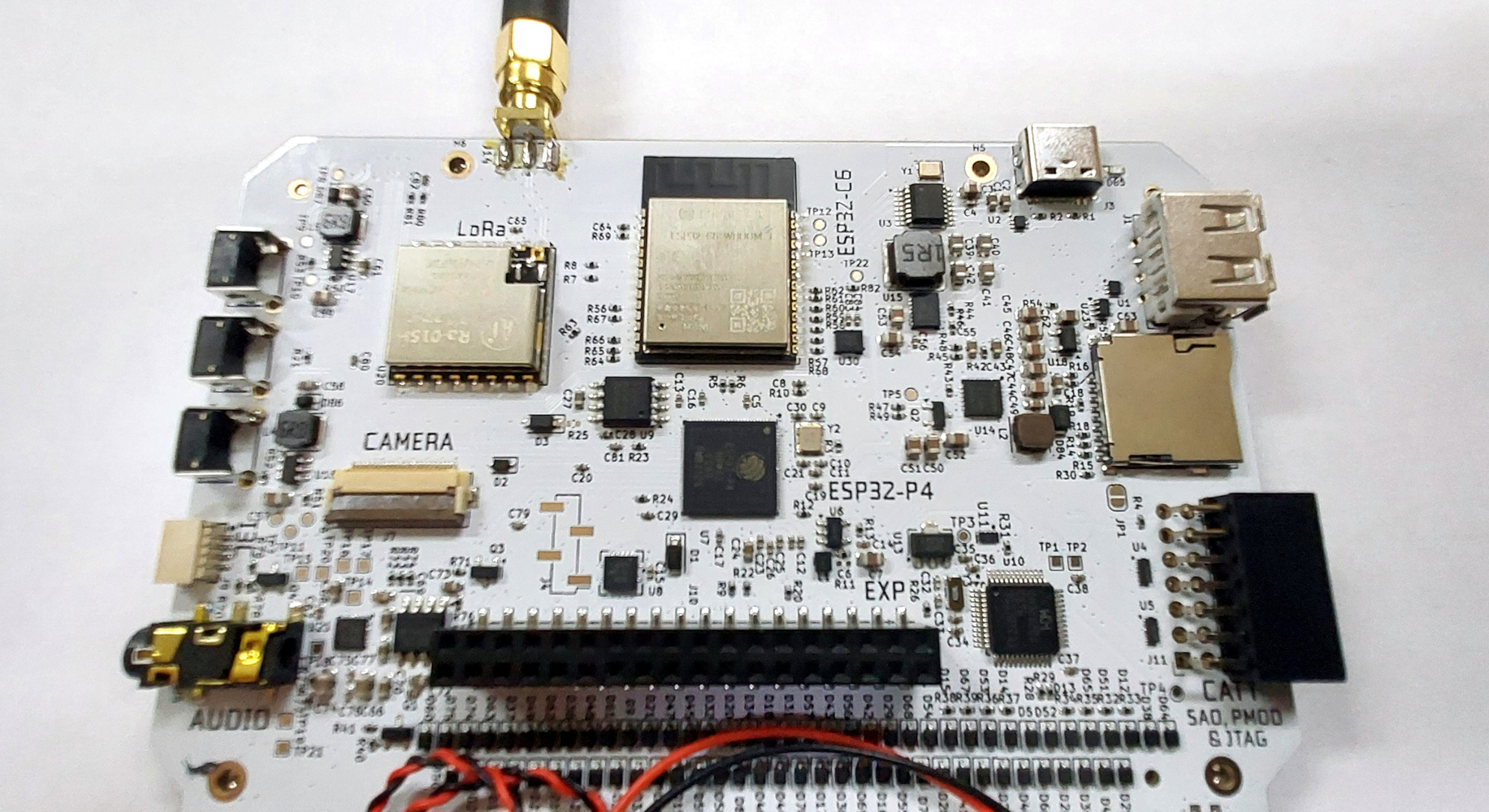
The Tanmatsu PCB, showing all the different parts.
The bare PCB, with the expansion connector bottom centre.

The Tanmatsu (Japanese for “Terminal”), is a general putpose palmtop computer based around an ESP32-P4 application processor from Espressif. It takes the form of a PCB and PETG 3D printed sandwich, with the front face PCB sporting a silicone QWERTY keyboard and an 800×480 MIPI DSI display. The keyboard should be familiar to many readers, being the same moulding as the Solder Party KeebDeck which has appeared on other devices.

Under the hood that P4 has two 400MHz RISC-V cores and 32MB of PSRAM with 16MB of Flash, and there’s an ESP32-C6 for WiFi, BLE and IEEE 802.15.4 mesh networking. There’s an Ebyte LoRa module with an SMA antenna too, which can be had in 868, or 915MHz versions depending on where in the world you live. Continue reading “Review: The Tanmatsu, A Year On”


One To Watch For In 2025: Tanmatsu

If you’ve used the Espressif series of processors, perhaps you’ll have heard of their upcoming ESP32-P4. This is an application processor, with dual RISC-V cores at 400 MHz, and save for a lack of an MMU, a spec sheet much closer to the kind of silicon you’d find in single board computers with pretensions towards being a mini-PC.

It was announced a year ago and there have been limited numbers of pre-release versions of the chip available to developers, but thus far there have been very few boards featuring it. We’re excited then to note that a P4-based board we’ve been watching for a while is finally breaking cover, and what’s more, you can now pre-order one.

The Tanmatsu (Japanese for “Terminal”) is an all-in-one palmtop computer for hackers, with a QWERTY keyboard and an 800×480 DSI display. It’s designed with plenty of expansion in mind, and it’s got space on board for a LoRa radio. The reason we’re interested is that it comes from some of our friends in the world of event badges, so we’ve seen and handled real working prototypes, and we know that its makers come from a team with a proven record in manufacture and delivery of working hardware. The prototype we saw had hardware that was very close to the final version, and an operating system and software that was still under development but on track for the April release of the device. It will be fully open-source in both hardware and software.

We liked what we saw and have pre-ordered one ourselves, so we’ll be sure to bring you a closer look when it arrives.







