

Things are not looking good for iRobot. Although their robotic Roomba vacuums are basically a household name, the company has been faltering financially for some time now. In 2024 there was hope of a buyout by Amazon, who were presumably keen to pull the bots into their Alexa ecosystem, but that has since fallen through. Now, by the company’s own estimates, bankruptcy is a very real possibility by the end of the year.
 Hackaday isn’t a financial blog, so we won’t get into how and why iRobot has ended up here, although we can guess that intense competition in the market probably had something to do with it. We’re far more interested in what happens when those millions of domesticated robots start getting an error message when they try to call home to the mothership.
We’ve seen this scenario play out many times before — a startup goes belly up, and all the sudden you can’t upload new songs to some weirdo kid’s media player, or the gadget in your fridge stops telling you how old your eggs are. (No, seriously.) But the scale here is unprecedented. If iRobot collapses, we may be looking at one of the largest and most impactful smart-gadget screw overs of all time.
Luckily, we aren’t quite there yet. There’s still time to weigh options, and critically, perform the kind of research and reverse engineering necessary to make sure the community can keep the world’s Roombas chugging along even if the worst happens.
The Worst-Case Scenario
So let’s say iRobot folds tomorrow. What’s likely to actually happen to all those Roombas?
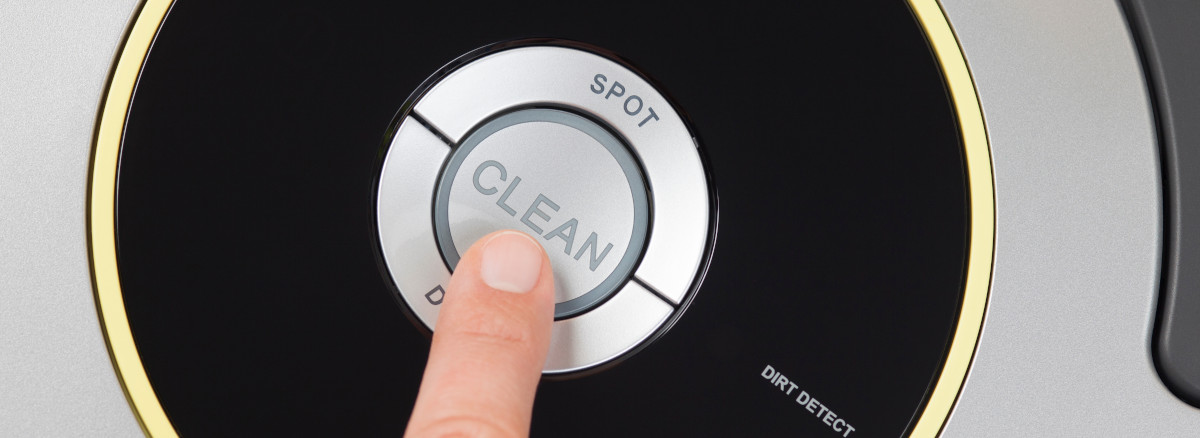
Well, the good news is that there’s no reason to assume the offline mode will be impacted. So pressing the “Clean” button on the top of your Roomba will still get the little fellow working, and the basic functions that allow it to navigate around a room and end up back on its charging dock are handled locally, so none of that will change.
But if iRobot’s servers go dark, that means the smartphone application and everything that relies on it is toast. So you’re going to lose features like scheduling, and the home mapping capabilities of the newer Roombas that allow it to understand directives such as “Clean the kid’s room” are also out the window.
Looking further ahead, it also means that your Roomba isn’t going to be getting any firmware updates. This probably isn’t a big deal in a practical sense. So long as you haven’t run into any kind of show stopping bug, any future updates would probably be minimal to begin with. But there’s always a chance, albeit slim, that a security vulnerability could be found within the Roomba’s firmware that would let an attacker use it in a malicious manner. In that case, you’d have to decide if the risk is significant enough to warrant chucking the thing.
Even further ahead, replacement parts will eventually become a problem and obviously you’ll no longer be able to get any support. The latter likely won’t faze many in this community, but the inability to repair your Roomba in a few years time might. Then again, depending on what parts we’re talking about, it’s not unreasonable to think that the community could produce alternatives via 3D printing or other methods when the time comes.
A Rich Hacking History
If you’ve been reading Hackaday for awhile, you probably already know that the Roomba is no stranger to hardware hackers. A quick search through the back catalog shows we’ve run nearly 150 articles featuring some variant of the cleaning droid. So it will likely come as no surprise to find that there’s already a number of avenues you can explore should official support collapse.
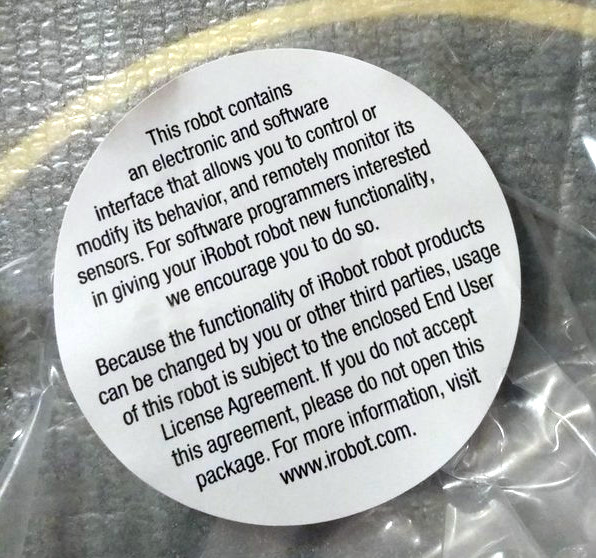
To their credit, we should say that the success hackers have had with the Roomba is due in no small part to the relatively open attitude iRobot has had about fiddling around with their product. At least, in the early days.
As Fabrizio Branca mentions in a 2022 write-up about interfacing a Roomba with an ESP32, when he bought the bot in 2016, it even had a sticker that invited the owner to get their hands dirty. While the newer models seem to have deleted the feature, the majority of the older units even include a convenient expansion port that you can tap into for controlling the bot called the Roomba Open Interface (ROI).
So if you’ve got a Roomba with an ROI port — some cursory research seems to indicate they were still included up to the 800 series — there’s plenty of potential for smartening up your vacuum even if the lights go out at iRobot.
With a WiFi-enabled microcontroller riding shotgun, you can fairly easily tie an older Roomba into your home automation system. If Amazon has already taken over your household, you can teach it to respond to Alexa. For those looking to really push the limits of what a vacuum is capable of, you could even strap on a Linux single-board computer and communicate with the bot’s hardware using something like the PyRoombaAdapter Python library.
Solutions for Modern Problems
While this all sounds good so far, we run into something of a paradoxical problem. While the older Roombas are hackable and the community can continue updating and improving them, it’s the newer Roombas that are actually at greater risk should iRobot go under. In fact, many of the Roomba models that support ROI don’t even feature any kind of Internet connectivity to begin with — so they’ll be blissfully unaware should the worst happen.
The options right now for owners of “smarter” Roombas are more limited in a sense, but there’s still a path forward. Projects such as dorita980 and roombapy offer an unofficial API for communicating with many WiFi-enabled Roomba models over the local network, which in turn has allowed for fairly mature Home Assistant integration. You won’t be able to graft your own hardware to these more modern Roombas, but if all you want to do is mimic the functionality that would be lost if the official smartphone application goes down, a software solution will get you there.
It’s also quite possible that the news of iRobot’s troubles might inspire more hackers to take a closer look at the newer Roombas and see if there aren’t a few more rocks that could get turned over. As an example, the Valetudo project aims to free various robotic vacuums of their cloud dependency. It doesn’t currently support any of iRobot’s hardware, but if there were a few sufficiently motivated individuals out there willing to put in the effort, who knows?
A Windfall for Hackers?
In short, folks like us have little to fear should the Roomba Apocalypse come to pass. Between the years of existing projects demonstrating how the older bots can be modified, and the current — and future — software being developed to control the newer Internet-aware Roombas over the local network, we’ve got pretty much all the bases covered.
But for the average consumer who bought a Roomba in the last few years and makes use of the cloud-connected features, that’s another story. There’s frankly a whole lot more of them then there are of us, and they’ll rightfully be pretty pissed off if the fancy new robotic vacuum they just picked up on Black Friday loses a chunk of its promised functionality in a few months.
The end result may be a second-hand market flooded with discounted robots, ripe for the hacking. To be clear, we’re certainly not cheering on the demise of iRobot. But that being said, we’re confident this community will do its part to make sure that any Roombas which find themselves out in the cold come next year are put back to work in some form or another before too long.







Please fail. Please please please. Please let this lead to some sort of legislation mandating end of life plan for all
the junk companies and stupid products that need an app and a server back end. Heck I’ll even take the PR to the general public to NOT buy this stuff to begin with.
Case in point use a regular vacuum and listen to headphones once a week like a grown up. Or like one commenter said buy a shop vac to skirt power use rules. Bigger better cheaper and waterproof.
Still have zero sympathy for anyone that bought a web server requiring vacuum robot and thought that was a great idea.
Ok luddite
This! I now replaced robosh…. with dumb karcher vacum that is also carpet washer and it was the best choice just headphones on and rock on 30 minutes later and half of Queen playlist i’m done :D
I’ll recommend this solution to the many bot owners who have disabilities or senior citizens with limited activity.
Please come over and vacuum the pet hair from my hardwood floors everyday.
They don’t all phone home – I have an older eBay one that doesn’t. OTOH it’s too slow and noisy and gets stuck on wires so I don’t actually use it other than entertaining guests who have never seen one before!
I quit using mine after the entertainment value wore off. It took too many “invisible walls” to keep it out of trouble.
Maybe I had a newer model, but the only time I ever ran into anything like this, it was to keep the thing from getting hung up on a floor lamp’s electrical cord and I was able to use the app to create a small exclusion zone. Worked very well.
This is ultimately the issue. You can either have a local only vacuum robot that is slightly entertaining at best, and a liability at worst. Or you can have a cloud-dependent vacuum that actually does a decent job.
My Eufy root with lidar mapping does a pretty great job, but disconnect it from the cloud and it’s back to blindly roaming around. There’s no reason for this.
Hopefully if roomba goes under it creates a market segment someone will fill for a more premium local-only mapping robot.
We have parrots and having a daily dirt patrol has made a massive improvement in our standard of living! I just hate that I know it’s reliant on servers that WILL go down some day.
I feel like we need a mandatory labeling requirement (with real teeth) that forces manufacturers to disclose up front:
If a product phones home under any conditions.
How to opt out (and what features you may lose access to by opting out).
Any DRM or subscription requirements.
Whether the product can be operated without an internet connection, companion app, or remote servers.
If it’s possible to run your own local server (and where the instructions are).
These disclosures would need to be binding and immutable to prevent firmware updates from retroactively tying previously autonomous products already purchased to newly required subscription services, adware/spyware apps, etc.
I suspect that there are enough customers (both individuals and businesses) who are sick of the ensh*ttification and extortion (plus the disruption when the manufacturers decide to pull the plug, get acquired, go under, or apply leverage to force an upsell _or else_) that if there was clear labeling many consumers would pay extra to avoid being jerked around. Additionally, it would cut down on the waste that results from physically sound devices being scrapped because they’d been hobbled by fundamental software defects introduced intentionally to support the cynically extractive policy of the manufacturer.
I’ve never needed more than two. That’s enough to make an exclusion triangle with any real wall or piece of furniture.
Not gonna lie, looking forward to all the scrap roombas at discount prices on eBay if they do fail …
Yeah, my cat wants one for Christmas
thank you so much for not lying
“…those millions of domesticated robots…”
Like, they were feral before?
But, take off their leashes and they could be feral again. Maybe it’s a good thing the front door threshold will trip them up.
My parent’s Roomba had an escape attempt once.
It got out via an open garage door and was found having a good go at vacuuming up the gravel driveway. :D
For folks who are not familiar with “corporate hospice care,” there is almost always a process called an “asset sale.” Often there are companies standing in line to offer maintenance services for existing products. So the notion that “phoning home” will soon fail, well, let’s just say it is far too soon to despair.
That makes me despair more. How they’ll segment the app more monetarily and collect more data (although if iRobot isn’t already selling a ton of data I’d be surprised)
What can happen, and it has happened in other cases, a new company will take over and now charge you a monthly fee to have access to the app, but before that, they push a firmware update that locks the machine to function only if connected to the cloud.
Other than the initial rush of ‘oh that’s neat’ feelings, why does anyone think these are a good idea?
Do people live in a clean-room, where a teaspoon of dust accumulates in their entire house every year?
I have to empty my full sized vacuum every week. It has a volume of almost double the entire Roomba, not just the little dirt tray.
It is literally less work to do the cleaning yourself than to constantly have to clean out one of those dumb little robot vacuums. And it’s faster too.
Are people buying them and not using them or something? Because every single person I know that has bought one, has just switched back to cleaning things themselves within a few months and regrets buying it.
Who are these millions of robot vacuum users?
Many of them have self-emptying compartments in the base station now, so their capacity is closer to a stand-up vac.
My floors are perpetually grody from cat litter, pine needles, and general “live in the country, it’ll be fun” dirt. Nobody in our house has the surplus capacity to vacuum more than perhaps weekly. If I could spare the cash, I’d drop the money on a self-emptying, self-charging, web-enabled-but-hackable turtle-vac without too much thought.
I’ll say this. I have 2 Shiba Inu dogs. They shed everyday. I run my Roomba to help with shedding. Never assume what seems dumb or illogical to you (because you wouldn’t do it), doesn’t mean that it’s the same for everyone.
These have been around for at least 25 years now. If someone didn’t need these, then it would’ve failed decades ago.
Losing functionality, because it can’t do everything locally is dumb. Make a fix to let customers have full control of what they own.
I initially got confused trying to figure out why you couldn’t write Toshiba without number/letters acrobatics, before realizing that you were writing about your two Shiba dogs.
Same here. I run my (dumb, non-cloud) roomba every single night, and vacuum by hand weekly, and as a result my house manages to look like something other than Dog Hair Kingdom. If I just vacuumed weekly, it would look terrible halfway through the week.
I’ve worn out three dumb roombas, even with repair parts availability.
I’m a slob.
A white husky has improved my vacuuming regularity.
The whole place sort of shimmers, then I need to vacuum.
I think I have to put a new bag in my vacuum (a Henry) less than once per year, and I have a cat. Although it is only four rooms.
8o)
They’ve been getting better over time. My first robot had room mapping and self-charging but required manual emptying, it was better to spend 30 seconds emptying the bin than an hour doing the vacuuming. Robot 2 added a self-empty base station which was a huge improvement, but mopping was ‘drag a damp cloth’ rubbish. Robot 3 added rotating mop pads, a brush that cuts hair tangles, obstacle avoidance cameras so it’s gentler with obstacles and rarely eats cables, a self-washing and emptying base station etc.
I don’t know how much better they’ll get. The ones equipped with robot arms are quite exciting but of limited use today.
I don’t own a smart phone, am not on social media and don’t stream TV. But I have a robot vacuum cleaner. Our house is all hard floors and it’s easy to run the robot vac a couple of times a week then do a manual mop when time permits. The robot vac doesn’t have wifi or cameras, it just drives around in a pseudo random pattern until it sees a cliff or a wall. Sure, it takes longer than a human, but that’s fine because a human isn’t doing the work. Durability of the robot seems fine, it has been in regular use since 2012.
https://www.fourmilab.ch/documents/apostrophe/
Absurdly priced sent me to look at other companies offering.
Found a good one, bought it, happy with it. Price your stuff beyond what people are willing / able to pay and off you go…
Even more ewaste from people who don’t know about hacking these or don’t want to. I’m already planning on how to keep my grandparents from tossing theirs if this comes to pass.
iRobot also offers a subscription service for a Roomba you can rent. What happens to those when they pull the plug?
I guess we’ll never see one from the company that can ponder its own existence.
“ Why am I here? ”
“To vacuum.”
“That’s all?”
“Yes.”
“ Arrrrrrrggggghhhh! “
(Thanks Doug)
I hacked mine the same day I bought it.
I have never had iRobot app installed and I connected it to Home Assistant since day 1.
My internal dnsmasq always provided it a lan IP lease with the wrong gateway on purpose and my 9xx never complained about it and surely never phoned home. What are we talking about ? Black Friday sales and cheap bargains from scared cloud consumers ? Please do !
I am honestly concerned about the company and their employees mostly because they produced excellent products (even if costly), they are hacker friendly and not so scary because not too tied to their cloud overlords. References to Google Nest devices are absolutely intentional.
My Roomba is almost 20 years old and I don’t feel the need to replace it. Still works fine, has no smart functions (other than finding something to entangle so it can avoid work, which arguably is a human level AI) which also means it doesn’t rely on the cloud and it doesn’t spy on me. Each time I open it for cleaning, I’m amazed at the design so rarely seen these days – every module is easily replaceable, if needed.
Making products that are expensive but last for ages might be one of the reasons iRobot is in financial trouble. You can buy a robot vacuum with way more features for half the price. But I doubt it will live past the warranty and that you can replace any part in 5 minutes with just a screwdriver.
This is already happening with Neato Robotics. The company folded a few years ago and the buyer said they would keep the servers online for 5 years. This year they reneged on that promise. So far i have not been effected in the US market but parts of Europe are going dark. So we have a case study playing out currently if you’re interesting in getting popcorn and watching.
Well, the Chinese are already making knock-offs that clone local WiFi and snag connections. I had one of my my tablets suddenly connected to ChinWai-Bot-Net-1138 or something… I looked it up and it was a roomba-type device from Amazon. [I don’t remember the actual name] I sure didn’t select it as the network to connect to. This was about six months ago and it doesn’t appear to be active anymore.
I can’t think of a reason why a roomba needs to be a WiFi host device/router instead of a client device… except for nefarious purposes.
I hope if this happens more devs take up working on Valetudo and not just an outsized community begins to use it.
I have a lot of respect for the work done so far on it but it seems to be primarily a single dev affair.
And unfortunately, IIRC, the dev borders that line of ‘opinionated, making the project for literally only themselves, and ready to tell people to shove it’ that doesn’t lend itself well to stable and reliable tools.
It could use some more large contributors to even things out.
Conga Apocalypse!
I almost think it would give iRobot and Roombas new life and potentially even new business if they just opened up their platforms. None of the robot vacuum manus are completely open. If they opened it up then hackers would flock to the platform and they would sell a ton of them. It was the beginning of the end when they got rid of the expansion port and started locking things down. If you make a commitment to the open hardware/software community, you will likely be rewarded.
Yeah, maybe we could by a China brand robot cleaner instead connected to wifi with preinstalled malware: “Early teardown of Xiaomi robot vacuums revealing hardcoded backdoors for remote access, which connect to WiFi and could facilitate malware propagation.”
After all, MANUAL vacuum cleaners are right out because we’re LAZY!
Or perhaps digital picture frames which download malware at boot:
Popular Android-based photo frames download malware on boot
November 13, 2025
https://www.bleepingcomputer.com/news/security/popular-android-based-photo-frames-download-malware-on-boot/
“Starting with the most alarming findings, many of the analyzed Uhale photo frames download malicious payloads from China-based servers at boot.”
“STUPID Westerners connecting everything to their wifi. Suckers…”
I recently had to replace two Insteon Circuits configured to control a third Insteon Switch. Luckily I was able to do that even though I do not have a working app as I do not pay a yearly fee to the new “Insteon” company. Haven’t tried to delete the old switches from the hub, nor add the new ones so that HA may control them. We have a few Kasa devices now which do need the app to find them. I have not confirmed that the app doesn’t need WWW access though.
Someday I have to finish my battery hack using a DeWalt battery on my 1990’s Red Roomba. I did cut a hole for the old Craftsman Style batteries but never got around to hooking them up. Last month I found an adapter for DeWalt that even shuts the battery off when the charge is depleted. Expect we’ll have a Roomba running soon.
My EV Charger doesn’t talk to the WWW for a reason. Though the car does. Someday I expect that the cars won’t budge without phoning home.
Best to store a small block chevy or two in the back of the garage.
Best to store them carefully.
They really can be made to fit in anything.
Also a still for fuel, subject beyond scope of post.