
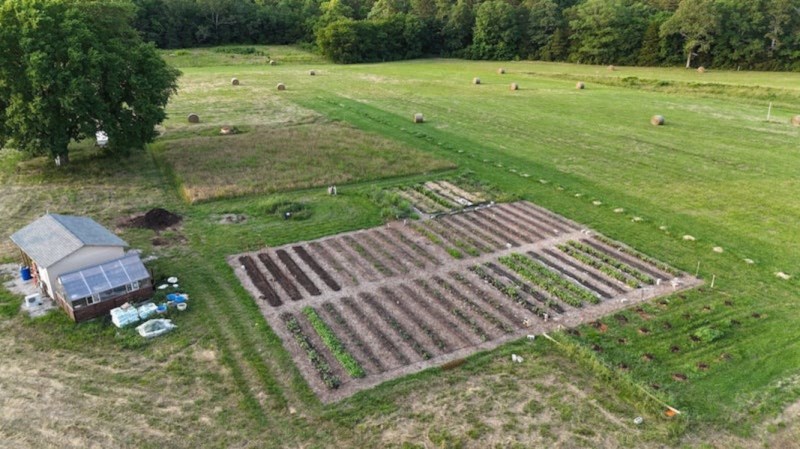
Recently, [Vinnie] aka [vinthewrench] moved from Oregon to Arkansas to start a farmstead. This is a style of farming that focuses not just on a profitable farm where produce is sold at market, but also on a homestead where much of one’s own food is grown on the farm as well. Like any farm, though, it’s extremely hard work that takes a tremendous amount of time. Automation and other technology can make a huge impact in these situations, and [Vinnie] is rolling out his own software stack to help with this on his farm.
He calls his project the Pi Internet of Things, or PioT, and as its name suggests is based around the Raspberry Pi. Since this will all be outdoors and exposed to the extremes of Arkansas weather, everything built under the auspices of this project prioritizes ruggedness, stability, and long-term support, all while avoiding any cloud service. The system also focuses on being able to ride through power outages. The server side, called piotserver, uses a REST API to give the user access to the automation systems through a web interface
[Vinnie] also goes into detail about why existing systems like Home Assistant and Open Sprinkler wouldn’t work in his situation, and why a ground-up solution like this is more appropriate for his farm. This post is largely an overview of his system, but some of his other posts go into more detail about things like integrating temperature sensors, rainfall monitoring, controlling irrigation systems, and plenty of other farm automation tasks that are useful for any farmer or gardener.
We’ve also seen some other projects of his here like this project which converts a common AC sprinkler system to an easier-to-use DC system, and a DIY weather station that operates in the 915 MHz band. He’s been a great resource for anyone looking to have technology help them out with their farm or garden, but if you’re just getting started on your green thumb be sure to take a look at this starter guide as well.












The hardware section is mostly a learning/hobby exercise for the author, not too interesting.
The software section how is more interesting
I too dream of owning land one day and having a fully automated solar powered agriculture setup
I have access to a fully automated system that delivers produce to my door.
Grocery delivery apps?
In many countries, they are getting ridiculously good.
Just as long as the robot doesn’t have to cross train tracks.
https://www.dexerto.com/entertainment/food-delivery-robot-destroyed-in-florida-after-stopping-on-train-tracks-3305892/
have you seen the latest hardware — https://www.vinthewrench.com/p/raspberry-pi-internet-of-things-part-029
All these domestic humanoid robots everyone is building are indoor use only. Build me a $20-30K farmbot and Im all IN. If someone built one capable of replacing a migrant worker Trump would probably approve USDA subsidies to buy them.
My neighbor has a machine that picks berries. He paid $100K for it, USED. Sounds like a crazy expense but it turns the work of ~150 pickers into a 4 man job. He used to spend that much in labor for the 6-8 weeks of blueberry harvesting alone. He uses the same machine for his blackberry, and raspberry harvests.
Farm automation is always increasing and improving. While specialized machines can be built for many tasks, having a team of humanoid robots doing generalized farm tasks, and even running the human aspects of those specialized machines would be more useful to society than housemaids and kitchen assistants IMO
Also I’ve been playing around with home assistant for a few months now, made my own hardware to work with it, really enjoying it so far.
It seems to me like most smart agriculture needs, from sensor data collection, to solenoid, making schedules for watering (?? I’m not a farmer, i have no idea what goes in farming) would be well served, just from a software ecosystem perspective by home assistant
Even if I’m making custom hardware, i would prefer it to be plug and play with home assistant to minimise programming.
If only he addressed why he didnt use home assistant…..
oh wait he did.
What was it? I didn’t go through everything so i missed it
The gist of it is Open Sprinkler does not offer all the features he wanted, and Home Assistant has too many features that make it more complex than he wanted to work with.
This is phenomenal. I don’t know much about Home Assistant but I’m a homesteader and I will be digesting this thoroughly. In Texas, running the garden in July is miserable. He even covers security and keeping bad actors out for those who don’t take it seriously.
I need full-haystack automation.
“Further, I chose to write code in the more mature dialect of C++ 23 using Clang”
I was playing around with having a chat bot convert py to c++, java and rust. I was surprised to see how similar the C++ code looked in an modern c++ dialect. If you have code that is somewhat self contained, low on dependencies, then the bots do a pretty good job in converting into any other language. That gives you even more flexibility for future platforms.