
I, Integrated Circuit

In 1958, the American free-market economist Leonard E Read published his famous essay I, Pencil, in which he made his point about the interconnected nature of free market economics by following everything, and we mean Everything, that went into the manufacture of the humble writing instrument.

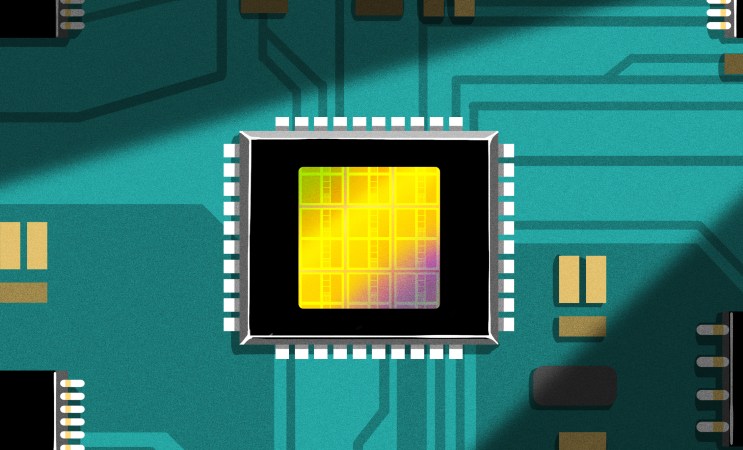
I thought about the essay last week when I wrote a piece about a new Chinese microcontroller with an integrated driver for small motors, because a commenter asked me why I was featuring a non-American part. As a Brit I remarked that it would look a bit silly were I were to only feature parts made in dear old Blighty — yes, we do still make some semiconductors! — and it made more sense to feature cool parts wherever I found them. But it left me musing about the nature of semiconductors, and whether it’s possible for any of them to truly only come from one country. So here follows a much more functional I, Chip than Read’s original, trying to work out just where your integrated circuit really comes from. It almost certainly takes great liberties with the details of the processes involved, but the countries of manufacture and extraction are accurate. Continue reading “I, Integrated Circuit”

Comparing A Clone Raspberry Pi Pico 2 With An Original One

Although [Thomas] really likes the Raspberry Pi Pico 2 and the RP2350 MCU, he absolutely, totally, really doesn’t like the micro-USB connector on it. Hence he jumped on the opportunity to source a Pico 2 clone board with the same MCU but with a USB-C connector from AliExpress. After receiving the new board, he set about comparing the two to see whether the clone board was worth it after all. In the accompanying video you can get even more details on why you should avoid this particular clone board.

In the video the respective components of both boards are analyzed and compared to see how they stack up. The worst issues with the clone Pico 2 board are an improper USB trace impedance at 130 Ω with also a cut ground plane below it that won’t do signal integrity any favors.

There is also an issue with the buck converter routing for the RP2350 with an unconnected pin (VREG_FB) despite the recommended layout in the RP2350 datasheet. Power supply issues continue with the used LN3440 DC-DC converter which can source 800 mA instead of the 1A of the Pico 2 version and performed rather poorly during load tests, with one board dying at 800 mA load.

Continue reading “Comparing A Clone Raspberry Pi Pico 2 With An Original One”

Symbian On Nokia Lives Again, In 2026

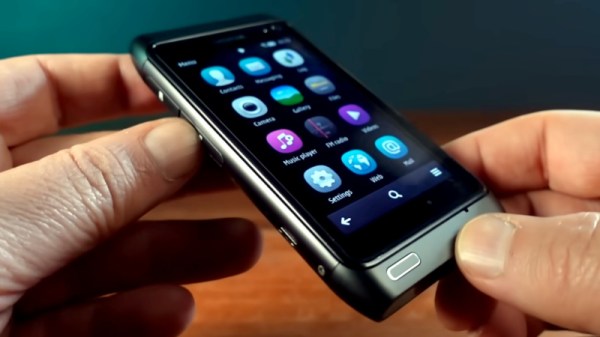
Do you remember Nokia phones, with their Symbian OS? Dead and gone, you might think, but even they have dedicated enthusiasts here in 2026. Some of them have gone so far as to produce a new ROM for the daddy of Symbian phones, the Nokia N8, and [Janus Cycle] is giving it a spin.

For many people, the smartphone era began when the first Apple iPhones and Android devices reached the market, but the smartphone itself can be traced back almost two decades earlier to an IBM device. In the few years before the birth of today’s platforms many people even had smartphones without quite realizing what they had, because Nokia, the market leader in the 2000s, failed to make their Symbian platform user friendly in the way that Apple did. The N8 was their attempt to produce an iPhone competitor, but its lack of an on-device app store and that horrific Windows-based installation system meant it would be their last mass-market flagship before falling down the Microsoft Windows Phone rabbit hole.

In the video below the break he takes a pair of N8s and assembles one with that beautiful camera fully working, before installing the new ROM and giving it a spin. We get to see at last what the N8 could have been but wasn’t, as it gains the last Symbian release from Nokia, and the crucial missing app store. Even fifteen years later it’s a very slick device, enough to make us sorry that this ROM won’t be made for the earlier N-series sitting in a drawer where this is being written. We salute its developers for keeping the N8 alive.

Oddly, this isn’t the only Nokia from that era that’s received a little 2020s love.

Continue reading “Symbian On Nokia Lives Again, In 2026”









