

If you’re located in the Northeast United States and thought you heard an explosion yesterday afternoon, it wasn’t just your imagination — multiple sources have now confirmed that a 1 meter (3 foot) meteor entered the Earth’s atmosphere and broke up in the air off the coast of Massachusetts, releasing the energy equivalent of 300 tons of TNT.
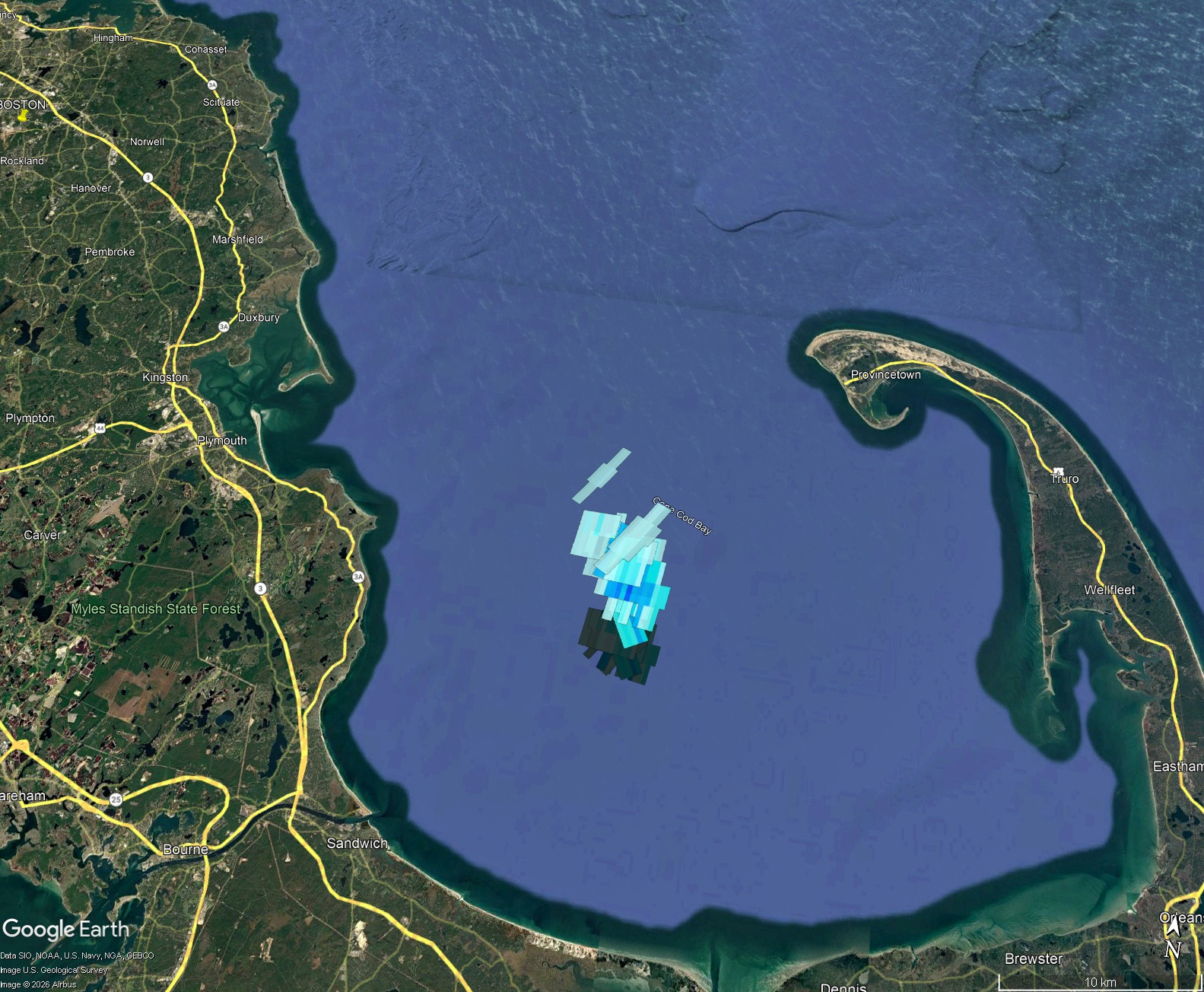
Well, maybe. The latest update from NASA says it might actually qualify as a meteorite, with radar data indicating that debris from the space rock may have fallen into Cape Cod Bay. For those unfamiliar, the difference between a meteor and a meteorite is whether or not any of the object survived its encounter with the atmosphere and made it down to the surface.
There’s an argument to be made that a larger asteroid would have likely set off some alarm bells as it approached the planet, but the fact that this deep space interloper showed up unannounced is a sobering reminder that our ability to detect incoming threats isn’t nearly as robust as we’d like. Fortunately, it looks like the event didn’t result in any serious damage or injury.
Speaking of mid-air threats, here’s a reminder of what not to do on an airliner: on Saturday a flight departing Newark airport for Spain had to turn around when it was discovered a Bluetooth device bearing the name “BOMB” was onboard. There was no actual explosive device found on the plane when it was searched upon its return, and reports are that the whole incident was the result of an Ill-conceived device name on a portable speaker.
The details on this one are interesting, as a first-hand account posted to Reddit would seem to indicate that both the flight crew and teams back at United Airlines headquarters in Chicago were able to see the Bluetooth devices on the plane in real-time. The passengers were actually given several chances to turn off their devices before the order was given to turn the plane around, and at one point the crew claimed they were even able to see the number of Bluetooth devices that were still active.
Admittedly, it could have been as simple as one of the crew members using an app on their phone to see how many discoverable Bluetooth devices they could pick up and reporting their findings back to the home office. But in the modern security climate, it’s not hard to imagine that the aircraft has some form of integrated Wireless Intrusion Detection System (WIDS). Something to keep in mind the next time they ask you to put your gadgets into airplane mode during takeoff.
It seems like every week we’ve been reporting on some service going dark, and today is no different. As pointed out by OMG Ubuntu, Canonical will be shutting down the Ubuntu Pastebin service in June. In fact, originally it was supposed to go offline today, but they’ve pushed the date back by a month due to the response from the community. Turns out giving your users just a few days to pack up their belongings before kicking them to the digital curb isn’t popular. Who knew?
Now granted Hackaday is geared more towards hardware than software, but a search through the database would seem to indicate we’ve never once run a post that linked to Ubuntu Pastebin in the 18 years the service has been available. Conversely, we had pages of results when searching our back catalog for instances of the classic pastebin.com. So we’re actually curious about this one and would love to hear from the readers: how many of you were actually using this service regularly, and will you miss it?
Finally, those in the market may be interested to hear that Wells Fargo will start offering mortgages for 3D printed homes produced by the Texas-based ICON Technologies. They’ve even got a special incentive program lined up for the extruded domiciles, offering a lender credit that can offset some of the closing costs.

This might not sound like that big of a deal, but apparently most banks have been understandably skeptical of the technology and the long-term market for 3D printed homes up to this point. After all, it was just a few years ago that a recently completed 3D printed home in Iowa had to be demolished after the structure fell short of safety standards. As pointed out by CNBC, previous communities produced with ICON’s concrete printing technology had to be financed through the developer.
We’re still not sure that 3D printed homes make a whole lot of sense, but making the technology more accessible is surely a net positive. Even if the current state of the art in house squirting isn’t quite there, you know how the old saying goes: a journey of a thousand miles begins with a single layer.
See something interesting that you think would be a good fit for our weekly Links column? Drop us a line, we’d love to hear about it.












I’m not nearly as skeptical of 3d printed houses as I am on any involvement whatsoever by Wells Fargo. I’ll never deal with them again. I hope better banks pick up before too many are burned by WF and it ruins the industry before it starts.
Why “bomb”? Because someone thinks their fancy wireless speaker is “da bomb.”
you normally dont get to set the name for your devices, only the host. its entirely conceivable that this was done by the manufacturer. i imagine the case is shaped like the bob-omb from smb.
even though its a scientifically proven fact that you can do more damage with a box cutter than a shoe bomb.
All you need to do if you want to destroy an aircraft (or anything else) is to say ZEEKY BOOGY DOOG!
I doubt they even knew the speaker was on. They have a habit of turning on when a slight breeze gets near the power button. Unless they were trying to use their bluetooth speaker while on the plane.
The device was actually a Fitbit. They connect by default basically
Joke’s on us:
https://hellottec.com/product/bomb-portable-bluetooth-speaker-2bh15
Those who work in the worldwide aviation industry get a lot of practice adding those essential layers of Swiss Cheese.
What the story about: “Magnet fishers in Cape Cod are stoked”
The story is about the space rock that “landed” into Cape Cod Bay, thus magnet fishers may get the pieces and sell them in order to get “stoked”. The map might show the impacts.
That would assume that meteorite is mostly iron. Around 95% of what falls to Earth is stony with no iron content and they wouldn’t be picked up by magnet.
In Catalonia
-Water from a well with a “Bomba”
-My daughter’s name is Maria (marijuana)
-For the Sant Juan party, they throw pyrotechnics and eat coca (cocaine)
An alert system will surely think very bad things about us.
Might explain all the Pastebin clones one can self-host.
Pastebin was mainly used to share urls to pirated media.