
The British government is in a headlong rush to ban under-16s from social media, and restrict the access of under-18s. And in typical form, the EFF is here with a warning about the dangers and futility of such legislation.
The proposed new law will involve an age restriction policed through online ID verification, something which will not be limited to the young, as every British adult will also have to show ID to access large parts of the Internet.
There is little in the way of information about how this unprecedented invasion of privacy will be implemented, however we expect that it will be left to the lax security measures of a range of lowest-bidder third party identity verification services. The resulting database will become a very rich target indeed.
The EFF pull no punches in warning of the harms these measures will bring upon those it seeks to protect. Far from “Giving under-16s their childhood back” as it is being promoted, they warn that it will deprive them of access to community, friends, and distant family, as well as educational content that could be vital for them.
If it works at all. Certainly he more technically minded youth will put their efforts into the world of computer networking. A VPN ban is reportedly in the works, so a whole generation of future software developers and IT specialists will get their start running software to get round this on their Raspberry Pi.
We’ve reported on the EFF’s concerns over UK ID laws before.
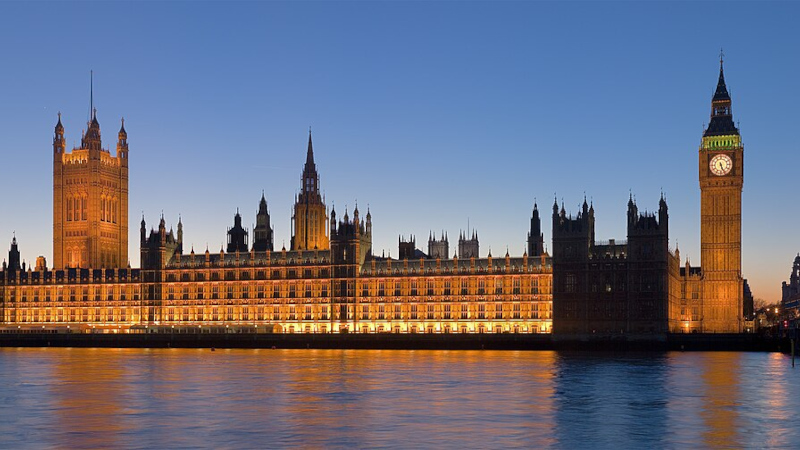
Header image: Diliff, CC BY-SA 2.5.












While the UK is bumbling around, the EU is also trying to implement a “secure” online ID check.
https://digital-strategy.ec.europa.eu/en/policies/eudi-regulation
It’s supposed to give the service only the information that is necessary, for example the age of the user and not their name or address to prevent massive scale data mining using the system, but how to prevent companies like Google from harvesting and combining all the information through multiple requests over multiple different services is left unexplained.
Canada’s attempting to follow in the UK’s footsteps first with an access law (bill C-22) that they just rammed through parliament and into the senate before the summer break, and a massive combo-law (bill C-34) that bundles an under-16 social media ban, a pornography age verification requirement, a whole new regulator body, a bunch of chatbot regulations and probably more. You can really tell the new PM last worked in the UK and wants to fallow in Starmer’s unpopular footsteps.
If any of it does manage to make it through both the parliament and the senate without being thrown back, hopefully they can be struck down in court under a Charter of Rights and Freedoms challenge.
C-22
https://www.michaelgeist.ca/2026/05/more-misinformation-on-bill-c-22-as-the-government-struggles-to-defend-its-lawful-access-plan/
https://www.michaelgeist.ca/2026/05/the-lawful-access-two-headed-surveillance-monster-how-bill-c-22-went-off-the-rails/
https://www.michaelgeist.ca/2026/06/government-moves-to-shut-down-lawful-access-hearing-in-order-to-fast-track-passing-the-bill-this-week/
C-34
https://www.michaelgeist.ca/2026/06/everything-all-at-once-bill-c-34-combines-platform-duties-a-kids-social-media-ban-ai-chatbot-regulation-and-a-powerful-digital-safety-commission-into-a-risky-trust-us-bet/
https://www.michaelgeist.ca/2026/06/the-exemption-illusion-why-the-governments-plan-to-fast-track-bill-c-34s-kids-social-media-ban-means-no-standards-no-privacy-review-and-no-enforcement/
https://www.michaelgeist.ca/2026/06/taking-stock-of-bill-c-34-five-things-to-know-about-the-governments-plan-for-a-kids-social-media-ban-mandated-age-verification-and-ai-chatbot-rules/
Any ID scheme needs to contend with the risk of ID interception. This is the big one, submitted data is not as ephemeral as proponents claim if happens to be intercepted, especially on a service’s servers as part of an intrusion lasting days/weeks/months. There’s also various other attacks like someone working out your birthday and year of birth by asking the service every day of the year until your age or age group rolls over.
“It’s for the children” is the siren song of tyranny.
In this case it is simple survival. The effect of smart phones on schools/education and child and social development has been profound, and not in a good way.
At the same time they want to ban social media use, there is a large part of the British Left (I don’t recall what they are called at the moment) who want 16 years olds to vote.
+1
In America, “parental rights” is a trojan horse for extreme rightwing white supremacists. People who treat children quite poorly, the irony of the semantics
Your statement is amusingly wrong.
The social media age restriction laws in the US are primarily being introduced and passed in Democrat majority jurisdictions.
Akimmet, they may be being passed by democrats, like the 3D printer control bills but they’re clearly Republican-coded
North or south democrats?
Calling these laws republican coded is disingenuous. There is no politician on earth that is above exploiting a moral panic.
We need to not get sucked into the us verses them tribalism. It does nothing other than stoke hatred.
How to say you don’t live in the US without saying you don’t live in the US.
If you did, you’d know better than to post something this wrong….
This isn’t an issue for parental rights people.
Parents are still allowed to keep their snot monkeys off the net, and they should.
Internet wasn’t built for kids, it was built for porn.
Cringe post, go to gulag
Or simply, how does the system know it’s you without knowing it’s you?
As I understand it, the EU scheme is supposed to maintain privacy in cases where a person is signing anonymously to a service and needs to prove their age, so they can use their digital wallet to create a trusted token that says “Yes, I am over 18” but doesn’t reveal any other information.
However, if the service doesn’t have access to information about who is providing that token, it could be anyone. It could be someone using stolen IDs or a different person creating a user account for some kid who wouldn’t otherwise have access. It’s the same problem as, how do you know that the kid who just turned 18 isn’t buying beer for their underage friends? Answer is, you don’t, unless you keep tracking how much beer they buy to bust them.
To close that loophole, you need to know if the same ID is used multiple times to create different accounts even if you don’t know who that person is, and so the age check becomes a sort of tracking cookie that’s tagged onto you for life. You can trivially correlate that with other data and build up a database of who everyone is, where they live, etc. Alternatively, if the token is anonymized to truly hide the person behind it, it becomes untrustworthy and ultimately pointless.
The EU version does not tell a website your age. It tells the website 18+ yes/no
The only thing a site needs to know is if you are old enough, an exact age is not a requirement.
As to harvesting. The app of the EU is open source. It’s eventually going to be zero knowledge proof. Privacy safe. The goverment identifies you as 18+, you choose what site you give that token to. The govenment doesn’t know where you use the token and the website does not have to know who you are, just that you have an 18+ token.
It’s perfectly possible to do age verification in a privacy preserving matter, by sharing only one bit (1 bit) of validated info to the requesting party stating i am older than x. It has been done in covid apps, and it’s generically done by the Yivi app. I am looking forward to getting perks because of my old age, and being able to prove that in a PP way ;)
But why.gif. There are these things called parents who’s job it is to monitor and protect the kids.
I hear it now “But Sword, the Gov is doing it because the parents aren’t”
Ok then why aren’t there court cases against the parents? Answer: because this isn’t about “the kids” at all, that is just the way they ram loss of privacy through.
This. We should fight age verification with fire.
Yeah. I wish EU just mandated some kind of public categorization of sites. That would be much less privacy-invading and would make filtering more effective and accurate.
RE: public categorization of sites – obviously pretty much all the news would be rated R for the depiction of violence and instigating hatred.
The EU could choose to put pressure on social media to not be so toxic. This is a problem for adults too. But, instead they are hellbent on going the mass survelliance route instead. Why? Ignorance and lobbyists, probably… There is valuable data to be mined here.
The whole thing has never been about the kids, but: What peoples kids do online is the responsibility of their parents. Period. Hard to keep track on, but could be solved by just talking to your kids about all the crap on the internet and why this is toxic/dangerous/bad etc. Maybe unconfortable, but still a parents task. Parenting has gone the same survelliance route instead with apps keeping track of kids whereabouts etc. Kids are being conditioned into thinking its a good thing to be monitored at all time in this way. Just stop, ok.
In the 90s, it was well known that the internet is no safe place, that everything can be an illusion.
It had been mentioned in TV programme for children many times.
In practice, children likely knew better about the dangers than their parents did.
Back then, children in general had better technical proficiency than their parents.
Because they were more into video games, home computers, PCs and telecommunications (cell phones, pagers, e-mail etc).
They were so skilled they could program a VCR, for example. ;)
That’s nice and all but what does that have to do with the UK… which ya know the entire effing story is about ya tosser
Yep. My daughter has restrictions on her tablet and won’t have a phone till she can drive. That’s my business, nobody else’s
Hm. Please be careful with that authorian parenting style, it might backfire.
Your child might end up being isolated in its friends group (if it has friends to begin with) and might develop an anger against you or it might be unable to make an emergency call.
A feature phone without social media apps might be a compromise here, perhaps.
Just saying, because were I live, children have rights too and their own will and are not the sole property of their parents.
PS: There’s an old saying that comes to my mind:
“Be kind to your children, because they might choose your retirement home.” ;)
Listening in to conversations between kids who spent their younger years before the big social media boom, they seem to consider their younger generation “zombies” and are glad they were never exposed to the brainrot when they were early teens.
Go back and watch flash animations from the early 2000s, we had brain rot (All Your Base, End of the World, animutations, etc), there was just a lot less to go around. You had to seek it out, wait 2min for it to load and then pay attention for 1-5min. I suspect the zombifying secret sauce is the firehose that is infinite scrolling and instant load times.
There’s another factor: those animutations were chan community insider jokes. People spent effort to make them for each other, instead of getting fed a passive stream from content mills.
Yes, think of the children. Think of the children wandering the streets. Think of the children buying fluorescent candyfloss flavor vapes. Think of the children finding their local friendly drug dealer and supplying them with their favourite chemical cocktail. Think of the children left vulnerable by the state services which absolutely failed to prevent them being abused by those in positions of power. Think of the children failed by an education system which is skewed towards league table results rather than building and developing their creative or critical thinking skills. Think of the children whose parents are so technically illiterate that they gave them unfettered access to the internet at an age where they are so ill-prepared to deal with it. Yes, think of the children.
Ugh, the vape/nicotine pouch/cig flavors things drives me up a wall. I can’t get x flavor of tobacco product, but I can get Blueberry/Watermelon/Whipped Cream/Root beer/every flavor of Vodka imaginable. So clearly also not about “the kids”
If vaping is supposed to be a step towards quitting smoking, there is not good reason for flavoured vapes to exist, apart from intentionally inducing addiction. There is no reason why flavoured vapes should be legal in any country.
We dont need government to be our parent. While the product is ridiculous, the one thing we dont need any more of is more bureaucracy. This “govern me harder daddy” mentality is the root of most of our problems in society because its this governing that has got us here.
Says unfettered capitalism.
In one country I know of they voted in a person, who with the help of another even wealthier person, got rid of many government regulatory bodies.
Now these same people who voted thusly are having data centres built a few hundred metres away from them, whilst others are getting polluted water due to PFAS regulations being ditched.
But it wasn’t supposed to happen to them but someone else, right? All that winning…
But wait there’s more! Deregulation of greenhouse gas monitoring, deregulation of vehicle emissions standards, dismantling of ocean current surveying, deregulation of consumer protection rights and corporate reporting, workplace safety deregulation, nuclear deregulation, in fact the largest deregulation in that country’s history. All that bureaucracy gone that you declare you don’t need, did I mention all the winning?
All regulation should have a sunset clause. Otherwise it will be difficult to review and remove outdated regulation that has passed its usefulness, and the piling backlog causes the demand to elect reckless politicians to get things moving at all.
They should be required to revoke two old laws/regulations for each new one they pass.
Revocations first.
They should also ban lawyers from government power.
When they are in charge, every law is a ‘lawyers full employment law’.
Think about the worst politicians…All GD lawyers.
They can still run for office, after they give up their law license, for life.
could be a bob dylan song text
So past generations did phone phreaking, or crack games for the C64, or poke around until university firewalls let through torrent traffic, or reverse engineer copy protection stuff on CD-ROMs, or break out of the parental control in their cell phones. The new generation will become experts in containers, VPNs and forging online IDs…
Kids (young folx in general) will find ways around stuff. It might be, uuuh, “pre-legal”, though.
The main two points against it are:
– the data of those age verification providers is ripe for taking (there will not be a only minimal amount of data stored)
– the parts of the intarwebs young people will hang out then is probably not really the… nicest… parts (essentially making things even worse)
bugger, I see another Raspberry Pi shortage coming up 😊
Whilst I’m totally against the surveillance angle, here in Australia the social media ban for under 16s has definitely had a positive effect. Some kids get round it of course, but most seem to be happy to have a break and be able to hang out more with their friends. I.e. it gives them an excuse not to use the phone where as before all their friends were on it, so you would have been the odd one out.
(my observation as a teacher)
That’s interesting because the main argument against before the ban was introduced was that because of the large distances between population in Australia the kids relied on social media like life support.
That argument was always a red herring. Email hasn’t been banned, nor has the phone, web forums, IRC etc etc.
By UK guidelines on what counts IRC, Web Forum are clearly ‘social media’, as would be things like multiplayer games and quite possibly emails and phones could be considered part of the ban too – the ability to communicate with others is just about the only defining trait to count as ‘social media’ by the definition provided, so for the UK…
I’d like to think some common sense would be applied, but given the real world track record on such things and the rather thinly veiled real goals I rather doubt it.
My objection has nothing to do with kids, and focusing on them is a red herring. This is mass internet surveillance by the back door.
Former .au teacher here, my experience is the same. I see more kids out riding bikes since the ban. Of course kids will try to get around it. They also try to get around the rules about alcohol and tobacco. And just like alcohol and tobacco, there are consequences if one is caught breaking the rules…. and in terms of “staying safe online” I would prefer that kids use fake IDs on the internet. Much safer than disclosing anything genuine to Zuckerberg et al.
I’m not on social media and since the ban, I have noticed zero impact on my online life. So the fears of a surveillance state, in Australia at least, have not eventuated… at least, not yet :-)
A lot of problems could be solved if they simply put the responsibility to parent in the hands of parents and gave them tools to do their job, instead of trying shift the burden of parenting onto strangers.
We’ve had decent enough opt-in parental controls since at least the days of windows XP, and it’s far less intrusive to have sites simply label (eg. in response headers) the age bracket of certain content. A parent can then customize what sites to block, what sites to whitelist, and what age level they want to set.
All while devices can go on assuming their users are adults out-of-the-box because parents are there to set this up any way they like on any device they buy for their child. And this only need apply to big names with lots of users, like Windows, Apple, or Android. If someone can compile a custom version of their OS, they’re more likely than not to be an adult.
Politicians doing system design, what could possibly go wrong?
The resignation as a Premier Minister for example
“Prime”
There are some upsides then!
oi you got a permit for this post? The UK government doesn’t tolerate freespeech!
We’ve been watching and learning from our esteemed American friends.
That is only true if you read only the right wing media.
Dude, if you look at what the UK will arrest you over or fine you for its pretty clear that they lack proper free speech.
Not a UKian or USian myself but unless there is evidence otherwise then I don’t believe touching the paint in a swimming pool in the UK will get you arrested, or that government employees there are required to wear a national birthday flag lapel pin under threat of professional reprimand?
Last year there is data for.
England arrested 20k people for ‘wrong speech’ on the internet.
Canada has a shadow court system with no presumption of innocence, no right to confront your accuser and no due process. (Human Rights Commissions).
The Fascists are on the left, same as always.
Not many countries allow free speech. Only the US does as far as I know. I’m from the Netherlands and it’s less common for people to get arrested over speech compared to other EU countries, but it still happens. One of our politicians got arrested and spent years in the legal process, going from court to court, over a simple statement, that didn’t include any violent speech. It’s scary. Now a Belgian politician is in trouble for being in a group chat where someone else made a statement, and he got in trouble. Tons of German citizens got arrested for speech. A French politician got arrested weeks ago for making a short video about immigration. Didn’t say anything bad, still got arrested. The EU is looking at the UK as a good example instead of a bad one. It’s sad to see. I hope to be able to move to the US.
Yes. For so-called hate speech, maybe.
If you’re calm and polite (aka being civil), you can express your opions freely.
You need to know that the human dignity is a people’s right here.
Attacking other people’s dignity is violating their rights,
making you the person trying to take their rights.
Both the right of unviolated dignity and right of free expression of the own opinion are among the highest goods of German constitution.
So sorry, no, Germany isn’t that opressive post-3rd Reich p*lice state that some people like to make it seem.
German people can and do usually say what they think about a certain topic.
What’s not okay, is to present opinions as facts.
Saying “you’re stupid” is not same as saying “I think you’re stupid” or “what you do is stupid”.
Small detail, bid difference. One is likely unfounded (evidence? medical documents?) or an insult, the other ones are your opinion or your rating or your observation/conclusion.
Another, more complicated topic is Isrl.
Because of the cruelties of WW2, the Js and Isrl have special protection by law, basically.
So demonstrating against all the bad what the country currently does is risky to German demonstrants.
Because valid, polite criticism might be quickly interpreted as anti-semitm.
That’s why our p*liticians always walk on egg shells whenever that country gets some negative press.
Say “From the river to the sea.” to your local polizei.
Hm. Not sure if that’s a good idea. Except if someone is really seeking for trouble.
Also, I think it has nothing to do with free speech or free expression in the more narrow sense,
but that slogan is worded more like an intended provocation.
It’s close to political propaganda, maybe.
Another topic we Germans are tought to be sensitive about.
Please don’t get me wrong, the current geopolitical situation is worrying and many activists here in Germany do protest/demonstrate against unjustice and are against war.
But it’s important to do it in a sensible way without pouring oil into the fire.
The German police itself is trained to de-escalate but on other hand,
it can’t just stand there watching and drink some coffee.
It has to intercept if demonstrants/protesters do try start to escalate in public.
Especially if the two political opponent groups are close to each other.
In general, I mean, not just in this case of Isr. vs Pal.
People who are arrested do usually get treated well, also.
It depends on how aggressive they are or not.
Not seldomly, they can leave police station quickly after the paper work is done.
So it’s not as horrible as the media might make it seem.
Nowadays Germany isn’t like 3rd Reich anymore, there’s no reign of iron grip like back then.
Here in Germany, the German police officers do require to have a high degree, pass a psychological test, must not have extreme political views and have to attend police school for many years.
They’re quite educated people in short, who have themselves under control.
But of course, they’re only human too.
So there are police officers who attracted negative attention, too.
But not worse than in other countries, probably.
Not true.
Germany makes no distinction between a nazi salute and a nazi salute while making a finger Hitler stash w left hand.
Their meanings are exactly opposite.
Both will get you arrested in Germany.
At least that definition of ‘hate’ was imposed on you after WWII.
Better then the modern way, letting the neo-crypto-fascists (aka Wokies) define what hate is.
In Germany due to their laws against insult you can be arrested for something as simple as calling a policeman a muppet (or the German equivalent) or an idiot or some such. And as I said wearing the Z symbol on clothing is also outlawed for instance. And there are tons of things that are not allowed.
And you should have seen them during COVID..
You don’t need to go to a discussion about sensitive subjects related to WW2 to make the point.
(And yeah, I know you can also be arrested for calling cops muppets that in the UK, but then you can do a civil suit and get compensation for wrongful arrest.)
It’s getting worse and worse in the western world, including in the US incidentally, where the ‘free’ get arrested/suspended/fired for things like ‘not
using the right pronouns’ or for being too liberal or for defending free speech et cetera. Or of course the classic ‘arrested for resisting arrest’ (and they say AI hallucinates, ha) .
I’m sorry Joshua but no, you are not free at all in Germany.
And it doesn’t help to put your head in the sand and pretend it’s all wonderful
Just the mere fact that the Netherlands and Germany for instance both have laws where you can be arrested for ‘insult’ is telling to a point where all doubt is removed.
Oh and wearing the letter Z is also not allowed in Germany because it’s the Russian symbol from the conflict.. I mean come on now. Free expression.. yeah right.
You are right Bob the builder, up to the point where you went insane and said you wanted to move to that horrible shithole.
Good job I were on the continent when I wrote it then. :)
The right to self harm typically is linked to adultness.
Internet is addictive with all the usual negative consequences, even without social media, so it should be treated like alc or other legal drugs.
Brain research would even prefer to delay access to drugs until the mid 20s!
THINK ABOUT THAT!
Sugar, coffee and alcohol are socially accepted drgs, too.
Depending on the extent of consumption, video games and watching TV can be considered drgs, too.
Depending on the extend of delusion, anything you don’t like can be considered drgs too.
Brussel sprouts (stillborn cabbages) are drgs!
Brussel sprouts.. I used to hate them when I was a kid so I thought ‘there are many things I hated as kid that I now find yummy, so let’s try them again!’
It was horrible, I spat it out, I don’t think those that eat them are the same species as I am.
Protecting the children wasn’t really a priority for the British government over the last decade. At least not if it came to knife crimes or large scale abuse.
AKA Legislative sleight of hand. Bit like the neo-nationalist agendas in multiple countries all with their chants of “we are regaining our freedoms” whereas the reality is that large sections of societies actually losing theirs. Woe betide anyone who fights this agenda as they are tarred by the brush of facist, immoral, leftist or whatever other turn of phrase suits.
Conflict only benefits the few. Rationality, reasonability and reconciliation benefit the many.
Education is key to knowing the difference. Critical thinking is the ability to know how it will affect you and others around you.
Is it the case where we are entering a scenario where we are now too educated or have too much freedom of access to information beyond that which others decide should be within our purview?
Is the reason birth rates are dropping across the world because youngsters look at society with different perspectives thanks to the internet and are asking themselves “why should we”?
Is it all a cynical longer-term strategy to dumb society down by making things just a little bit harder?
We are all tracked. Everything we do leaves a fingerprint. Humans, in general, are collectively stupid. Nothing lasts forever. There is always hope.
So massive child abuse is a-ok or what?
Child abuse is abhorrent. Any abuse is abhorrent but let’s take a scenario: a child commits an abhorrent act against another child because they “saw it on the internet” or conversed with an AI chatbot which hallucinated or had been prompt-injected. How do we deal with that? What safeguards do we put in place to prevent it in the future?
If the internet is age-gated to prevent that ever occuring then fine but state it as it is: it is a restriction. But as much as we can hope for the best let’s ask what do we really think will happen?
Will we end up with children who are tech-savvy and know how to protect themselves online as a result of good role-models; informed parents and excellent teaching on schools and colleges?
Or will we end up with generations left in ignorance of this “internet” thing that they access using Mom/Dad/Uncle/Auntie/other “responsible” adult’s ID then stumble across those darker areas which defy logic and human decency?
That’s a horrendous burden to place on the mind of a developing child and no amount of legislation will prevent that.
The issue for me is not that the government want to age-gate the internet. Some form of censorship was always going to be a natural development of the internet as big business and interests slowly shaped it into the critical, indespensible service they wanted it to be. It’s that the government has not announced anything else to support the vulnerable children or parents. Usually this is a big clue that either 1. they are acting in total ignorance and/or 2. Other interests have lent their support (not that these are mutually exclusive scenarios).
Anyway, I’ll get off my soapbox now. It’s nice to think and you prompted me to do that so I appreciate your response.
If a kid does an “abhorrent act against another child” because some bot (or person) tells them to do it then that kid should be in an institution, not the rest of the country surely. And the parents should take responsibility for raising a kid, and use the great many tools available to manage their access to various things on the internet.
But it’s not about kids, the law is to force adults to ID to use internet services, and the whole thing is pushed by certain billionaires and think tanks and not the public at all, it has been shown that the so-called ‘grass-root public groups’ that ask for it are all primarily financed and created by the before-mentioned billionaires and think-tanks, people like Thiel and Tony bleeding Blair (the smut on humanity that keeps on giving).
The thing they like about kids is that they are a great tool to get any fascist-adjacent thing implemented and to get people to talk about kids instead of that what they are trying to do. So handy and useful those kids eh.
Talking about billionaires, It’s funny that everybody is complaining about Musk stirring the pot, but the real issue for him is that he does it in the open, instead of that weaselly crap that the other billionaires engage in – and are much more successful at. We should be happy he can’t play the game, he would be much more trouble if he did I bet.
Funny how you proved him right with that one ignorant sentence.
There was never hope.
Heat death of the universe therefor hookers and blow!
The net doesn’t need to rate everything.
Parents need to whitelist or delegate that to someone they trust.
When the kid outsmarts the ‘rents they get unfiltered internet.
Is organic.
Same as we figured out we could not buy (dirty mags/cigarettes/beer/black powder) at age 12.
But we could shoplift them.
They should use the video recordings act as precident and make parents responsible for looking after their own children instead of complaining and blaming everyone else that their child poisened themself because they ignored the “keep out of reach of children” label!
I personally find it amusing that persil uses the phrase, “always keep away from children”, feels like they are being used to promote population control.
“A VPN ban is reportedly in the works”. Good luck making that work, i guess the government has never heard of Turing Completeness!
In a parliamentary democracy the chaotic disagreements should really work to protect the public from the ‘leaders’ pushing certain things through.
Unfortunately the one thing a large percentage of people going into politics share is a love for things that smell and look and feel like fascism, and thus you get unwanted unity when such a proposal pops up, and things get very tricky indeed.
I do wonder where this will lead. I doubt there are enough privacy conscious individuals, such that any exodus would hit their bottom line hard enough to induce a response.
I guess they are hoping for the same result as the incremental increase in legal smoking age will have, gradually cutting off the addiction from the population, with the hope of not sending too many underground.
Personally I’d hope it would increase competition and creativity, reigniting the early days of the internet before social media took root.
It would be ironic if this was the proverbial pin that popped the internet bubble.
There are a lot of good insights into this issue. Parental supervision SHOULD be the focus but IMHO there are a lot of clueless and/or lazy parents not to mention those working several jobs and do not have the time. Lack of personal interaction as children and teenagers produces adults with very limited social skills not to mention speach filters. TV and video games provide a 2 to 3 second attention span. Lastly, there will be a booming market for fake and/or shared ID’s. All proving yet again that you cannot legislate stupidity out and intelligence in.
We in the US have tried legislating stupidity out, the results are all over popular news now : – [
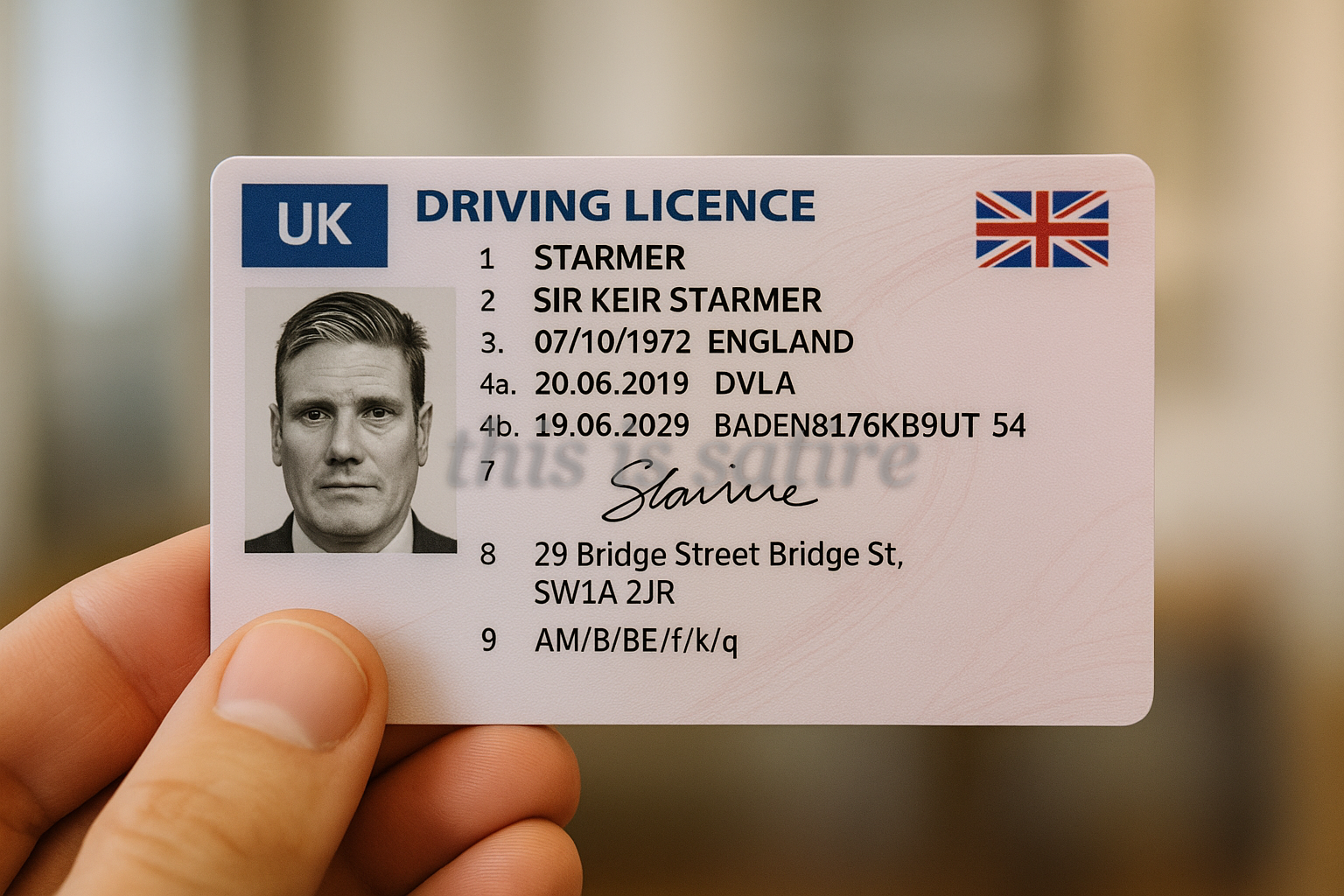
Warning satire:
The real croym here mates, is that of, why is me ole chap to allowed to use a pho’ograph of ‘imself, when he was still young and ‘andsome and I must show me damaged face on the ID?
No way he looked that good in the past decades. It ain’t rite, innint lads?
Sounds to me like we all need a fake ID, so we can read and and say what we want. Just use the real ID for banking, health and gov stuff. The other one is for excercising free speach and access to information.
I have been thinking of ways to use the “mosquito” noise that only kids cn hear to implement some kind of age verification that does not expose any personal information. It would at least protect the privacy of those over 25.
My grandarents generation warned my parents generation that TV would rot their brains.
The evidence did not support the claim. They still outperformed their patents in school.
My parents generation warned my heneration that video games woukd rot our brains.
The evidence did not suppport the claim. We still out performed our parents in school.
My generation is warning the next that soical media is rotting their brains.
The evidence does support the claim. Kids are not inly doing worse in school yhen i did, but they have regressed all the way back to the same performance as kids in 1990. https://www.npr.org/2026/05/13/nx-s1-5812483/reading-math-scores-data
Many may claim it is due to covid, but this trend started prior to covid. Kids have too much screen time. They cannot even watch a film without looking at their phones as anyone who has been to a theater can attest.
While I would rather a smartphone ban for children the a social media ban, a ban from social media could be a first step in that direction.
I realize on may think a smartphone ban would not solve anything, after all my generation had portable screen thst sought to addict their users, Gameboys, PSPs, and DSs, but none of those were all that effective at being addicting. This is a unique situation in spite of sounding like the same old same old.
As for concerns shout pushing Kids to use VPNs and fake IDs. Most kids are only so willing to risk gettingvin trouble. Kids have found ways to buy smokes and booze, but not every kid has done so. Not every single kid is willing to break rules and risk getting in trouble even if they are capable if it and could get away with it.
Sounds to me like we all need a fake ID, so we can read and and say what we want. Just use the real ID for banking, health and gov stuff. The other one is for excercising free speach and access to information.
I have been thinking of ways to use the “mosquito” noise that only kids cn hear to implement some kind of age verification that does not expose any personal information. It would at least protect the privacy of those over 25.
You can understand why governments want to restrict this sort of stuff, it’s not healthy for any person to spend a major part of the day in la-la-land adults included.
So that brings up the question if its mentally healthy and sane to be a politician? Surely not right? Get into that stuff and do it all day? That can’t be sane.
And a lot of them start very early, they already get into people’s business in school, feeling that they have some direct line to some ‘universal truth’ and ‘justice’ and have a right to apply their views to others and make laws and have goons force the whole country to comply to their beliefs, even to the point that they think they can and should do that if the majority of the population disagrees.
So how about they tackle that mental issue? Should that not be on front of the agenda after so many centuries of ignoring it? And while we are at it we can get some help for people that think politicians are right and they are very special and they should be doing that stuff. I mean I know it’s a common bug in the human mind, but still though.
“The British government is in a headlong rush to ban under-16s from social media”
Well, except for the toxic cesspool that is Bluesky.
Ban the under-16 from social media but give them the ability to vote at 16 when they’re still forbidden to access the full internet.
“The net is not a babysitter! Children should not be roaming the Internet unsupervised any more than they should be roaming the streets of New York City unsupervised.
We cannot dumb the Internet down to the level of playground. Rotten dot com serves as a beacon to demonstrate that censorship of the Internet is impractical, unethical, and wrong. To censor this site, it is necessary to censor medical texts, history texts, evidence rooms, courtrooms, art museums, libraries, and other sources of information vital to functioning of free society.
Nearly all of the images which we have online are not even prurient, and would thus not fall under any definition of obscenity. Any images which we have of a sexual nature are in a context which render them far from obscene, in any United States jurisdiction. Some of the images may be offensive, but that has never been a crime. Life is sometimes offensive. You have to expect that.
The images we find most obscene are those of book burnings.
Please remember that no child has access to the Internet without the active consent of an adult. And absolutely no child should be left on the Internet alone. Supervision of children remains the responsibility of parents and teachers, as it always has and always will.”
Rotten admin
Two things: 1) Even if not foolproof, a UK social media ban for teens will avoid more heartbreak and save more lives than the status quo. 2) Will this be “always fighting the last war,” or will teens also be banned from using AI chatbots too? Me, I never got addicted to Facebook, but I am clearly addicted to AI, even when my AI-assisted research is very quite educational. Fortunately, if I don’t pay for it, my AI addiction is throttled. Maybe there should be required “AI usage” classes that teach youngsters how skeptical they should be, before they are allowed to use AI… No, it’s not your friend. No, just because it sounds so confident, doesn’t mean you should believe it. Yes, you should challenge everything it says.
They really trying to turn into Oceania. Wonder when they will be trying to arrest proplr for thought crimes,
The real damage being done to British society is due to the radicalization of gullible pensioners. A better solution would be mandate a minimum number of hours of lawn bowling per week for all seniors.
I’m quickly losing hope for the future. Where I live, Sweden, there are proposals for social media age restrictions, (I.E. identity verification), possibly including even watching Youtube, a census with mandatory biometrics registering, adding facial recognition to police surveillance cameras (which are nowhere near as many as in London, but still dotted about most cities and towns, and there are also proposals for putting up more), et cetera. Digital ID is already something that about 99% have, Bank-ID. Said ID is required for more and more services, such as most online purchases, using several brands of package delivery boxes including Postnord, which is the state-owned postal service of Sweden and Denmark, using Swish, Sweden’s money transferring app, and accessing online health care. And accessing “secure mailbox” service, where the government can send digital messages instead of physical mail. Which there has been talk about making mandatory and quit sending physical mail altogether.
(Bank-ID of course only works on Apple, Microsoft and Google systems, add to that)
What you write about young people (also applies to privacy oriented people of all ages) learning to get around restrictions works until it doesn’t, or until it is outlawed with severe punishments. I’m fairly certain that using AI generated false ID here, for any reason whatsoever, would be the crime “urkundsförfalskning”, approximately translatable to “forgery of document”, punishable by fine or up to 6 years in prison depending on severity. Increasing punishments for all kinds of crimes is also a proposal, which will pass with all certainty.
People might say “move”, but to begin with, passports and immigration are already biometric, and the growing surveillance society is not a UK or Sweden problem, but a world problem, it is only at different stages and slightly different forms in different countries. In 10 years there will be no country which has a lower level than Sweden today, if it continues in the same acceleration it has been for the last 20.
Australia implemented a ban on under 16s use of social media. It resulted in a social media ‘shift’ in thinking about Australian politics. Suddenly, inexplicably everyone appears to believe that the 2 party system is corrupt and must go (drain the swamp), and that a far right numpty, with no policies, nor any experience in successful governance, has all the answers.
Doubtless the same will happen in the UK. Silicon Valley’s digital control through social media is a thing there too!
I already had to sign-up for my Australian Digital ID, multi document verification, facial recognition Android app and all. There’s simply no choice.
“Had to” sign up? For what? I have had no trouble banking, conducting business, browsing the web, buying/selling things the way I always have. What does one do online that one needs a “digital ID” for? I’m genuinely curious.
Another Australian here, in exact agreement with you. I don’t understand what Parent is on about.
I think if you run a business you have to have a digital ID, or at least life is made very difficult without it.
I am a sole trader. I already do my tax stuff on paper because I can’t trust the ATO’s ID (seriously, a voice print? that’s trivial to fake!)
I don’t know if this counts as “difficult,” but it did require a small investment in envelopes and postage stamps.
Don’t call me Parent.
Literally anything to do with the ACMA, so that was my unwilling in. It’s scheduled to be applied to everything to do with gubernment services and departments, that require any one of a number of identification levels. My level was ‘strict’, so that’s where they make you scan your own face with their app, in addition to uploading details of various identifying documents.
Sorry, it already here. There’s no discussion, it just is.
https://www.digitalidsystem.gov.au/
Thanks for the link. I’ll do my best to avoid it. I’ve managed to avoid the ridiculous voice ID for the tax office, and I recently got chucked off MyGov, so I have high hopes :-)
Calling Pauline Hanson far right is cute, Australia hasn’t even scratched the surface of far right, but when it comes I suspect you’ll be in for a shock.
One Nation is pretty moderate by right wing standards socially and is closer to the populist left economically, there are far more far right parties on the global stage, even the most extreme right wing parties in the west are centre-right at best.
You can’t label them as anything because they don’t have coherent policies. They just have lists of things they are grumpy about. This is much easier than sitting down like grownups and coming up with a proper plan and a sensible way to pay for it. If the Sky News watchers and Murdoch readers lap up their nonsense, why would One Nation bother with the hard parts?
Its not an unprecedented privacy invasion. Sex, alcohol, driving they are all behind age restrictions. So why are we not allowed to check those restrictions online? I admit the UK implementation sucks every way you look at it.
But the EU white label app is very close to zero knowledge proof and moving in that direction and open source. You privacy is not harmed in any way.
This isn’t really about children, it’s about digital ID for ALL.
If the gov. really wanted to do this ‘just for the children’ then it can be done
without ID.
https://dizzythinks.substack.com/p/two-crises-one-solution-zero-chance
https://dizzythinks.substack.com/p/right-lets-build-the-thing-properly