
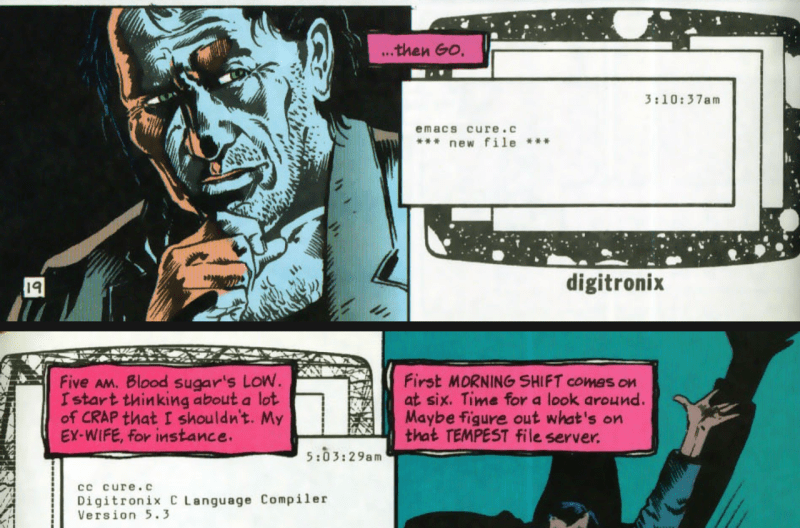
Emacs is one of the big classic text editors, right up there next to vi. It’s famous for its interface and its ubiquity across the *nix world. It’s such a core piece of software in the coding world that it has showed up a fair few times in popular culture—and [Ian Y.E. Pan] has collated some of those appearances.
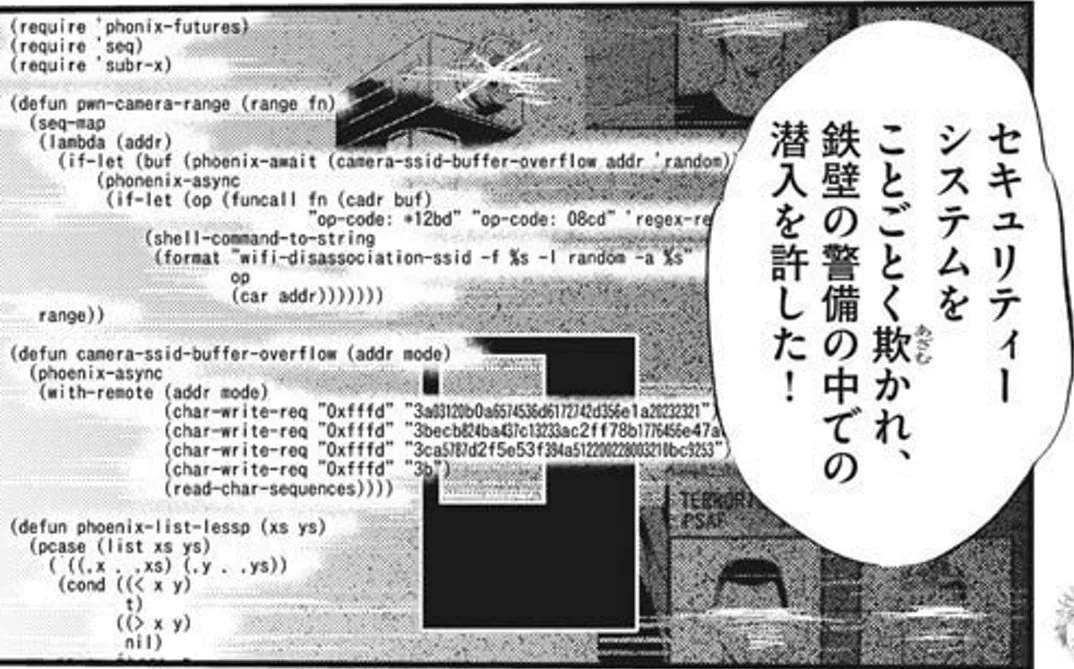 Emacs played a role in The Social Network, the retelling of the origin story of Facebook (the social network everybody used to use). Notably, Mark Zuckerberg used the tool to slap together a script for scraping a website. It also appears in Tron: Legacy, Arctic Blast, and the tech TV comedy Silicon Valley—more than once, in fact.
Other appearances include comics, Japanese anime series Key The Metal Idol, and a few miniseries and documentaries to boot.
[Ian]’s list is unlikely to be exhaustive. Both because he hasn’t seen every movie or TV show ever made, and because you can make new content featuring Emacs references tomorrow if you so desire. Still, it’s fun to see some of the famous properties that have featured good ol’ Emacs.
Don’t hesitate to let us know if you happen to put together a similar list about vi. The tipsline is waiting.












What is Facebook? An Emacs mode? I try to open it, but it did not work. Do I have to install an elisp libraries for it?
Not only emacs, but Lisp !
Those who know, know.
Triple firewall. A true fortress.
Vim better
Vim is infinitely better, and the obligatory Vim/emacs comment
https://youtu.be/lE4UXdJSJM4?si=I8tofi3BRdys3vQV&t=133
Emacs is a nice operating system, if only it had a decent text editor. ;-)
Open up the terminal & type in vi ;-)
Or if you want more, use one of the SEVERAL vi implementations. Most popular iirc is evil-mode. Works very well and supports most of the customizations that (neo)vi(m) plugins offer out of the box. The only hitch is that tou have to decide how to handle the cursor. One program expects the cursor to always be between characters, the other expects it to be on a character. Once you decide which behavior you like it works well.
Emacs is supposed to be a good text editor, or operating system, depending on who you ask. I just don’t get it.
I’ve been using VIM for decades and I love trying new things, but I’ve never seen any benefits to Emacs.
Both are different in philosophy. VIM is modular and plugins are the way to go where Emacs is more “complete”, but both can do the same things. So I should be able to do the exact same thing on both. But for some reason, running Emacs in a terminal is discouraged online. That was my experience in the past. People adviced me to run the graphical version, so that I could use the menu’s that weren’t available in the terminal version. That’s the point where I’m like, ok never mind then. I haven’t tried Emacs in over a decade so that might have changed. I just love spending time in VIM. It’s so nice, so clean, so comfortable. VIM is like a cozy blanket in the shape of an IDE.
But to each their own. I’m glad both are actively maintained, especially after Bram’s death.
I don’t dislike Emacs, I just don’t get it and I’ll stick to using Vi Vi Vi, the editor the beast (that joke is copyrighted by Richard Stallman (yes, I know)).
So for me it’s :s/emacs/VIM/g
Once you get to the point that you’re trying to make menus in vim or do serious UI tweaks emacs becomes a better substrate on which to build your editor. The main reason is that people have been doing it for decades so there are a number of built-in frameworks that support pretty much anything you could want to do. I consider it to be something of a text application framework where vim is an editor. As such you can easily use vim through emacs rather than standalone but there’s no point unless you’re trying to build a development environment out of vim.
My VIM is kind of like a development environment, except my primary language is LaTeX. My VIM looks rather stock, besides it having a language server, AI plugin, etc. I have tons of things done through shortcuts. I can easily compile my documents, change things around, fold parts, move parts. I use tabs, split windows, I use a terminal inside VIM. I’m not someone that really changes the looks so it’s not themed or anything. I try to avoid using my mouse when working so you won’t see me use menu’s. As long as it’s dark, I’m good. A large part of my work consists of writing technical documents and I’m very chaotic, which is why I love using LaTeX. I get very frustrated with Word and I make too many mistakes when using that. With LaTeX I can work with one chapter at a time using include. I write in VIM and use Zathura for the output.
Another emac advantage over vim is that people who grew up in the win 3.11 era and above can rely on their keyboard shortcut muscle memory
mcedit is my choice – it is consistent with mc interface and I do very little and small jobs in terminal.
Thing is that depending on what you do you need different tool – even to do the same job. It’s like hitting the nail – you can do it with any hammer. But different trades developed different hammer to do that efficiently in their scope of work.
It’s a shell and you’re not supposed to use the terminal version because it’s a graphical shell and you would loose features. You also won’t install it on servers as you use TRAMP to connect and do remote operations. You can access remote files even for other users like this: /user1@host|sudo:user2@host:/path/to/file and you can bookmark it ;) not need to use kitty + tmux + ssh + sudo + vi/vim to edit a remote file.
sorry forgot the /ssh: in /ssh:user1@host|sudo:user2@host:/path/to/file
No menus in the terminal???
I think it depends on what terminal you are using.
It might also depend on what options were chosen at compile time.
But…
F10 will usually bring up the menu for me. Even in a terminal. The real problem is using a terminal emulator that wants to capture F10 for it’s own uses.
Although.. I’m sure there is a way to reconfigure it for another button.
And I guess you could also do an alt-x menu-mode
I did many designs in verilog, using the Xemacs variant of emacs.
My first experience with unix (sunos, to be specific) in the early/mid 90’s got me started with emacs. I used it all through college as my main editor. I even used xemacs to get fancy color syntax highlighting and integrated gdb. Then I didn’t use unix or linux for a long time, and when I did get back into it, I was using pico or nano. Then around ’07, I was guilted into getting on the vim train. Been there ever since. But I still remember liking emacs a lot, never really understood all the hate for it. I should try switching back for funsies.
I have an fun warm-up interview question that I use on candidates: VIM, nano, or emacs? Then I make them explain their choice (that’s when the interview really starts).
Nano with VIM shortcuts, unless one wants the full vim experience.
Oh boy. Nano if it’s all that’s installed, vi(m) if the system is brand new and I haven’t set anything up, neovim for quick edits while the system isn’t fully up such as editing configuration files from a rescue terminal or right before shutdown. Emacs in client/server mode with evil-mode if the computer is going to be on for any length of time or I’m doing Serious Work™️.
Did anyone replied something like: none of them – I use mcedit (or some other odd choice)? Did they managd to defend their choice?
I occasionally get somebody who will venture VSCODE or an IDE of some sort — which is fine if they can justify their choice in a logical, cogent manner.
Emacs, because it’s what I grew up with. Well the MicroEMACS version that shipped with the Amiga anyhow. Same reason I still use 1-2-3 “/” shortcuts in Excel instead of the normal shortcut keys … decades worth of inertia! 😆
the funny thing is that nvi is actually better than vim. i wouldn’t’ve expected that. but nvi’s deeply nested undo behavior is far superior to any other vi i’ve found. i assumed it was just “in my fingers”, but no, it’s actually more capable. and vim’s performance is abysmal on a lot of common operations, like O(n^2) when repeat counts come into play. no one was more surprised than i was to find that this vague personal preference turned out to be have a basis in objectively-measured quality.