

Yesterday, Isar Aerospace secured its place in the history books when the upper stage of their Spectrum rocket put a payload of CubeSats into low Earth orbit (LEO). Not only does this make them the first European company to achieve such a feat, but it also marks the first time a booster departing from continental Europe has reached orbit. Not bad for a second attempt.
Standing 28 meters (92 feet) tall, the two-stage Spectrum rocket is just shy of half the size of the SpaceX Falcon 9 and designed to put a maximum of 1,000 kilograms (2,200 pounds) into LEO and 700 kg (1,500 lb) into the Sun-synchronous orbits used by Earth observation satellites. That puts its performance considerably ahead of other commercial launchers such as Rocket Lab’s Electron. Although the booster is not reusable, Isar Aerospace has stated they’re targeting a respectable launch cost of €10,000 ($11,700) per kilogram. The German company notes there are several more Spectrum vehicles currently in production, and when their new factory is operational, they’ll have the capacity to produce up to 40 of them each year.
In other European space news, BepiColombo has now entered what the European Space Agency (ESA) is calling the “arrival phase” of its nearly decade-long journey to Mercury. On Thursday, the spacecraft jettisoned its ion propulsion module as it had achieved the necessary trajectory and velocity to be captured by the planet’s gravitational field when it swoops by in November.
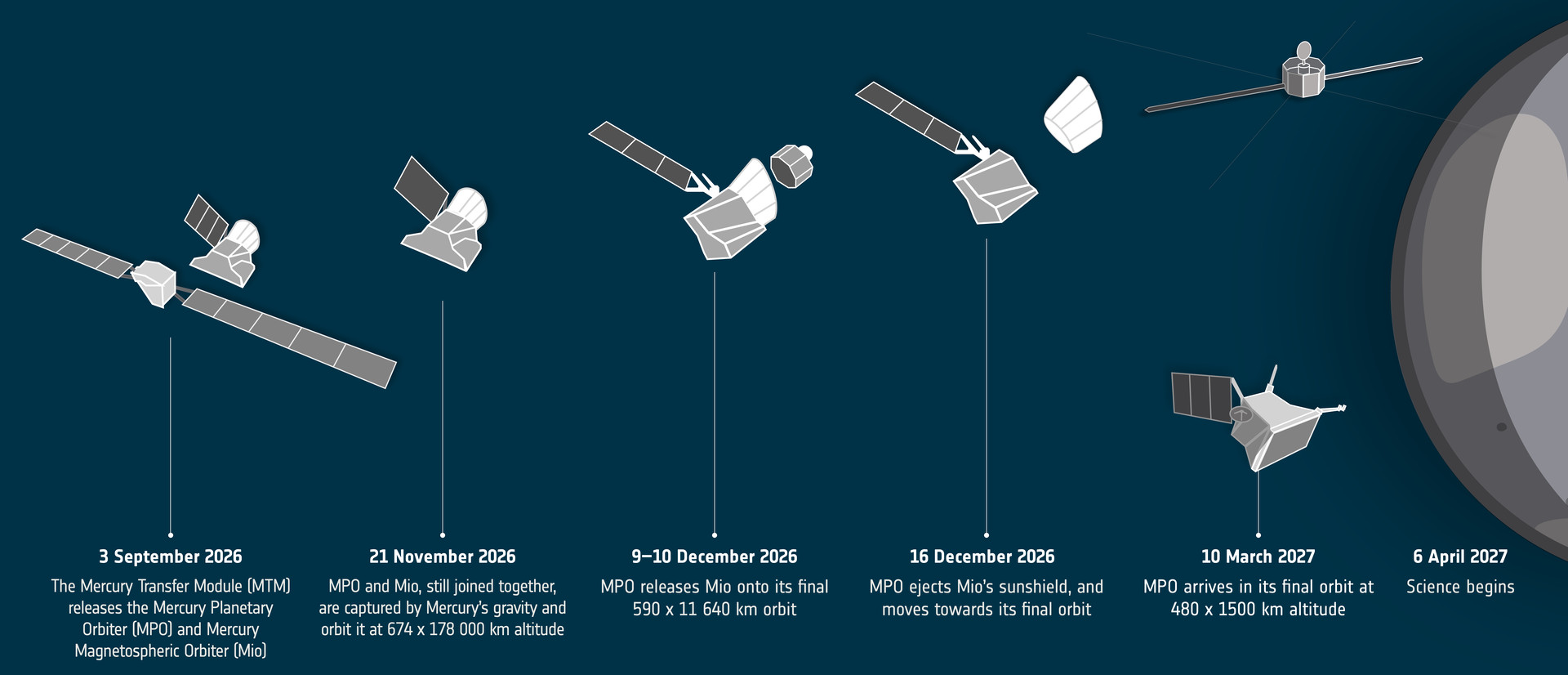
Launched in 2018, the BepiColombo mission is actually carrying two separate craft: the ESA’s Mercury Planetary Orbiter and the Mercury Magnetospheric Orbiter from Japan. After the two separate from each other in December, they will operate independently to study their respective aspects of the solar system’s innermost planet for the next year, although, as is often the case for missions like this, an extension is always possible if things are still going well at that point.
On the subject of hardware outliving its original design lifetime, an active community of hackers has done a fantastic job of keeping the Spotify Car Thing up and running after the company officially pulled the plug on it just two years after its 2022 release. They’ve got a full Linux distribution running on it featuring a slick UI that can launch apps, check the weather, tap into Home Assistant, and of course, play music. The community is currently running a contest with cash prizes to spur on development of new open source software for the liberated Car Thing, and we’re eager to see what comes of it.

Speaking of keeping things open, the Free Software Foundation (FSF) has joined Bluesky — but they aren’t exactly thrilled with it. Being federated and largely comprised of free and open-source software, the FSF admits that Bluesky is the lesser evil when compared to something like X or Facebook. But they still can’t recommend others join the service, as the actual signup process requires your browser to run non-free JavaScript code.
One may wonder why the FSF would join Bluesky if they can’t recommend the service to others, and the answer is simply because they want to get the word out to a wider audience. While the FSF already operates an account on Mastodon, there’s a good chance that anyone who’s willingly regularly using said platform doesn’t need any additional convincing when it comes to the evils of proprietary software.
This is as good a time as any to point out that Hackaday is on Bluesky and Mastodon as well, and unlike the FSF, we’re also on Facebook, although the automatic sharing of new posts hasn’t worked for quite some time and honestly we can’t be bothered to figure out why. For our readers with a particular aversion to grass, we’ve even got an official IRC channel on libera.chat where you and nearly 50 others can feel superior to the thousands of immoral heathens that have joined our Discord server.
Finally, it’s been 50 years since the introduction of the ColorChecker — that little card with 24 blocks of colors that’s placed in the frame of a picture or video to provide a visual reference point. In honor of the milestone, Calibrite has put together a timeline that walks you through its history, starting with its inception in the 1976 paper “A Color-Rendition Chart” by C.S. McCamy, H. Marcus, and J.G. Davidson and running up to how the handy tool evolved for the digital age.
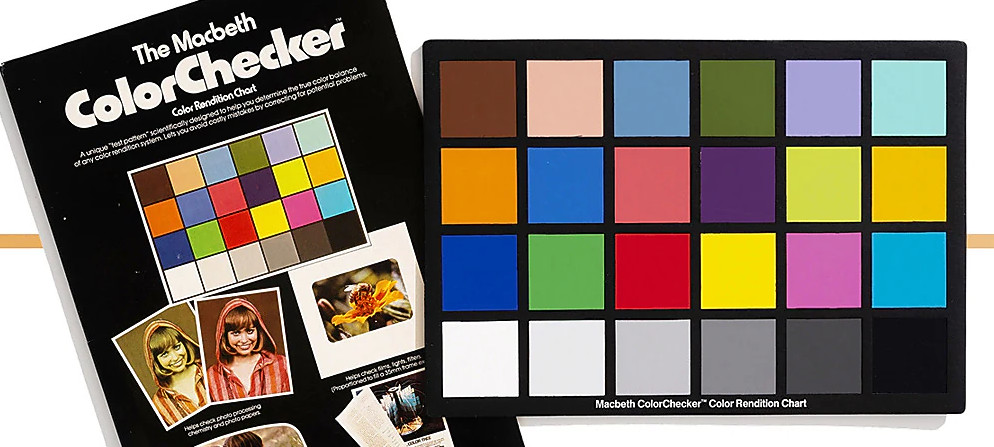
There are plenty of facts and trivia about the ColorChecker that you can bring up the next time you want to impress a photographer, and we especially appreciated the breakdown of what each of the original 24 colors was meant to represent.
See something interesting that you think would be a good fit for our weekly Links column? Drop us a line; we’d love to hear about it.












i always figured the goals of the fsf was nonpartisan, so i see it silly to align itself with a service that is reputed to be an echo chamber for the democratic party. especially when many of the tech companies they are fighting against are also primarily left leaning. right leaning people also want agency over their technology and software.
My thoughts would be that nostr might be the best fit for FSF, unlike bluesky or twitter nostr is truly incapable of having a bias applied to it, and unlike mastodon it doesn’t end up fracturing in to separate non-interacting communities each with their own bias who mutually block servers that host content sympathetic to “the other side”. My understanding is that nostr lets users host their own accounts, making it impossible for them to be shut down by anyone, but at the same time each viewing client gets the ability to decide who’s posts they do and do not wish to see in their feed… Nostr supports situations where, in response to the same newsworthy event, different users can mutally see whoever’s coverage aligns with their side of the debate, you can choose to prioritise what you agree with or block what you despise without ever affecting it’s distribution to those others who don’t/do want to see it. And an open minded user can select to follow accounts which stand for every general viewpoint, ensuring nobody can bias or otherwise manipulate their feed for them. In principle Nostr would seem to be perhaps the perfect public square (if only it had more users).
Bluesky is all the people that ragequit X when Elon burnt their longhouse down.
FSF needs to go where its donors are. Money is money.
FSF, the same company that for about 25 years sheltered known pedophile Stallman. When people had enough they were like “uhm sorry about that, we didn’t know”.
I don’t care if they become designated terror organisation. They deserve it.
DIY alternatives to Calibrate? As this is Hack-a-day, and I have no money, any clever people have ideas?
For rendering
https://techxplore.com/news/2026-09-method-blends-real-3d-accurate.html
I’m not even on the IRC but I think the writer is intelligent enough to identify the very real issues with having your main community contact area on a Discord. This must be the saddest cyberpunk timeline.