Yesterday, Isar Aerospace secured its place in the history books when the upper stage of their Spectrum rocket put a payload of CubeSats into low Earth orbit (LEO). Not only does this make them the first European company to achieve such a feat, but it also marks the first time a booster departing from continental Europe has reached orbit. Not bad for a second attempt.
Standing 28 meters (92 feet) tall, the two-stage Spectrum rocket is just shy of half the size of the SpaceX Falcon 9 and designed to put a maximum of 1,000 kilograms (2,200 pounds) into LEO and 700 kg (1,500 lb) into the Sun-synchronous orbits used by Earth observation satellites. That puts its performance considerably ahead of other commercial launchers such as Rocket Lab’s Electron. Although the booster is not reusable, Isar Aerospace has stated they’re targeting a respectable launch cost of €10,000 ($11,700) per kilogram. The German company notes there are several more Spectrum vehicles currently in production, and when their new factory is operational, they’ll have the capacity to produce up to 40 of them each year.
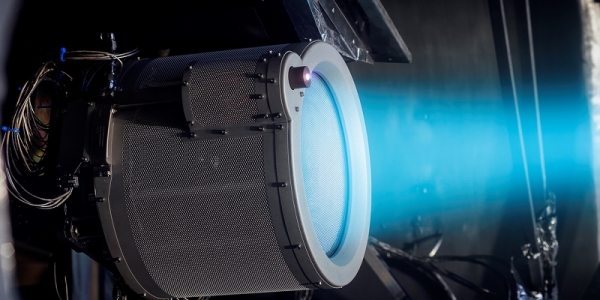
In other European space news, BepiColombo has now entered what the European Space Agency (ESA) is calling the “arrival phase” of its nearly decade-long journey to Mercury. On Thursday, the spacecraft jettisoned its ion propulsion module as it had achieved the necessary trajectory and velocity to be captured by the planet’s gravitational field when it swoops by in November.