

Hackaday Links Column Banner

Hackaday Links: September 6, 2026

Yesterday, Isar Aerospace secured its place in the history books when the upper stage of their Spectrum rocket put a payload of CubeSats into low Earth orbit (LEO). Not only does this make them the first European company to achieve such a feat, but it also marks the first time a booster departing from continental Europe has reached orbit. Not bad for a second attempt.

Standing 28 meters (92 feet) tall, the two-stage Spectrum rocket is just shy of half the size of the SpaceX Falcon 9 and designed to put a maximum of 1,000 kilograms (2,200 pounds) into LEO and 700 kg (1,500 lb) into the Sun-synchronous orbits used by Earth observation satellites. That puts its performance considerably ahead of other commercial launchers such as Rocket Lab’s Electron. Although the booster is not reusable, Isar Aerospace has stated they’re targeting a respectable launch cost of €10,000 ($11,700) per kilogram. The German company notes there are several more Spectrum vehicles currently in production, and when their new factory is operational, they’ll have the capacity to produce up to 40 of them each year.

In other European space news, BepiColombo has now entered what the European Space Agency (ESA) is calling the “arrival phase” of its nearly decade-long journey to Mercury. On Thursday, the spacecraft jettisoned its ion propulsion module as it had achieved the necessary trajectory and velocity to be captured by the planet’s gravitational field when it swoops by in November.

Continue reading “Hackaday Links: September 6, 2026”

Old Spotify Car Thing Hacks Gain New Attention

If you haven’t heard by now, Spotify is shutting down support for their “Car Thing” on December 9th of this year. Once that happens the automotive media player will officially be useless, with users being advised to literally throw them in the trash come December 10th. Call it an early Christmas present from your friends at the multi-billion dollar streaming company.

Surely the hardware hacking community can do a bit better than that. As it turns out, there’s actually been a fair amount of hacking and research done on the Car Thing, it’s just that most of it happened a couple years back when the device first hit the market. Things stagnated a bit in the intervening years, but now that the clock is ticking, there’s far more interest in cracking open the gadget and seeing what else we can do with it.

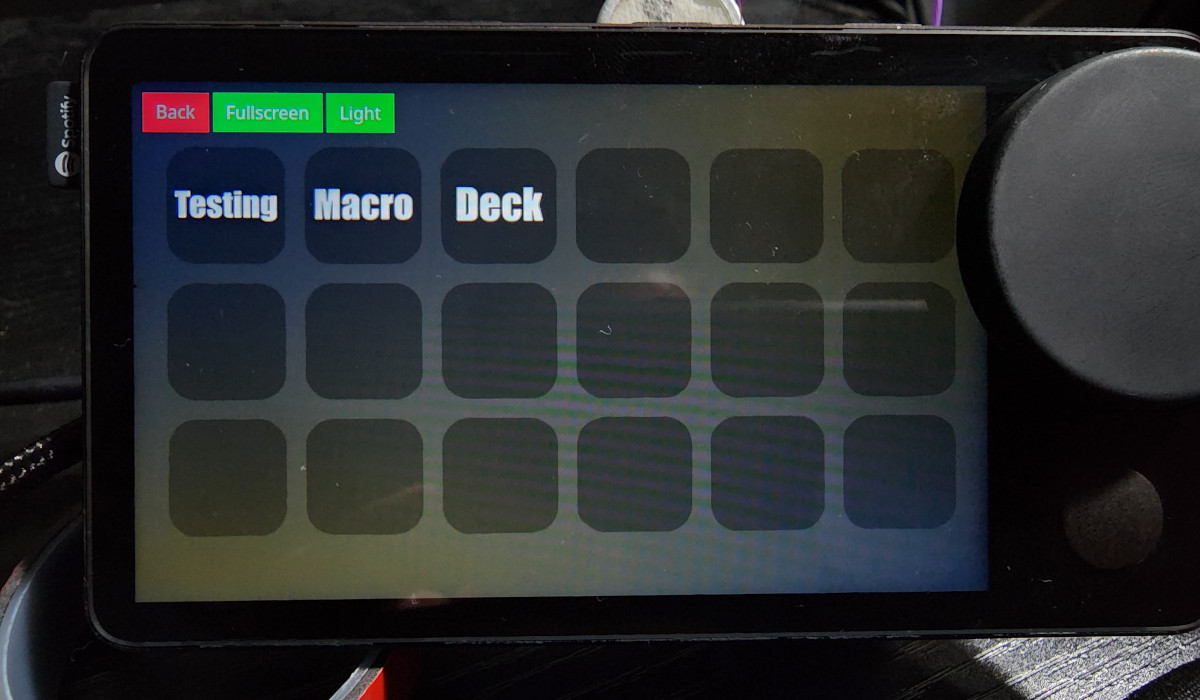
[lmore377]’s Car Thing macropad hack from 2022.
The car-thing-reverse-engineering repository on GitHub has a wealth of hardware and software information, and has been something of a rallying point for others who have been poking around inside the device. Unsurprisingly, the Car Thing runs Linux, and with relatively minor work you can gain U-Boot and UART access. With just 512 MB of RAM and a Amlogic S905D2 chip that’s similar to what powers the Radxa Zero, it’s not exactly a powerhouse. Then again, we’ve seen plenty of awesome projects done with less.

If you’re more into the step-by-step approach, security researcher [Nolen Johnson] did a write-up about getting access to the Car Thing’s internal Linux system back in 2022 that’s certainly worth a look. As you’d imagine, there’s also a few YouTube videos out there that walk the viewer through gaining access to the hardware. This one from [Dinosaur Talks Tech] not only provides a good overview of how to get into the system, but covers flashing modified versions of the stock firmware to unlock various features and tweaking the internal Linux OS.

Interestingly enough, while we’ve seen plenty of homebrew hardware players for Spotify over the years, this is the first time the Car Thing has ever crossed our path. Something tells us though that this isn’t the last time we’ll hear about this forlorn Linux gadget.

Continue reading “Old Spotify Car Thing Hacks Gain New Attention”









