
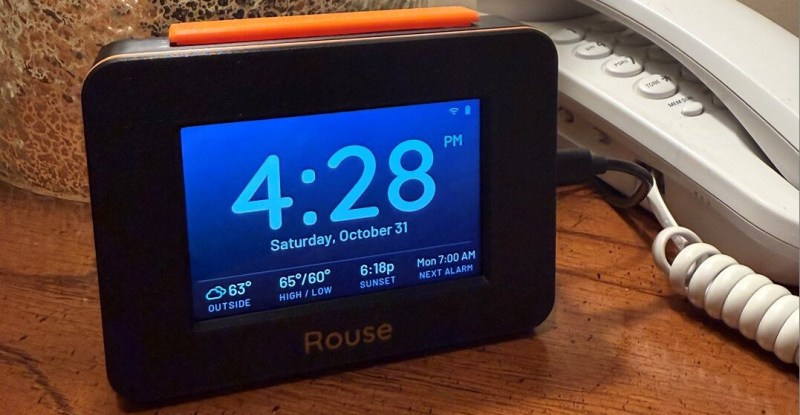
Devices from the likes of Google and Amazon can be used as high-tech alarm clocks that can show the weather and family photos in addition to telling you what time it is. But they’re also used to push ads out and potentially do other shady things that you’d probably just as soon not have in your bedroom.
If you like the features offered by devices like these but not the hidden costs that come with them, take a look at Rouse. This firmware, which can be installed on common ESP32 development boards such as the Waveshare ESP32-S3-Touch and the ubiquitous Cheap Yellow Display, provides some of those same features in a DIY package.
 There’s no user account, no subscription, and no app for your phone that will inevitably stop working some day. The firmware offers up a web interface for configuration that can be accessed by anything with a web browser, and while it can perform firmware updates over the network, it only does so with your approval. It might seem odd that we have to double check to make sure our alarm clocks aren’t leaking any of our information onto the Internet, but that’s the world we live in apparently.
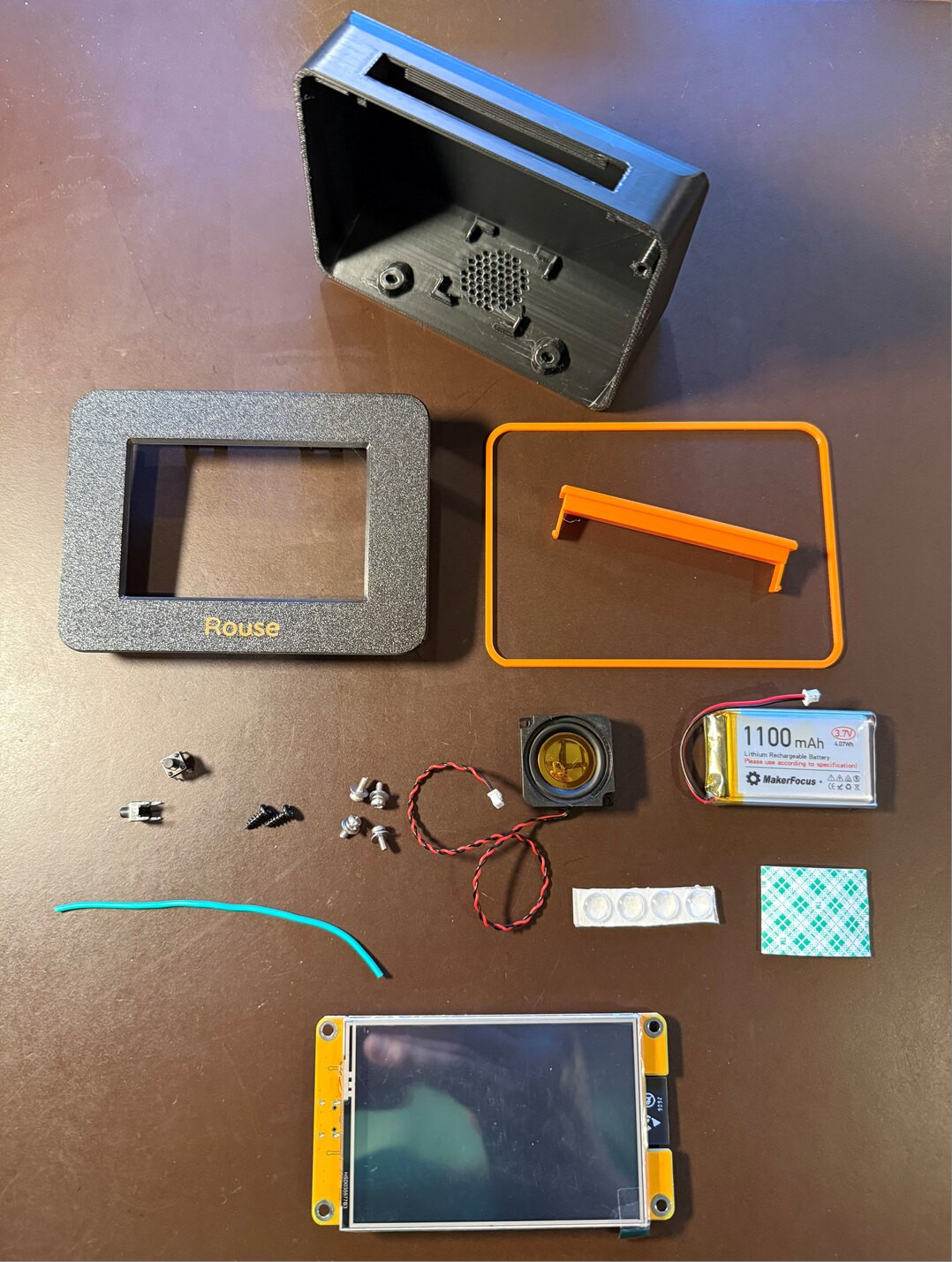
In addition to the basic ESP32 board, you’ll probably want to add some buttons and a speaker, all of which is documented in a fantastic build guide. There’s even files for you to 3D print your own enclosure for the finished clock, though you could certainly put it in an enclosure of your own choosing should you want to customize the build further.
Hackers and makers love clock projects, and at this point we’ve covered more than we can even keep track of. As part of that we’ve seen a number of alarm clocks builds, but as is so often the case around these parts, they tend to be one-off builds. The fact that Rouse has been built with community in mind really makes it stand out, and we’d love to hear in the comments if any of you already have one of these ticking away on your nightstand.












The build looks awesome, the orange rim between front and case is definitely a professional design trick. The same can be said of the site with all the documentation and downloads. This is the best example i’ve seen in a long time of what open source/hardware can be; and it isn’t even sponsored by some Chinese pcb manufacturer. Love it.