Refurbishing A Vibratory Tumbler With A Dryer Motor

vibe

[Jake von Slatt] of the Steampunk Workshop is at again, this time refurbishing a cheap vibratory tumbler that had died after just one project.

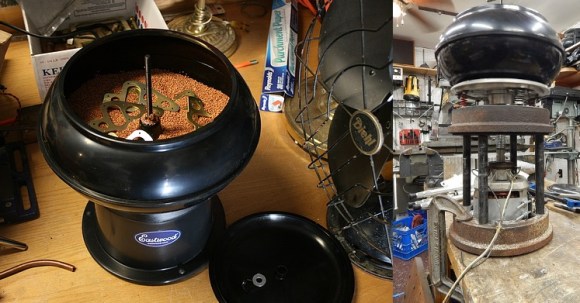
The original Eastwood tumbler looked nice, but obviously didn’t go through much life-cycle testing at the company that designed it. Upon taking it apart, [Jake] discovered that the bearings in the motor were shot — after only a few hours of operation! Because of this he decided to start from scratch, keeping only the bowl, lid, and of course, the tumbling media.

[Jake’s] redesign makes use of Volkswagen brake drums for a very heavy duty base, a custom machined ball bearing plate made out of scrap aluminum, a flexible motor coupling made by welding a heavy spring onto two shafts, some more springs to balance the bowl, and a reclaimed dryer motor. It might not look pretty, but we think it’ll last a wee bit longer than the original.

He’s calling it his latest feat of post-apocalyptic engineering by using only parts on hand, and while we’d have to agree that his use of scrap material is impressive, we’d like to see him be able to power his rebuilt Bridgeport Mill off the grid when the apocalypse hits!

As always, he’s made an excellent video describing the project — don’t forget to check it out after the break.

Continue reading “Refurbishing A Vibratory Tumbler With A Dryer Motor”
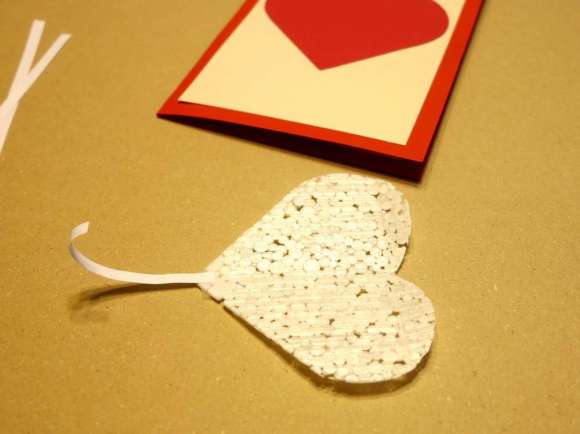
Walkalong Heart Glider

IMG_2924-1000

[Darcy Whyte] is a bit of a paper plane aficionado, so in preparation for this year’s Valentine’s day (that’s one month from today!) he’s created a flying Walkalong heart glider you can make yourself!

First off, what’s a Walkalong glider? Well, it’s a type of toy airplane made out of a light material with geometry that allows for a very slow descent — one that can be extended almost indefinitely if you walk behind it to create a slight draft. [Darcy] has made a whole bunch of these in all different shapes and sizes, and even got to fly them around the Canadian Aviation and Space Museum for a Walkalong Glider Meetup!

He’s since created the do it yourself Walkalong heart glider which can easily fit inside a card for a very unique Valentine’s memento. It does require a foam cutter to make, but [Darcy] also has plans on his site for a DIY hot-wire foam cutter that costs less than $10 to build!

It’s a cute little project — stick around after the break to see how it’s done!

Continue reading “Walkalong Heart Glider”

Hydro: The Low Cost Waterjet Cutter

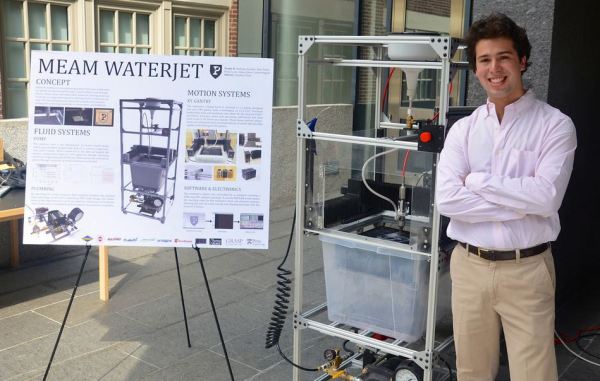
Waterjet cutters are generally huge machines, with equally large price tags. But what if there was a hobbyist level waterjet cutter that was actually affordable? Well, for their Senior Design Project at the University of Pennsylvania, [Adam Libert] and his team made one that could retail for less than $5000.

[Adam] was the lead mechanical designer on this amazing project, and he designed the fully waterproof XY gantry, capable of withstanding the water and abrasive from the cutter. The entire machine is only 2′ x 2′ by about 5′ tall, making it extremely portable and easy to move through doorways — and it runs off of plain old 120VAC and shop air. It is capable of cutting through up to 1/4″ aluminum and 1/8″ steel with a working area of 12″ x 14″ at a tolerance of 0.005″.

Not surprising, the project won the Mechanical Engineering Senior Design competition in 2012 with accolades for outstanding creativity. We weren’t able to find any information on the future plans for this project, but we hope they make it open-source, or even run a crowd-funding campaign for it.

The goal was to create the first ever low-cost, small scale, and easy to use waterjet cutter, and judging by the video, it looks like they did it — stick around after the break to see for yourself.   

Continue reading “Hydro: The Low Cost Waterjet Cutter”

Copper Etching: Not Just For PCBs

etching buttons

[Morag Hickman] is an artist who makes use of ferric chloride for something other than etching a PCB. She uses the process to etch beautiful designs into her jewelry.

[Tortoise Butler] is a small film crew that created this three and a half minute film on the art of etching copper, and it is an absolute pleasure to watch. There are no computers, no toner transfers, and she doesn’t even etch on a flat surface. It’s an excellent example of doing something different — why not add etching to finish off a project? If you’ve already done PCBs, it can’t be that hard to do a logo instead!

Anyway, it’s been a while since we’ve shared a handmade hack, and we think this is a great example that deserves the spotlight. Don’t forget to send in your own handmade projects to the tips line!

Stick around after the break to enjoy the film — we recommend watching it full screen and in HD.

Continue reading “Copper Etching: Not Just For PCBs”

Fastening 3D Printed Parts

PC100358

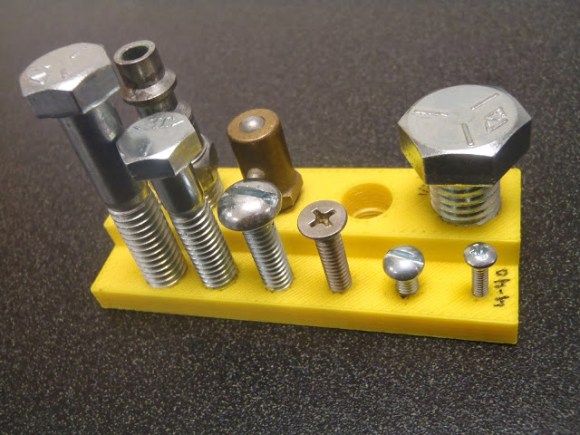
Ever been curious on how to fasten 3D printed parts together? There are lots of ways to do it — but what’s the best way? [Chris Lopez] works in a machine shop and decided to do some testing of how best to tap 3D printed parts, so you don’t have to!

The typical ways to add fasteners in 3D printed parts include designing the thread right into the part (only works for big threads), adding a press-fit insert, drilling and tapping it like any other material, inserting a Heli-Coil, or even by using ultrasonic weld inserts. In fact, this Stratasys blog post actually goes into some good detail on the pros and cons of each!

But, there’s a much easier way. To tap a hole normally you need to locate it accurately, make a pilot hole with a center drill — ensuring it is straight and true — then drill through with the undersized tap drill, and finally, thread it with a tap. Luckily, your 3D printer takes care of almost all these steps. By simply designing your holes to be the tap drill size you can hand tap fairly strong threads in your 3D printed parts. Just make sure your wall thicknesses and or infill settings are high enough to make sure there is material to engage!

[Chris] also goes into some detail on creating captive nut geometry — but for that you’re going to have to check out his blog. And if you’re interested in another style of fastening 3D printed parts, why not inset magnets into them while they are printing?

The Face-Tracking Confectionery Cannon!

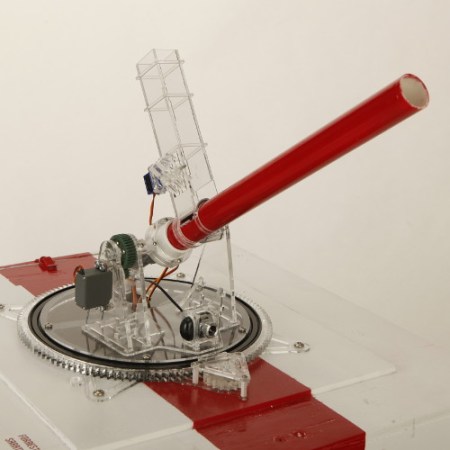
A team of mechanical and electrical engineering students at Olin College came up with a very fun semester project — a pneumatic powered marshmallow cannon that can track faces, and aim for the mouth!

The device — dubbed the Confectionery Canon — is an impressive mechanical build which required many of Olin College’s manufacturing resources such as the laser cutter, the mill, and the lathe. The majority of the device was made out of acrylic, which was chosen for easy laser cutting, and affordability. Specific aluminum pieces provide strength and were made using mostly scrap found in the shop.

Four servos, a webcam, a solenoid and an Arduino Uno make up the electrical system, which uses Python and OpenCV to track faces (GitHub). A PVC tank is used as the pneumatic reservoir, charged with a safety release valve at 30PSI. To fire the cannon, a sprinkler valve is controlled by a beefy solenoid. It currently only has a magazine capacity of 4 large marshmallows, but the team is planning on upgrading soon.

They have put together a great website with tons of information on the project, and following the break is a fun promo video they made for the project — they even got the VP of  the college to try it!

Continue reading “The Face-Tracking Confectionery Cannon!”

SquareWear 2.0 A Wearable Opensource Arduino

squarewear2_annotation-1024x577

Are you guys tired of redesigned Arduinos yet? Usually we are, but [Ray] just released the SquareWear 2.0, and we have to admit, it’s a pretty slick design.

It’s an update to SquareWear 1.1 which we covered a year ago. That version made use of a 18F14K50 microcontroller, measured a tiny 1.6″ x 1.6″ and could easily be sewn into wearable circuits. But after receiving lots of requests to design a new Arduino based board, [Ray] obliged and made v2.0.

The new SquareWear is slightly bigger, measuring in at 1.7″ x 1.7″, but it packs a much bigger and more functional punch — just check out the image schematic above! The only catch is it doesn’t actually have a USB-to-serial chip on-board, which is why [Ray] was able to get the board so small and inexpensive. Instead it simulates USB in the software using the V-USB library. That method is much slower but still functional. To perform serial communication through the USB port it uses the onboard USBasp bootloader.

The board also features large through-holes to accommodate sew-able pin pads, making it super easy to integrate this into fabric!

For a complete explanation of the SquareWear 2.0, check out the video after the break.

Continue reading “SquareWear 2.0 A Wearable Opensource Arduino”