Robotic Motion Sensing Using An Optical Mouse

optical mouse

We’ve had fun with the sensors in optical mice before, but [Mac Cody] wrote in to tell us about his legitimate application of the technology. First, he disassembled the mouse and bypassed the on-board controller. He then wired the clock and data lines to a Harris RTXEB single board computer. It’s based around a Harris RTX2001A microcontroller which he programmed in Forth to talk to the Agilent optical mouse sensor. Documented code is provided in case you want to implement it in a different language. His future plans for the system are to roll it into some robot projects for dead reckoning navigation.

Continue reading “Robotic Motion Sensing Using An Optical Mouse”

Shmoocon 2006: The Church Of Wi-Fi Presents: An Evil Bastard, A Rainbow And A Great Dane!

shmoocon

The Church of WiFi gave a presentation on some of their recent projects. The first was coWPAtty, a program for brute forcing WPA-PSK. To speed up the process they created a table for pre-hashed WPA-PSK. WPA-PSK is seeded using the SSID of the router, so they grabbed the top 1000 SSIDs from Wigle.net and calculated the hashes when using a 170,000 word dictionary. Now they are able to check 18,000 keys/sec instead of just 12 keys/sec.

The next project was Evil Bastard, a custom WRT firmware. It is similar to Rogue Squadron which is a firmware designed to spoof an access point and collect user information by phishing. Evil Bastard has even more tools like Aircrack and Driftnet. It even features a “Point ‘n 0wn” interface that lets you just click on the target you want to automatically spoof.

The CoWF is also responsible for Kiswin, Kismet for Windows, which saves you from having to install Cygwin.

Continue reading “Shmoocon 2006: The Church Of Wi-Fi Presents: An Evil Bastard, A Rainbow And A Great Dane!”

Shmoocon 2006: Covert Crawling: A Wolf Among Lambs

shmoocon

Billy Hoffman has built a site crawler that can hide its activity within normal web traffic. Crawling a website is one of the easiest ways to find exploitable pages, but the systematic nature of the crawl makes it stand out in logs. Billy set out to design a crawler that would behave like a normal web browser. It follows more popular links first (think “news”, not “legal notice”) and it doesn’t hit deep linked pages directly without first creating an appropriate Google referrer. There are tons of other tricks involved in making the crawler look “human” which you’ll find in Billy’s slides over at SPI Labs. You can also read about the talk on Wired News.

Continue reading “Shmoocon 2006: Covert Crawling: A Wolf Among Lambs”

Windows 95 On A GP2X

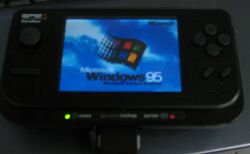
bochs-gp2x-1-thumbThe GP2X is a portable game console that runs Linux and was released in November last year. This is a console that encourages you to hack its open platform and has a dev wiki to document those projects. Mandleman has recently gotten Bochs, the x86 emulator, running on the platform. He then booted Windows 95 (Internet Archive) on top of that; It takes six and a half minutes. He’s also built emulators for the NES, NeoGeo pocket, and Wonderswan. Recently released Linux based devices like the GP2X and the Nokia 770 are interesting because they encourage development. I hope in the future we’ll see an open device that has the market penetration of the PSP.

[thanks togi]

Continue reading “Windows 95 On A GP2X”

Using Mologogo With Google Earth

earth

[yug1taht] wrote in to tell us about his lastest addition to Mologogo. You may remember Mologogo from its launch last fall. It lets you track GPS enabled phones using Google maps. It works with most Nextel phones and the inexpensive pay-as-you-go Boost Mobile phones; which is what our friend PT used when he tried it out. This latest addition to Mologogo lets you output the data as .kml file which you can then play with in Google Earth.

Continue reading “Using Mologogo With Google Earth”

Shmoocon 2006: Behavioral Malware Analysis Using Sandnets

sandnet

A common approach to analyzing malware is to turn it loose inside of a VMware session, but some malware have methods for detecting virtual machines and will refuse to run if they encounters one. Joe Stewart has developed a tool called Truman that can be used to construct a sandnet. The sandnet expands on the idea of using VMware as a sandbox. The malware runs inside of a normal OS environment not a virtual one and it interacts with what it thinks is an entire network.

This is how the setup works: You have two machines connected using a crossover network cable. Machine 1 is the server and machine 2 is the client that the malware will be run on. Machine 2 is booted via PXE into a clean Windows install (or whatever OS your malware is for). Once booted it begins watching a directory on the server for the malware’s exe. Once you copy the executable into the directory the Windows machine copies the file and executes it. After 10 minutes the Windows machine dumps its physical memory to disk and then shuts down. An image of the newly infected Windows file system is then saved. The client machine then boots into Linux for analysis of the new Windows image. Truman improves analysis speed because you don’t have to constantly reimage the client machine by hand.

The PXE server also acts as a fauxinternet for the client machine. By watching tcpdump you can see what outbound connections the malware is trying to make. To aid in this process, Truman includes several fauxservers which are just simple Perl scripts designed to act like servers. The fauxservers tell the malware exactly what it wants to hear in hopes that it will cough up logins, passwords and other useful information.

Continue reading “Shmoocon 2006: Behavioral Malware Analysis Using Sandnets”

Standalone Microcontroller Based LUA Development Platform

lua
Hack-A-Day reader Bogdan Marinescu does a better job summarizing his project than I ever could. You can get his source code, schematics and more details by following the “read” link.

This project is a truly stand-alone development platform. What does that mean? Well, you plug-in a PS/2 keyboard, a 320×240 LCD, and start typing code. The code is written in LUA. The compiler and interpreter for LUA run from the microcontroller. The code also contains a small editor (for the code), support for FAT12/FAT16 on MMC/SD cards, support for remote connections and a new FLASH-friendly embedded file system. The platform is ‘self-reproducible’, i.e. you can transfer code from one platform to another. The LCD/keyboard/MMC are optional, so you can have a big ‘development’ platform with everything in it and a lot of bare ‘production’ platforms that ‘reproduce’ their code directly from the development platform. A M16C microcontroller and an external 512K SRAM chip are all that is required to build the bare platform, the other components are just for interfacing different peripherals. Hope you’ll like the idea. The code is 95% functional, but it needs some more work and a lot more testing.

Continue reading “Standalone Microcontroller Based LUA Development Platform”