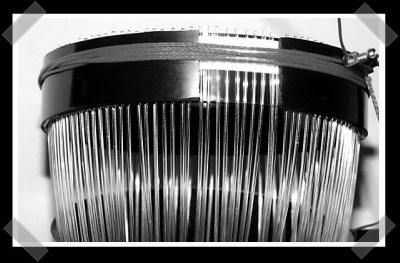
Ring lights that surround the lens are generally used for macro photography – they’re not cheap, but they’re one of the few ways to get shadowless photos. This fiber optic flash diffuser is based on the same ideas of this one. Rather than use a few large optic strands, [Joris] is using many, many more to decrease shadows as much as possible. His previous efforts are even more interesting. He built a LED version – with serial connected LEDs and a step up switching power supply to drive them. Then he moved on to cold cathode fluorescent before moving onto the fiber optics.
LED Hacks1914 Articles
Fnordlicht: RGB Mixing LED Light
While [Will] goes and hides in his offshore datashelter, Hack-A-Day is happy to welcome back our veteran foreign correspondent [fbz]. She promises future posts will have far less ‘German by example’. -[Eliot]
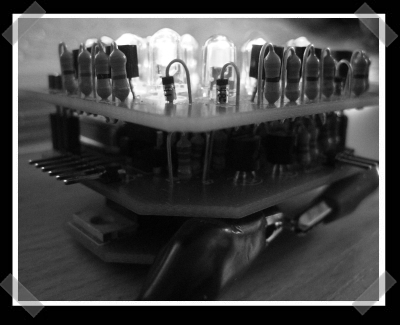
The Fnordlicht is a color mixing LED platform with free hardware schematics and open source firmware initially started by [fd0]. The system is dynamically controllable (via RS-485) and can also work as a standalone with pre-loaded color mixing. I have one of these soldered up and working at home; the circuits come in a stack of three boards with an optional serial level shifter board add-on. There are project pages in German about the Fnordlicht as well, which include some photos of the first prototype. Full kits (“Fnordlicht Bausatz” means “Fnordlicht kit”) and printed circuit boards (“Fnordlicht Platinensatz ohne Bauteile” means “Fnordlicht circuit board set without parts”) can be purchased from their shop, but be sure to ask them first about shipping prices to your location. I love this project, I fire it up and stick it in a corner of my hack room to add some color-changing atmosphere.
A while ago [Eliot] covered the MoMolight, a color changing led project controlled by the colors playing on your monitor.
Thinkpad Style Keyboard Light
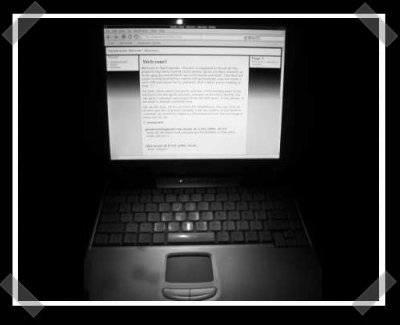
[Sprite_tm] keeps coming up with nice work. This time he sent in his thinkpad style keyboard LED lighting solution for his toughbook. I know, you’re thinking… ‘it’s a LED…’ He used an ATtiny13 to monitor the caps lock LED. If it’s operated two times in succession, the LED is turned on and off. Nice, clean and effective.
[By the way, Part 2 of my diy projector how-to is up on engadget. Look for part 3 later Tuesday.]