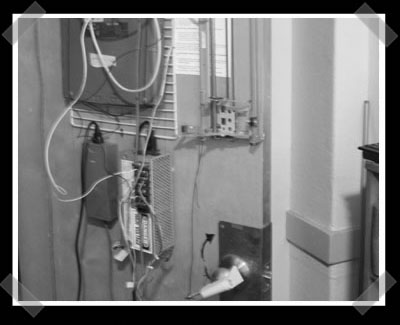
[Dheera] sent in his electronic door lock. The current version is purely microcontroller based, but I loved this crazy iteration. Seeing something like this evolve is fantastic. I really wanted a keypad door lock when I was old enough to dream of electric sheep.
Misc Hacks4131 Articles
Pre Geek-o-ween Mini Extra

[Zodiac] sent in this pumpkin computer. Gutted laptop, dvd drive, need I say more?
[max] sent along this ‘flaming’ led modded pitchfork.
I ran across Woz lighting himself up.
[Jon] and [Shawn] sent along this freaky project. [Warning: Involves taxidermy] [Jon] suggests a bluetooth headset… Dude.
Sequential Battery Charging
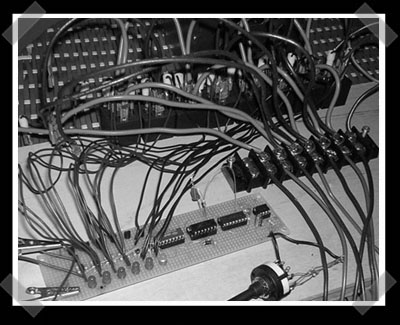
I’m getting pretty interested in building an electric motorcycle, and I ran across this little hack to charge multiple batteries with one charger. It uses a 4020 counter that’s pulsed by my dear friend the 555 to activate a series of relay pairs to switch a single charger sequentially between battery cells. A more advanced version could use a microcontroller to monitor the state of each cell to ensure even charging. If you’re thinking of constructing an uber-ups, this could be useful.
Hack Day Winners
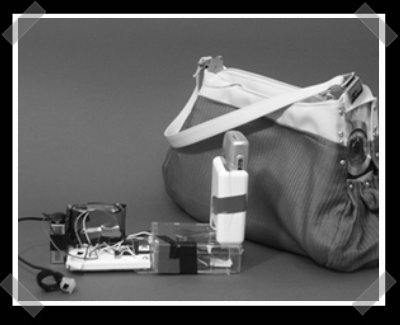
Yahoo recently held *Ahem* Hack Day developers conference/workshop. The winner’s pictured – a ‘blogging purse’. It looks like it just uploads images. The details are a bit on the weak side, but some of the stuff looks neat. The purse contains a camera, basic stamp, pedometer and Nokia phone.
The YBox is some sort of network to TV gateway (Microcontroller, Ethernet, IR reciever, RF out in an altoids tin). Looks like it pulls data from yahoo channels, but supposedly it’s configurable for custom data.
Speaking of contests, [David] pointed out this ARM design contest – entering will garner you a free dev kit.
Russian VFD
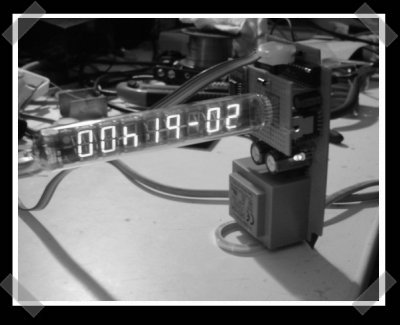
Nixie clocks seem to be a right of passage. [jkx] sent us something a little different. I’m diggin this one because the russian tube is pretty esoteric. He’s got a few nice looking projects up. (His tube amp is a beauty.) And yeah, there’s a video.
DIY Audio Interconnects
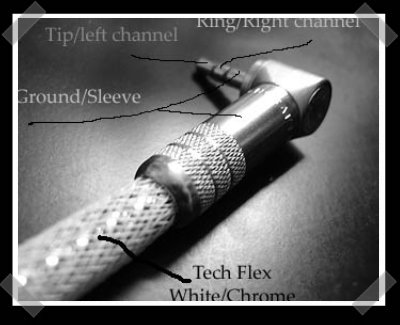
This is one of those things that has annoyed me for so long, that I’m putting it up. I have despised, no, I have friggin loathed the quality of 1/8″ (3.5mm) cables. Cables are pretty easy; just clip, strip and solder away, right? Right. If you grew up cursed with the junk that rat shack carries, you know my pain. So, if you hate those crappy cables as much as I do, go check out this lovely little write up on making quality interconnects. (Now if I could just find a 2.5mm connector like that switchcraft 3.5mm to fix this spare apple power supply)
Inker – The Hand Inkjet
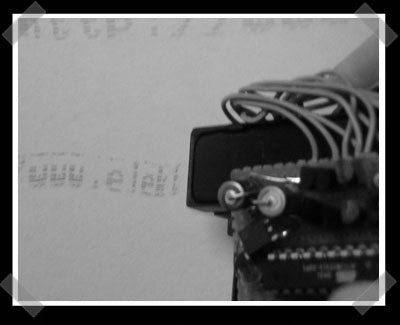
One of our Hackaday favorites, [Sprite_tm] made my morning when he sent this in. He built a driver circuit for a HP inkjet cartridge that allows him to print by hand. Ideal for printing on other people, their white boards or their beer. He had to do some blackbox reverse engineering to figure out what the onboard driver chip does on the cartridge. Considering the task, the circuit is surprisingly simple. It has some ATTINY brains, some driver transistors, a data bus and a DC/DC power converter to get the required 1.21 gigawatts, er 20 volts to drive the cartridge.