Kodak Film Factory Revealed

Anybody born before the mid 1990s will likely remember film cameras being used to document their early years.  Although the convenience of digital cameras took over and were then themselves largely usurped by mobile phones, there is still a surprising variety of photographic film being produced.  Despite the long pedigree, how many of us really know what goes into making what is a surprisingly complex and exacting product? [Destin] from SmarterEveryDay has been to Rochester, NY to find out for himself and you can see the second in a series of three hour-long videos shedding light on what is normally the strictly lights-out operation of film-coating.
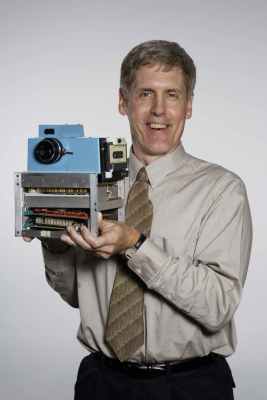
Kodak first digital camera 1975
Kodak’s first attempt at a digital camera in 1975. The form-factor still left something to be desired…

Kodak have been around in one form or another since 1888, and have been producing photographic film since 1889. Around the turn of the Millennium, it looked as though digital photography (which Kodak invented but failed to significantly capitalize on) would kill off film for good, and in 2012 Kodak even went into Chapter 11 bankruptcy, which gave it time to reorganize the business.

They dramatically downsized their film production to meet what they considered to be the future demand, but in a twist of fortunes, sales have surged in the last five years after a long decline. So much so, in fact, that Kodak have gradually grown from running a single shift five days per week a few years ago, to a 24/7 operation now. They recently hired 300 Film Technicians and are still recruiting for more, to meet the double-digit annual growth in demand.

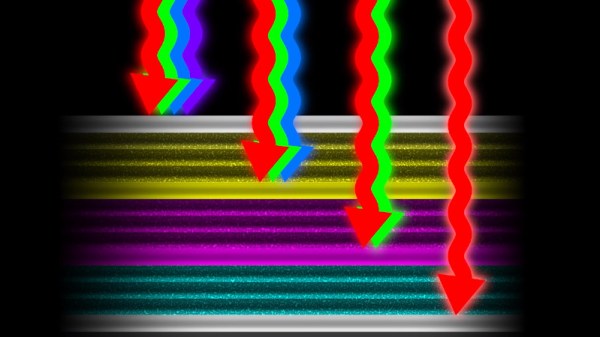
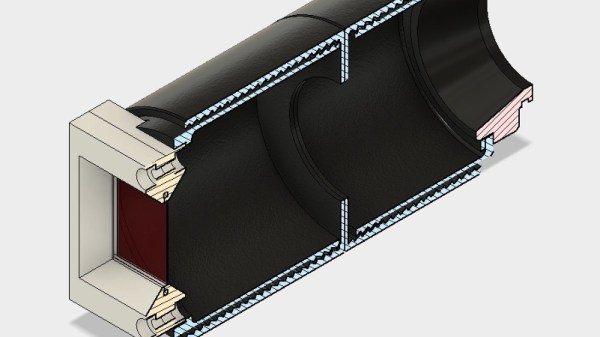
[Destin] goes to great lengths to explain the process, including making a 3D model of the film factory, to better visualize the facility, and lots of helpful animations.  The sheer number of steps is mind-boggling, especially when you consider the precision required at every step and the fact that the factory runs continuously… in the dark, and is around a mile-long from start to finish.  It’s astonishing to think that this process (albeit at much lower volumes, and with many fewer layers) was originally developed before the Wright Brothers’ first powered flight.

We recently covered getting a vintage film scanner to work with Windows 11, and a little while back we showed you the incredible technology used to develop, scan and transmit film images from space in the 1960s.
Continue reading “Kodak Film Factory Revealed” →

A 3D Printed 35mm Movie Camera

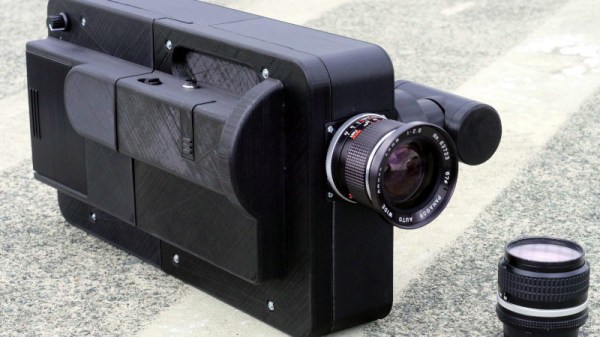
Making a camera can be as easy as taking a cardboard box with a bit of film and a pin hole, but making a more accomplished camera requires some more work. A movie camera has all the engineering challenges as a regular camera with the added complication of a continuous film transport mechanism and shutter. Too much work? Not if you are [Yuta Ikeya], whose 3D printed movie camera uses commonly-available 35 mm film stock rather than the 8 mm or 16 mm film you might expect.

3D printing might not seem to lend itself to the complex mechanism of a movie camera, however with the tech of the 2020s in hand he’s eschewed a complex mechanism in favour of an Arduino and a pair of motors. The camera is hardly petite, but is still within the size to comfortably carry on a shoulder. The film must be loaded into a pair of cassettes, which are pleasingly designed to be reversible, with either able to function as both take-up and dispensing spool.

The resulting images have an extreme wide-screen format and a pleasing artistic feel. Looking at them we’re guessing there may be a light leak or two, but it’s fair to say that they enhance the quality rather than detract from it. Those of us who dabble in movie cameras can be forgiven for feeling rather envious.

We’ve reached out to him asking whether the files might one day be made available, meanwhile you can see it in action in the video below the break.

Continue reading “A 3D Printed 35mm Movie Camera” →

Scan Your Film The 3D Printed Way

Everyone has a box or two at home somewhere full of family photographs and slides from decades past. That holiday with Uncle Joe in Florida perhaps, or an unwelcome reminder of 1987’s Christmas jumper. It’s fair to say that some memories deserve to be left to gather dust, but what about the others in a world of digital images?

You could of course buy a film scanner to digitize Uncle Joe on the beach, but aside from the dubious quality of so many of them where’s the fun in that? Instead, how about 3D printing one? That’s what [Alexander Gee] did, in the form of an adapter to fit the lens mount of his Sony camera that contains both a 50mm enlarger lens and a mount for the slide. It’s a simple enough print, but he’s made enough parts parametric for users to be able to adjust it to their own camera’s mount.

Sometimes builds do not have to be complex, push boundaries, or contain more computing power than took us to the Moon. This one is simple and well-executed, and for anyone prepared to experiment could deliver results with a variety of cameras and lenses. Of course, you have to have some film to scan before you can use it, so perhaps you’d like to try a bit of home developing.

Developing Film With Lego

Developing film at home is most certainly a nearly forgotten art nowadays, but there are still a few very dedicated people who care enough to put in the time and study to this craft. [Jan] is one of the exceptional ones. He’s developing 35mm film with Lego (Dutch, Google translate).

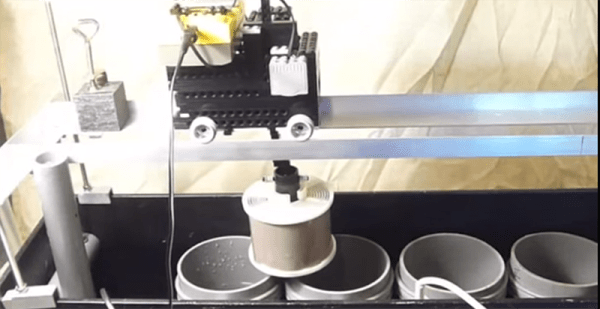
For the build, [Jan] is using the Lego RCX 1.0, the first gen of the Lego Mindstorms, released in the late 90s. According to eBay, this is a significantly cheaper option for programmable Lego. The mechanics of the Lego film developer consisted of multiple tanks of chemicals. The film was loaded on a reel, suspended from a Lego gantry, and dunked into each tank for a specific amount of time.

A second revision of the hardware (translate) was designed, with the film loaded into a rotating cylinder. A series of chemicals would then be pumped into this unit with the hope of reducing the amount of chemicals required. This system was eventually built using the wiper fluid pump from a car. Apparently, the system worked well, judging from the pictures developed with this system. Whether it was easy or efficient is another matter entirely.

You can check out a video of the first revision of the Lego film developing system below.

Thanks [Andrew] for sending this in.

Continue reading “Developing Film With Lego” →