
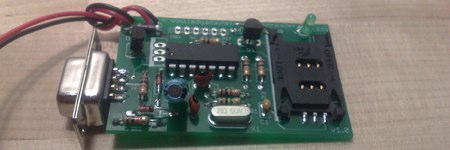
Adafruit Industries sent us one of their SIM Reader kits a few weeks ago to test. Assembly was a breeze thanks to the through hole components and good documentation. We plugged it into our USB -> RS232 converter and tried out the provided pySimReader software. It worked fine, but our modern SIM card out of an N95 didn’t prove very interesting. It was too new to attempt cloning and being a smart phone it doesn’t rely on the SIM for storing anything unless you specifically tell it to. The story was the same for a SIM we pulled out of a Treo. We tried the device with [Dejan]’s SimScan and a copy of Woron Scan. Both worked without any issue. Conclusion: the device works great despite us lacking anything interesting to do with it.
adafruit136 Articles
GPS Logging Arduino Shield
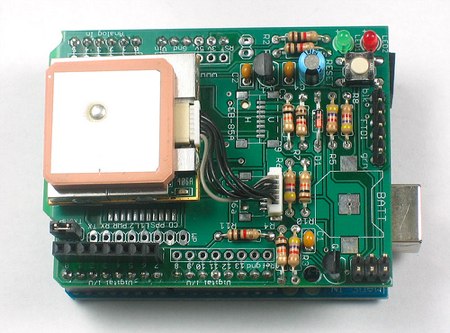
ladyada continues to produce more and more interesting Arduino shields. This new GPS logger plugs into a standard Arduino board and has support for four different GPS receiver modules. On the backside of the board is an SD card slot where it stores the coordinates in a text file. The total runtime can vary from five hours to twenty depending on how you choose to power the device and how you use the device. How often you read the device and whether you maintain the GPS lock will affect the power consumption. Like all of ladyada’s projects, you’ll find a great construction guide and example code on her site.
Twittering From The Command Line

Twitter users often have trouble explaining just exactly what the service is for. The site specifically asks “What are you doing right now?” A simple interface and multiple ways to update means people have started hooking it to different real world objects… objects that aren’t reporting what they had for lunch. After the break, we’ll cover a couple devices that have interfaced Twitter to the real world and how you can update from your command line.









