
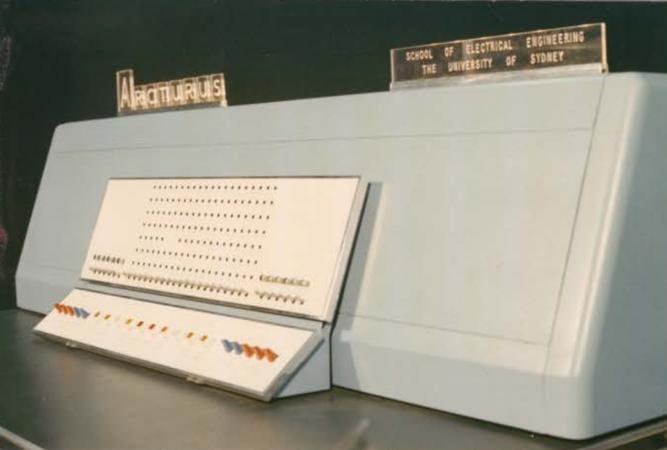
ARCTURUS control panel

The ARCTURUS Computer Developed At Sydney University In The 1960s

[State of Electronics] have released their latest video about ARCTURUS, the 14th video in their series The Computer History of Australia.

ARCTURUS was a research computer system developed on a shoestring budget at Sydney University in the 1960s, and was in service until 1975. Particularly the system was developed by [David Wong] as a part of his PhD thesis: The design and construction of the digital computers snocom, nimbus and arcturus (PDF). [David] worked in collaboration with [Kevin R. Rosolen] who is interviewed in the video.

Continue reading “The ARCTURUS Computer Developed At Sydney University In The 1960s”

Hackaday Links Column Banner

Hackaday Links: March 24, 2024

Way to rub it in, guys. As it turns out, due to family and work obligations we won’t be able to see the next Great American Eclipse, at least not from anywhere near the path of totality, when it sweeps from Mexico into Canada on April 8. And that’s too bad, because compared to the eclipse back in 2017, “Eclipse 2: Solar Boogaloo” is occurring during a much more active phase in the solar cycle, with the potential for some pretty exciting viewing. The sun regularly belches out gigatons of plasma during coronal mass ejections (CMEs), most of which we can’t see with the naked eye because not only is staring at the sun not a great idea, but most of that activity occurs across the disk of the sun, obscuring the view in the background light. But during the eclipse, we — oops, you — might just get lucky enough to have a solar prominence erupt along the limb of the sun that will be visible during totality. The sun has been quite active lately, as reflected by the relatively high sunspot number, so even though it’s an outside chance, it’s certainly more likely than it was in 2017. Good luck out there.  Continue reading “Hackaday Links: March 24, 2024”








