Send A Satellite Into Space For $300

There’s a new Kickstarter campaign that promises to launch a personalized satellite into orbit for 300 bones.

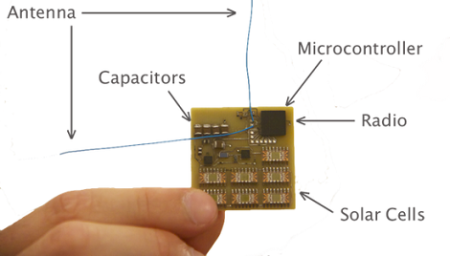
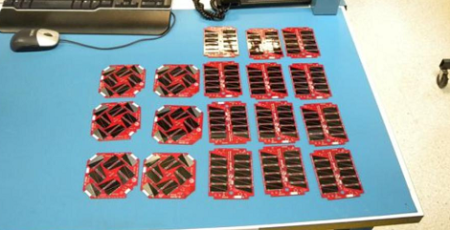
The KickSat project is headed by [Zac Manchester], [Mason Peck], [Justin Atchison] and a few more contributors hailing from Cornell University. Their goal is to launch a CubeSat filled with hundreds of postage stamp-sized satellites and release these ‘Sprites’ into low Earth orbit.

The Sprite concept has been in development for a while now and has been featured on IEEE Spectrum. The tiny satellites are simple PCBs with a microcontroller and a radio powered by solar cells and capacitors. The first version of the Sprite is designed to beam down a few bytes of data – just a unique identifier and a Kickstarter backer’s name. Future versions will undoubtedly include more advanced sensors such as cameras, thermometers, and very tiny particle detectors.

The KickSat team will use the funding from the Kickstarter campaign to test and integrate the systems. The team hopes to hitch a ride on one of NASAs many CubeSat launches, but if they get funding from 400 people, they’ll get to fly on a commercial launch by early 2013.

We were wondering about the amazing amount of space junk this KickSat/Sprite build will produce, but the team says not to worry: The Sprites fly in a pretty low orbit and will reenter the atmosphere a few weeks after being deployed. Not bad, considering Sputnik orbited for only 3 months.

Arduinos…. In…. Spaaaaaace…..

Since 2007, [Adam Kemp] has been leading a team of students from Thomas Jefferson High School, guiding them through the process of designing and building a small satellite that NASA selected for launch early next year.

The CubeSat, officially named TJ³Sat, uses commercial, off-the-shelf components for nearly all its systems. The team ran into a problem interfacing the FM430 Flight Module (PDF warning), so [Adam] designed an Arduino-based replacement. Based on an ATMEGA328, the entire board is a drop-in replacement for the FM430 Flight Module. On July 1st, the TJ³Sat will begin testing at Orbital Sciences Corp. to make sure the entire satellite is up to snuff.

The TJ³Sat’s payload will take data from the ground controllers and using a TextSpeak module convert serial data into spoken voice. This audio will then be transmitted over amateur radio frequencies and will be picked up by hams all over the world. We’d like to wish the students at Thomas Jefferson High a hearty congratulations for being the first High School to build a satellite and hope the testing and launch go as planned.