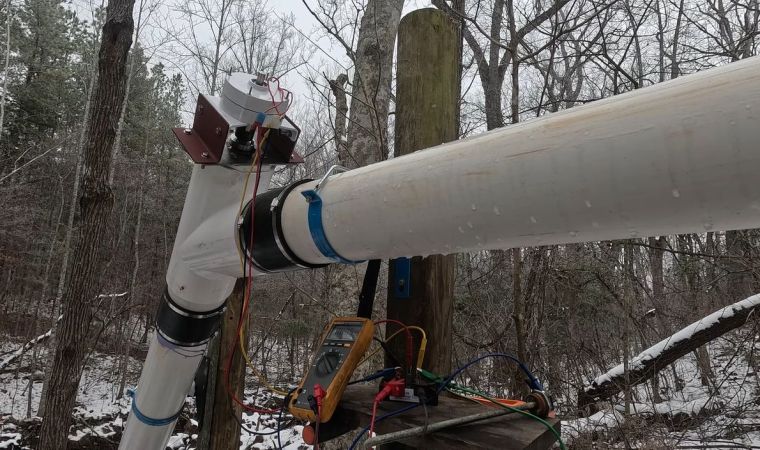
The concept of building your own hydroelectric generator seems simple at face value: use gravity to impart as much force as possible onto a turbine, which spins a generator, thus generating electricity. If you’re like the bloke over at [FarmCraft101] trying to DIY this with your farm pond and a lot of PVC pipes, you may have some significantly more in-depth questions, especially pertaining to what kind of generator to use. This and other questions, some of which were raised after the previous video in which the first prototype generator was assembled, are answered in this follow-up video.
When you DIY such a hydroelectric system, you have a number of options when it comes to just the turbine design alone, with the Kaplan-style turbine being one of the most straightforward ones – especially if you use a fixed pitch instead of adjustable – but you can go pretty far in the weeds with alternatives. As for the sharp drop-off after the turbine in the used design, the technical term is a draft tube, which is actually more efficient in this kind of low head, high flow hydroelectric dam situation.
After getting his money back for the unusable ‘3 kW’ generator, there were three options left: try an EBay special, get a purpose-built one from a US company, or rewind an alternator stator for higher voltage output than the standard 12/24V. Ultimately option four was chosen, as in ‘all of the above’, so that comparison is coming up in a future video.
Continue reading “The Many Questions And Challenges With DIY Hydroelectric Generators”