Nespresso is a variant of disposable single serve coffee pods with an extensive, expensive, and proprietary accessory line. After selling inconvenient bits of his soul for convenience and, admittedly, fairly tasty shots of coffee, [Chriss Lott] was predictably betrayed by his Nespresso Jura coffee machine.
Rather than simply exchange more local currency for a replacement revenue guarantee for the Nestle conglomerate, he did what any self-respecting hacker would do and tried to fix it himself. Unfortunately he quickly found their cunningly oval shaped security screws to be more trouble than his time was worth. He listed his remaining coffee pods for free on craigslist and decided to toss the machine in the planned obsolescence receptacle which comes standard in any civilized home.
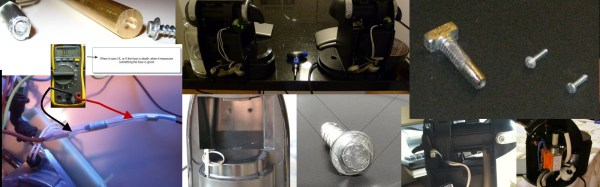
This is where our story would end were it not for the kindness of a fellow hacker. [Dave H] was browsing through craigslist when he spotted the sad tale. However, possessing a different skillset from [Chris], [Dave] had solved the particular oval shaped conundrum with a security screwdriver hand made from an old bolt. He answered his fellow hacker’s vaguely ardent plea and mailed the converted bolt over to [Chris]’s house.
With the proper tool in hand, [Chris] quickly discovered that all that was standing between him and his convenient coffee was a bit of schmoo between the cost cutting membrane switch and its mating pad on the circuit board. With the practically free repair complete, the machine happily vibrated back to life and produced coffee as if its planned obsolescence wasn’t for another few years. We assume a Nestle engineer was thrown into the pit on principle for this loss (they, of course, are evil enough to have a pit).
We’re not sure how the story proliferated through the internet, but we do know that it was inspirational to many convenient caffeine deprived hackers with similar problems. [Chris] found himself the hub in a network of circumnavigating security screw circumventing hackers.
[Dave]’s hacked bolt was the first to go on an adventure resulting in the repair of many machines before the postmen lost it under a cart, standard procedure. A replacement was purchased from an eBay seller for a hefty $40 american dollars and took up the journey where it left off. Others sent in guides on making the tool for those unwilling to wait for one to be shipped. In fact, even the maker of the $40 dollar tool weighed in on the issue. Apparently he was unaware that the consumer and commercial Nespresso machines used the same tools. A hacker himself, he ran a listing of the custom tool at a quarter of the price for the home repairman and another for the commercial appliance at the higher price.
The whole page is an entertaining read, for a certain kind of person, about appliance repair, reverse engineering, and camaraderie. Happily, the hub is still alive. If you find yourself with an oval screw which needs turning, get in touch with [Chris] and a strange community’s kindness will have a nomadic security bit crossing nations your way soon.