If you were to go back to the middle years of the twentieth century and talk to electronic constructors, you would find a significant number had a cigar box radio among their projects. Cigar boxes were fairly robust, readily available, and could easily accommodate the parts required to make a crystal set or a simple one-tube regenerative receiver. These days there isn’t much attraction to a simple AM radio though, so while they can still be fun to build, the cigar box radio only occupies a niche in vintage radio circles.
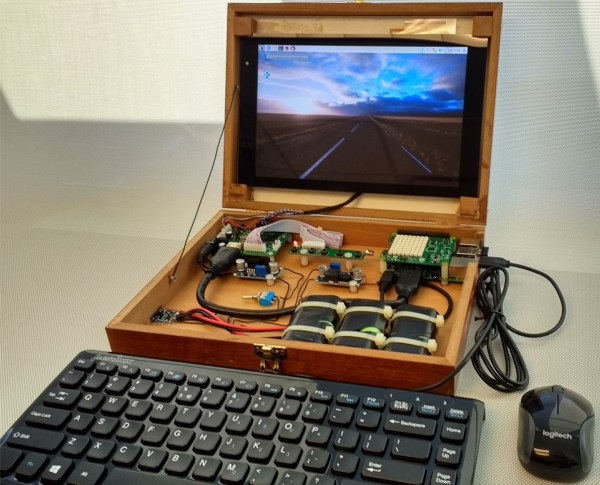
Cigar boxes, however, remain. [Mike] found a very nice antique cigar box, and made something unexpected, he put a Raspberry Pi in it and made something close to a laptop. Into the lid goes an LCD screen secured with wooden blocks, while in the body of the box goes the LCD controller, Pi 3, and battery charger and PSU modules. There are two sets of cells, one each for screen and Pi.
We like the idea and we like his write-up for its clear run-down of the modules required even though it’s mostly a plug-together build. We described it as “Something close to a laptop” because it has one glaring omission. He’s using an external keyboard rather than having incorporated one within the case. We think there looks as though there is plenty of room for one, so perhaps he’ll return to the project and upgrade it in that way. For reminding us that cigar boxes can make excellent laptop cases though, we’re thankful.
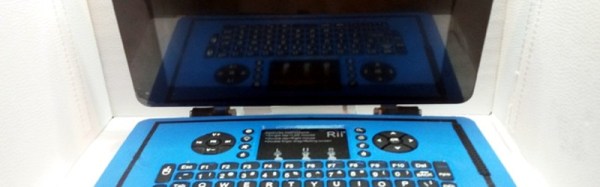
We’ve featured numbers of Raspberry Pi laptops over the years since the little computer’s launch. Just a small selection are this one using the official touch screen, a rather beautiful one in the style of a Psion palmtop, and one that is rather chunky but has a small footprint. Meanwhile in cigar boxes, we’ve brought you an excellent little 555 organ.