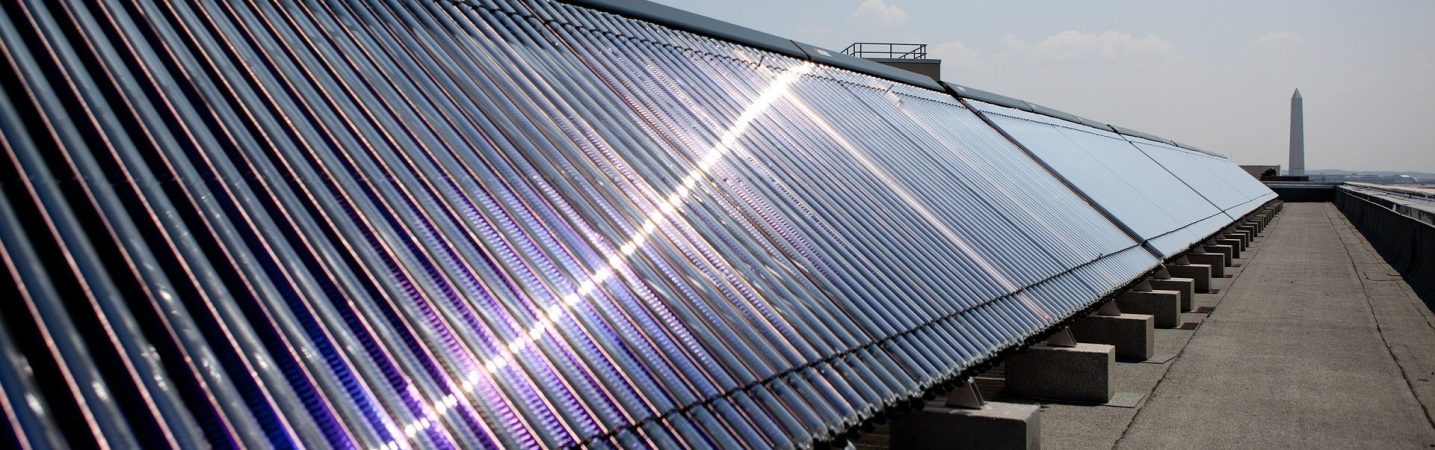
A rooftop array of solar thermal collectors

The MOST Effective Thermal Mass Works Like A Sunburn

Way, way back in the days when men wore beards and wide-lapelled suits in exotic colors, only NASA had access to photovoltaics and ‘solar’ meant solar thermal. In those days of appropriate technology, it was thought that the ultimate in thermal mass was a phase-change material– a salt or wax that in melting and re-freezing could hold far more heat than plain rock or water, which were more often used. Well, now that it’s the 21st century, we’ve got something even better. As Ars Technica reports about a recent paper in Science Magazine, Molecular Solar Thermal (MOST) energy storage can blow that old stuff right out of the water.

Molecular energy storage? That’s where the sunburn comes in. A sunburn occurs because proteins in your skin are denatured– kinked, twisted, and knocked out of shape– by ultraviolet light. The researchers realized that those kinky proteins are pretty energetic: like a spring, they’re storing energy in their distorted structure. Even better, certain chemicals, like the pyrimidone in the study, don’t ‘relax’ the way a phase change material does. It’s not a matter of warming up and giving up the energy stored in the molecular structure when cooling down– the energy needs coaxed out, in this case by an acidic solution.

That poses problems for a closed-loop system, since you’d be continuously diluting the pyrimidone with heat-releasing acid and neutralizing base. On the other hand, 1.65 MJ/kg of energy storage is nothing to sneeze at, especially when you’re collecting it with nothing more technically advanced than a fluid running through clear tubing. Conveniently enough, researchers found a way to make this stuff liquid at room temperature.

Comparing the heat in this MOST storage material to electrical potential in a battery is a case of apples and oranges, but in terms of pure energy density the pyrimidone cooked up for the paper is in the same range as Li-Ion batteries. There is some self-discharge, in that the altered “dewar” state of the pyrimidone decays naturally, but with a half-life of upto 481 days, you could imagine storing up a tankful UV-altered pyrimidone all year round to provide your winter’s heat.
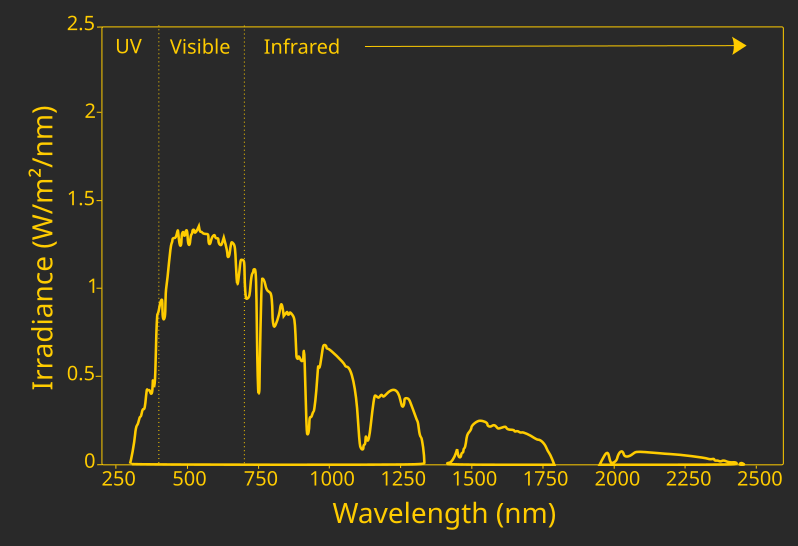
There’s not much power making it to surface in the UV, but lower energy photons cannot effect the transition.

It’s not perfect. Right now you get about 20 “charge cycles” before the molecules break down, but then, if you’re using this for seasonal load-spreading, a two-decade service life is nothing to shake a stick at. It’s only collecting energy from the UV range of the spectrum, which is a tiny fraction of the energy from our sun. The quantum efficiency of the molecule is rather poor as well– it takes a lot of photons to get a dewar transition.

With solar photovaltaics being as cheap as they are, thermal builds are few and far between– even solar water heaters are powered by PV these days. Of course if you’re somewhere that doesn’t get much sun, you could always go for wind power instead.

Thanks to [zit] for the tip! If you’ve seen a bright idea in the wild, or have one yourself, our tips line is open rain or shine.

DIY Solar Generator Inspired By James Webb Telescope

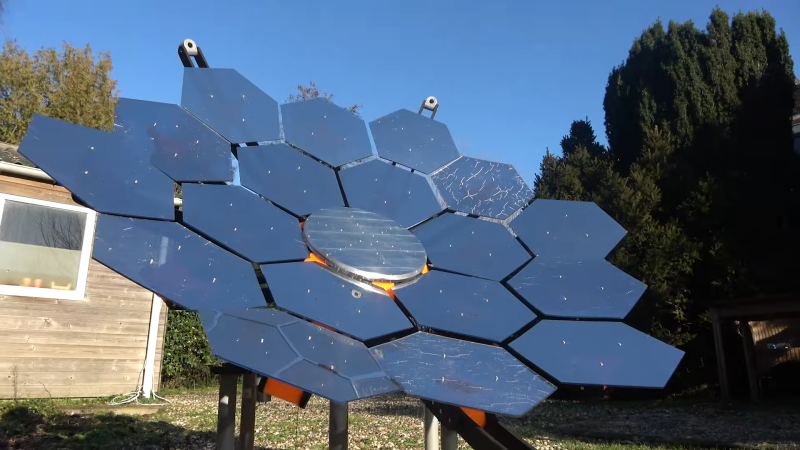
If you look at this solar generator from [Concept Crafted Creations], you might think it’s somehow familiar. That’s because the design was visually inspired by the James Webb Space Telescope, or JWST. Ultimately, though, it’s purpose is quite different—it’s designed to use mirrors to collect and harness solar energy. It’s not quite there yet, but it’s an interesting exploration of an eye-catching solar thermal generator.

To get that JWST look, the build has 18 mirrors assembled on a 3D printed frame to approximate the shape of a larger parabolic reflector. The mirrors focus all the sunlight such that it winds up heating water passing through an aluminum plate. Each mirror was custom made using laser cut acrylic and mirror film. Each mirror’s position and angle can be adjusted delicately with screws and a nifty sprung setup, which is a whole lot simpler than the mechanism used on the real thing. The whole assembly is on a mount that allows it to track the movement of the sun to gain the most sunlight possible. There’s a giant laser-cut wooden gear on the bottom that allows rotation on a big Lazy Susan bearing, as well as a servo-driven tilting mechanism, with an Arduino using light dependent resistors to optimally aim the device.

It’s a cool-looking set up, but how does it compare with photovoltaics? Not so well. The mirror array was able to deliver around 1 kilowatt of heat into the water passing through the system, heating it to a temperature of approximately 44 C after half an hour. The water was warmed, but not to the point of boiling, and there’s no turbines or anything else hooked up to actually take that heat and turn it into electricity yet. Even if there were, it’s unlikely the system would reach the efficiency of a similarly-sized solar panel array. In any case, so far, the job is half done. As explained in the build video, it could benefit from some better mirrors and some structural improvements to help it survive the elements before it’s ready to make any real juice.

Ultimately, if you need solar power fast, your best bet is to buy a photovoltaic array. Still, solar thermal is a concept that has never quite died out.

Continue reading “DIY Solar Generator Inspired By James Webb Telescope”

An image of an orange, translucent glowing quartz rod. Thermocouples can be seen at intervals along the rod looking in.

Industrial Solar Heat Hits 1000˚C

While electricity generation has been the star of the energy transition show, about half of the world’s energy consumption is to make heat. Many industrial processes rely on fossil fuels to reach high temps right now, but researchers at ETH Zurich have found a new way to crank up the heat with a solar thermal trap. [via SciTechDaily]

Heating water for showers or radiant floor systems in homes is old hat now, but industrial application of solar power has been few and far between. Part of the issue has been achieving high enough temperatures. Opaque absorbers can only ever get as hot as the incident surface where the sun hits them, but some translucent materials, like quartz can form thermal traps.

In a thermal trap, “it is possible to achieve temperatures that are higher in the bulk of the material than at the surface exposed to solar radiation.” In the study, the researchers were able to get a 450˚C surface to produce 1,050˚C interior temperature in the 300 mm long quartz rod. The system does rely on concentrated solar power, 135 suns-worth for this study, but mirror and lens systems for solar concentration already exist due to the aforementioned electrical power generation.

This isn’t the only time we’ve seen someone smelting on sunlight alone, and you can always do it less directly by using a hydrogen intermediary. If you’re wanting a more domestic-level of heat, why not try the wind if the sun doesn’t shine much in your neighborhood?

Hippie-Redneck Solar-Heated Swimming Pool Slash Hot Tub

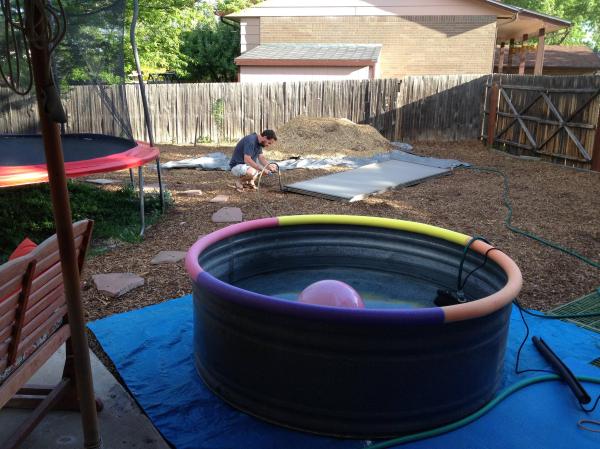
In need of a jacuzzi to complete your backyard but just don’t have the cash? Need a swimming pool for the little ones but tired of the cheap plastic ones popping and leaking all over the place? Look no further than [inexplorata]’s self-explanatory “Hippie-Redneck Solar-Heated Kiddo Swimmin’ Pool And Hot Tub“.

The pool uses a six-foot-diameter metal stock tank, provided by a neighbor. After some liberal use of JB Weld, the tank functions as a makeshift pool on the cheap, but the magic doesn’t end there. [inexplorata] found a solar thermal water heater that someone was getting rid of and snagged it to heat up the water, which is almost a necessity for most parts of the Northern Hemisphere right now.

A sump pump in a bucket handles water circulation, and [inexplorata] points out that the single water heater is more than enough to keep the water nice and warm (“hot enough to poach a rhino” is the scientific term used on the project page) so if you’ve got the means, this might be a welcome addition to the backyard! The build was posted on Reddit, the users of which had some helpful suggestions for improving the pool if you want to tackle this yourself. If you don’t have a solar thermal water heater, you could always make one of those too.