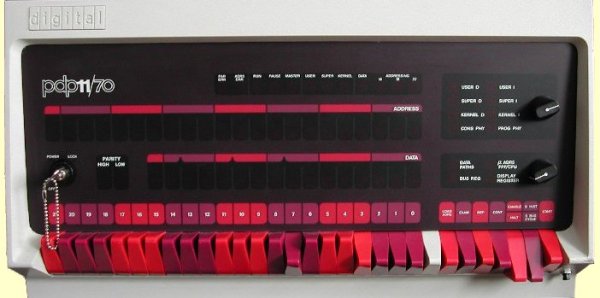
A year before the arrival of the brand-new 21st century, the Year 2000 Bug was predicted to grind modern society to a halt and ensure that at the dawn of the year 2001, there’d be nothing left but the smoldering wreck of once great societies. Thanks to the concerted efforts of countless engineers, software developers, and many others, we were left with mostly just silly glitches, with one of these surviving bugs apparently just discovered, as [Van Heusden] reported on an NTPd bug in BSD 2.11.
To be fair, it is a pretty obscure one, as the demonstration involves BSD 2.11 on a PDP-11/70 from 1975, so it’s probably not something that still sees much use outside retrocomputing enthusiast circles. In the blog post, the demonstration involves connecting a specific adapter by Traconex, capable of receiving WWV/WWVH time signals, and setting it up for use by the NTPd prior to running the ntpd -a any -d -d -d -d command.
Anyone who worked in the tech field and lived through the Y2K bug era will no doubt recall it as a time seasoned with a confusing mix of fear and optimism and tempered with a healthy dose of panic, as companies rushed to validate that systems would pass the rollover of the millennium without crashing, and to remediate systems that would. The era could well have been called “the COBOL programmers full-employment bug,” as the coders who had built these legacy systems were pulled out of retirement to fix them. Twenty years on and a different bug — the one that causes COVID-19 — is having a similarly stimulative effect on the COBOL programmer market. New Jersey is one state seeking COBOL coders, to deal with the crush of unemployment insurance claims, which are killing the 40-year-old mainframe systems the state’s programs run on. Interestingly, Governor Phil Murphy has only put out a call for volunteers, and will apparently not compensate COBOL coders for their time. I mean, I know people are bored at home and all, but good luck with that.
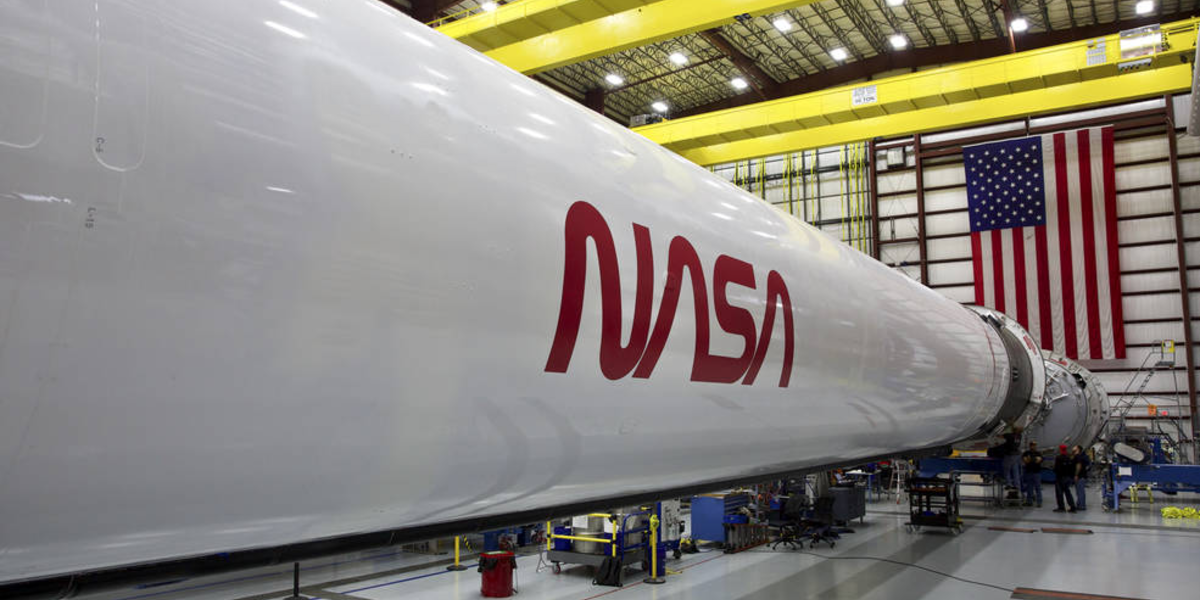
In another throwback to an earlier time, “The Worm” is back. NASA has decided to revive its “worm” logo, the simple block letter logo that replaced the 50s-era “Meatball” logo, the one with the red chevron bracketing a starfield with an orbiting satellite. NASA switched to the worm, named for the sinuous shape of the letters and which honestly looks like a graphic design student’s last-minute homework assignment, in the 1970s, keeping it in service through the early 1990s when the meatball was favored again. Now it looks like both logos will see service as NASA prepares to return Americans to space on their own launch vehicles. Wait a minute, what happens when we stand this thing upright?
Looking for a little help advancing the state of your pandemic-related project? A lot of manufacturers are trying to help out as best they can, and many are offering freebies to keep you in the game. Aisler, for one, is offering free PCBs and stencils for COVID-19 prototypes. It looks like their rules are pretty liberal; any free and open-source project that can help with the pandemic in any way qualifies. Hats off to Aisler for doing their part.
And finally, history appears to have been made this week in the amateur radio world with the first direct transatlantic contact on the 70-cm band was made. It seems strange to think that it would take 120 years since transatlantic radio became reduced to practice by the likes of Marconi for this accomplishment to occur, but the 70-cm band is usually limited to line of sight, and transatlantic contacts at 430 MHz are usually done using a satellite as a relay. The contact was between stations FG8OJ on Guadaloupe Island in the Caribbean — who was involved in an earlier, similar record on the 2-meter band — and D4VHF on the Cape Verde Islands off the coast of Africa, and used the digital mode FT8. The 3,867-km contact was likely due to tropospheric ducting, where layers in the atmosphere form a refractive tunnel that can carry VHF and UHF signals much, much further than they usually go. While we’d love to see that record stretched a little more on each end, to make a truly transcontinental contact, it’s still quite an accomplishment, and we congratulate the hams involved.
A lot of annoying little hacks are needed to keep our integer-based calendar in sync with a floating-point universe, and the big one, leap day, passed us by this week. Aside from the ignominy of adding a day to what’s already the worst month of the year, leap day has a tendency to call out programmers who take shortcuts with their code. Matt Johnson-Pint has compiled a list of 2020 leap day bugs that cropped up, ranging from cell phones showing the wrong date on February 29 to an automated streetlight system in Denmark going wonky for the day. The highest-profile issue may have been system crashes of Robinhood, the online stock trading platform. Robinhood disagrees that the issues were caused by leap day code issues, saying that it was a simple case of too many users and not enough servers. That seems likely given last week’s coronavirus-fueled trading frenzy, but let’s see what happens in 2024.
Speaking of annoying time hacks, by the time US readers see this, we will have switched to Daylight Saving Time. Aside from costing everyone a precious hour of sleep, the semiannual clock switch always seems to set off debates about the need for Daylight Saving Time. Psychologists think it’s bad for us, and it has elicited a few bugs over the years. What will this year’s switch hold? Given the way 2020 has been going so far, you’d better buckle up. Continue reading “Hackaday Links: March 8, 2020”→
A common sight in automobile-congested cities such as New York are parking meters lining the curbs next to parking spots. They’re an autonomous way for the city to charge for the space taken by cars parked along the sidewalk near high-traffic commercial areas, incentivizing people to wrap up their business and move their vehicle out of a costly or time-limited parking space.
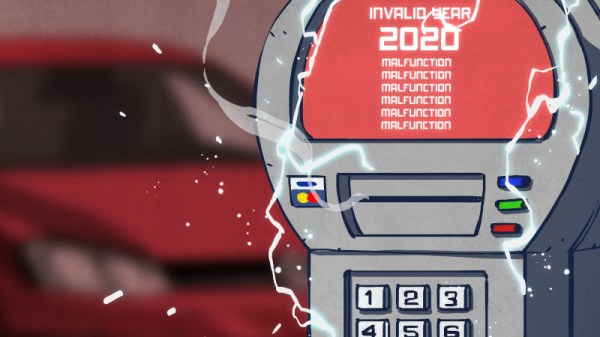
The parking meter is such a mundane device most people wouldn’t look at them twice, but on the inside it’s fascinating to see how they’re engineered, how that’s changed through the years, and how a software bug handicapped thousands of digital meters at the start of 2020.
Parking meters were originally commissioned in the 1930s by the government of Oklahoma City, due to the rapidly increasing number of automobiles, and therefore demand for parking space. Up until then, the city used patrolling policemen to regulate parking space, but they couldn’t keep up with the pace of the increased traffic and the lack of available parking space made business drop around downtown shops.
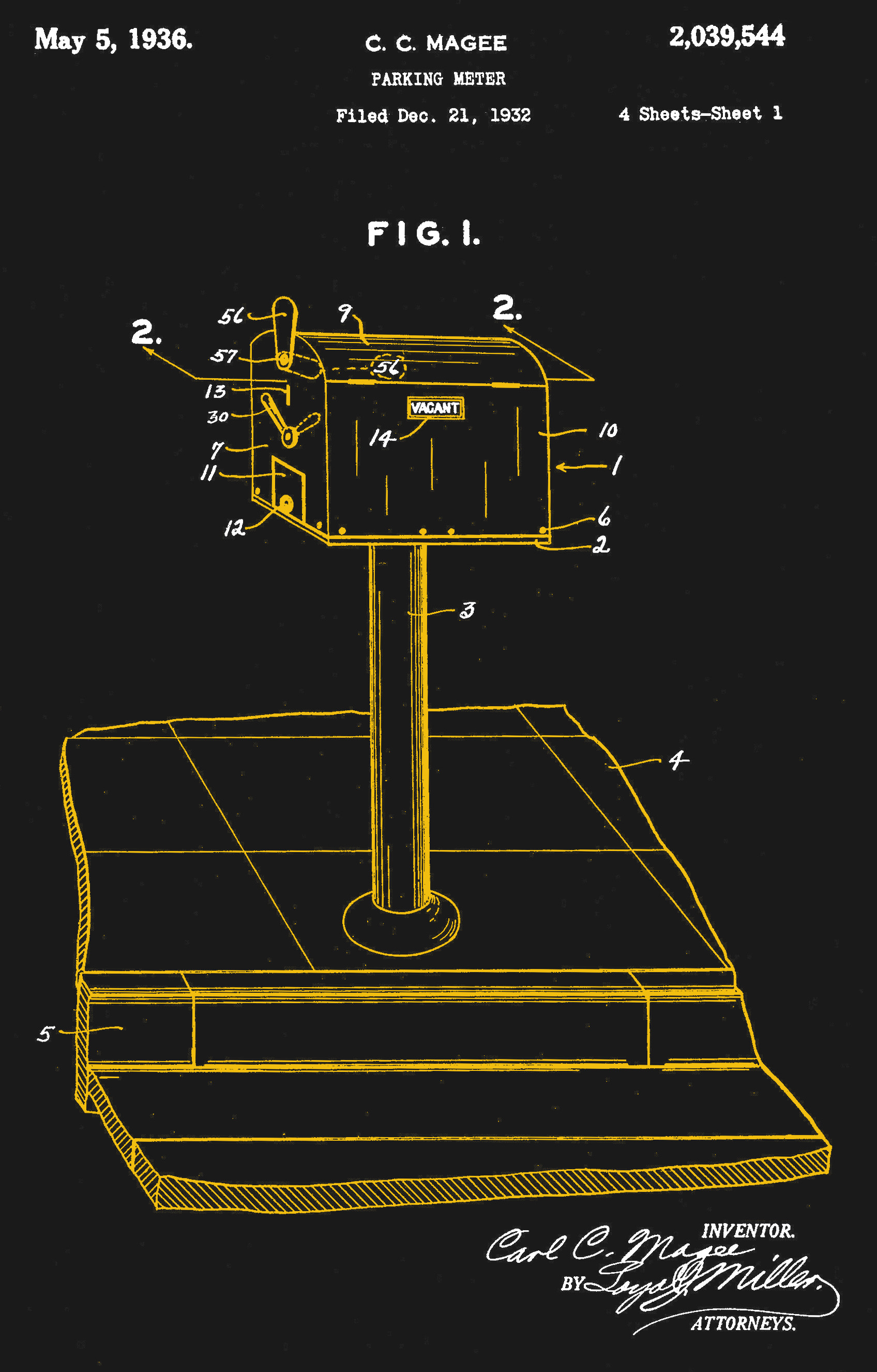
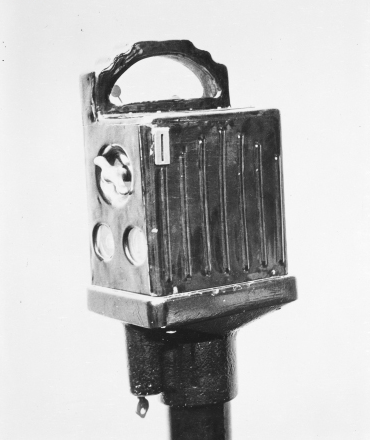
The first widely-adopted parking meter was dubbed “Black Maria”, a machine patented in 1935 by Carl C. Magee and Gerald Hale and first installed in the city in July of that year. This was a completely automated mechanical device made to solve the problem of regulating the time a driver can park their car in a given spot. It would take a nickel as payment, inserted into the mechanism by rotating a handle which also served to wind a clock spring. This clock would then tick down the remaining time the user could remain parked there, which could range from 15 minutes to an hour depending on the location.
An early Black Maria design, circa 1933.
Within days store owners noticed a positive effect in their profits thanks to the increase in customers with the regulated parking. What’s more, the coins collected from the meters also generated revenue for the city, and so, parking meters started spreading throughout the city. And as decades went, the mechanics were improved upon. A window was added into which a patrolling officer could easily look to check if the right amount of money (or money at all) was inserted. Separate panels for the coins to be easily collected without risking damage to the rest of the internal clockwork were also added.
The evolution of parking meters eventually passed through meters that could take care of parking spaces on either side of it, halving the amount of necessary poles per sidewalk. Electronic models starting appearing in the 1990s and eventually connectivity added. With meters all hooked up to the same network, the symbiotic connection between the parking meter and your spot was severed. It didn’t matter where your car was parked anymore; you could simply take your printed ticket and put it on your dashboard to be legally parked. Further advancements led to numbers spots that can be paid from any kiosk in the city, or though a smartphone app. But those digital advancements don’t always translate into reliability…