

There was a time when wise older people warned you to check your tire pressure regularly. We never did, and would eventually wind up with a flat or, worse, a blowout. These days, your car will probably warn you when your tires are low. That’s because of a class of devices known as tire pressure monitoring systems (TPMS).
If you are like us, you see some piece of tech like this, and you immediately guess how it probably works. In this case, the obvious guess is sometimes, but not always, correct. There are two different styles that are common, and only one works in the most obvious way.
Obvious Guess
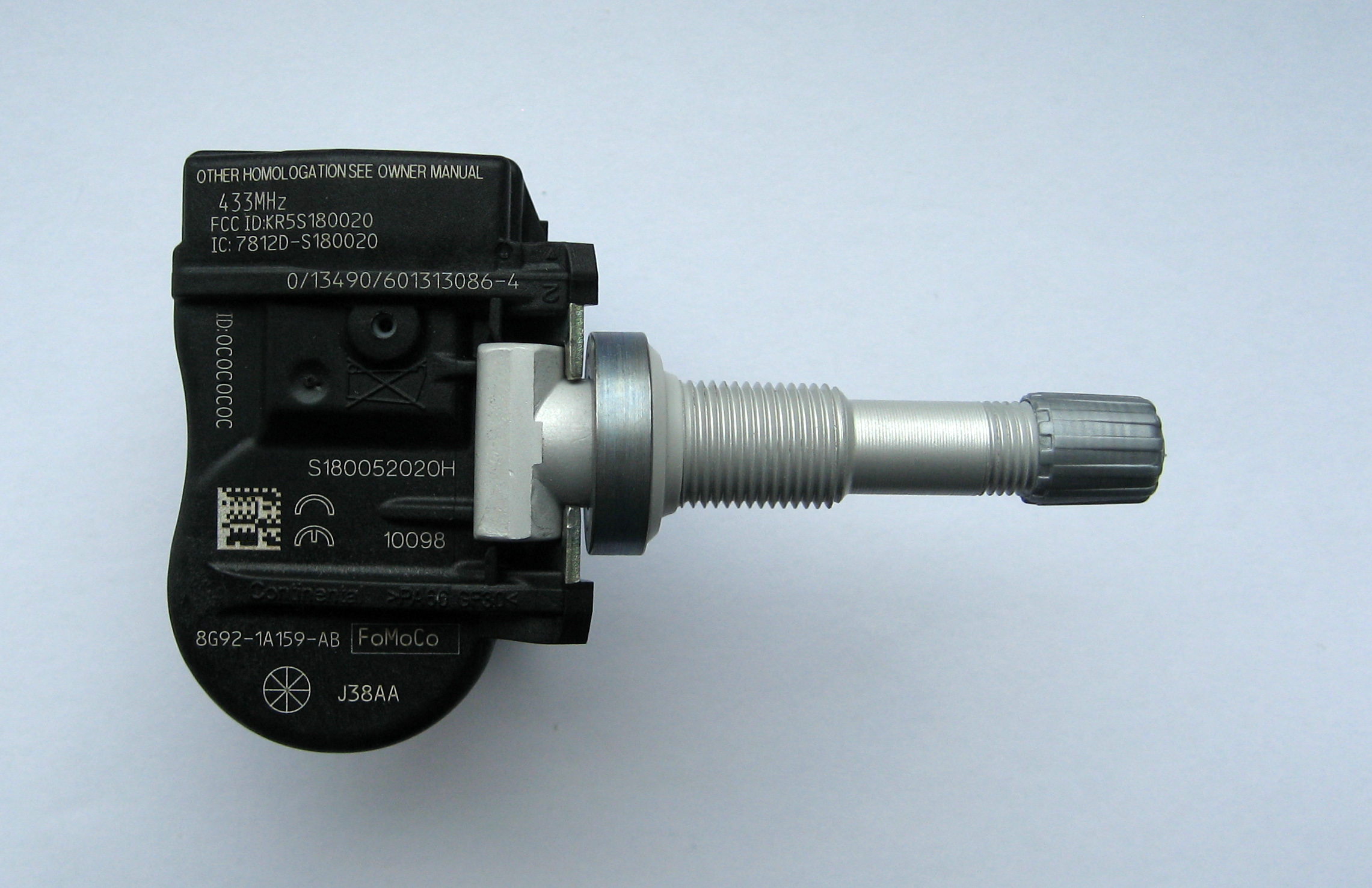
We’d guess that the tire would have a little pressure sensor attached to it that would then wirelessly transmit data. In fact, some do work this way, and that’s known as dTPMS where the “d” stands for direct.
Of course, such a system needs power, and that’s usually in the form of batteries, although there are some that get power wirelessly using an RFID-like system. Anything wireless has to be able to penetrate the steel and rubber in the tire, of course.
But this isn’t always how dTPMS systems worked. In days of old, they used a finicky system involving a coil and a pressure-sensitive diaphragm — more on that later.
This is cheap and requires no batteries in the tire. However, it isn’t without its problems. It is purely a relative measurement. In practice, you have to inflate your tires, tell the system to calibrate, and then drive around for half an hour or more to let it learn how your tires react to different roads, speeds, and driving styles.
Changes in temperature, like the first cold snap of winter, are notorious for causing these sensors to read flat. If the weather changes and you suddenly have four flat tires, that’s probably what happened. The tires really do lose some pressure as temperatures drop, but because all four change together, the indirect system can’t tell which one is at fault, if any.
History

The first passenger vehicle to offer TPMS was the 1986 Porsche 959. Two sensors made from a diaphragm and a coil are mounted between the wheel and the wheel’s hub. The sensors were on opposite sides of the tire. With sufficient pressure on the diaphragm, an electrical contact was made, changing the coil value, and a stationary coil would detect the sensor as it passed. If the pressure drops, the electrical contact opens, and the coil no longer sees the normal two pulses per rotation. The technique was similar to a grid dip meter measuring an LC resonant circuit. The diaphragm switch would change the LC circuit’s frequency, and the sensing coil could detect that.
If one or two pulses were absent despite the ABS system noting wheel rotation, the car would report low tire pressure. There were some cases of centrifugal force opening the diaphragms at high speed, causing false positives, but for the most part, the system worked. This isn’t exactly iTPMS, but it isn’t quite dTPMS either. The diaphragm does measure pressure in a binary way, but it doesn’t send pressure data in the way a normal dTPMS system does.
Of course, as you can see in the video, the 959 was decidedly a luxury car. It would be 1991 before the US-made Corvette acquired TPMS. The Renault Laguna II in 2000 was the first high-volume car to have similar sensors.
Now They’re Everywhere
In many places, laws were put in place to require TPMS in vehicles. It was also critical for cars that used “run flat” tires. The theory is that you might not notice your run flat tires were actually flat, and while they are, as their name implies, made to run flat, they also require you to limit speed and distance when they are flat.
Old cars or other vehicles that don’t have TPMS can still add it. There are systems that can measure tire pressure and report to a smartphone app. These are, of course, a type of dTPMS.
Problems
Of course, there are always problems. An iTPMS system isn’t really reading the tire pressure, so it can easily get out of calibration. Direct systems need battery changing, which usually means removing the tire, and a good bit of work — watch the video below. That means there is a big tradeoff between sending data with enough power to go through the tire and burning through batteries too fast.
Another issue with dTPMS is that you are broadcasting. That means you have to reject interference from other cars that may also transmit. Because of this, most sensors have a unique ID. This raises privacy concerns, too, since you are sending a uniquely identifiable code.
Of course, your car is probably also beaming Bluetooth signals and who knows what else. Not to even mention what the phone in your car is screaming to the ether. So, in practice, TPMS attacks are probably not a big problem for anyone with normal levels of paranoia.
An iTPMS sensor won’t work on a tire that isn’t moving, so monitoring your spare tire is out. Even dTPMS sensors often stop transmitting when they are not moving to save battery, and that also makes it difficult to monitor the spare tire.
The (Half Right) Obvious Answer
Sometimes, when you think of the “obvious” way something works, you are wrong. In this case, you are half right. TPMS reduces tire wear, prevents accidents that might happen during tire failure, and even saves fuel.
Thanks to this technology, you don’t have to remember to check your tire pressure before a trip. You should, however, probably check the tread.
You can roll your own TPMS. Or just listen in with an SDR. If biking is more your style, no problem.












“Plain site”, huh?
That’s what I get for changing the title at the last second.
I suspect the wheel speed thing was done as a cheap simple way to to the bare minimum to comply with legal requirements. Some sensors must be able to work even when stationary, because I believe some cars can help inflate a tire correctly by flashing the lights when it reaches the correct pressure
What cars/TPMS systems do this? My car doesn’t have a TPMS except for the Mk I eyeball, but the neighbors’ cars that I can see on my HackRF only ping every 15 minutes, which would be useless for monitoring during inflation.
The “wheel speed” method is ‘free’ — it requires no additional sensors beyond those already used in the antilock braking system.
Several Nissans after 2015 or so. I have a 2015 Nissan Rogue and 2022 LEAF that both have this. The call it “Easy-Fill Tire Alert” in the manual.
Turn the car on (without starting) and start inflating a tire. The hazards will flash indicating it detects you inflating a tire and then beeps when the tire has reached recommended pressure.
Well that’s pretty neat and useful. I wonder how they cajole the sensors to transmit faster during that process. The ones I’ve seen have no receiver.
Maybe they just see the delta from the last few measurements and if there’s a trend they ping out the data more rapidly. Any way they do it, that’s nifty.
Waiting for the recommendations to always carry a dual-use tire thumper.
Sounds like way more work than I want to get involved in. Sometimes the old ways are best.
You can receive those with an rtl-sdr and a program called rtl_433.
I connected mine to a copper pipe j-pole in a tree which I have for amateur radio.
It picked up a LOT of cars in the neighborhood.
Saving the serial numbers to a database would be trivial.
They often broadcast branding info of the sensor which in some cases gives you a clue regarding the make of the car. I’m sure if I wanted to watch out my window at who was coming and going I could identify some of those serial numbers.
Yah, I know. Bluetooth, cellphones, etc.. but that can all be turned off.
I haven’t actually removed the TPM sensors from my own cars or anything. But I can’t say I am a fan of this tech.
Any idea for a cheap diy pressure sensor for a bike? I saw those cheap Wch 570 bluetooth chips for 65 cents, wondering if there would be cheap pressure sensors around…
It’s unlikely you have a tubeless with a Schrader valve, but if you do, there are countless valve stem replacement TPMS devices.
If you have a tubed Schrader (likely), then there are probably even more screw-on caps that will fit your existing valve, available at just about any auto or RV supply store. And if you get a set of four, you can use the spare two as counterweights to glue onto the other side of the wheel :-)
If you got Presta valves then you’re on your own.
I wonder if you could sense anything meaningful by wedging a transducer between the tube and the rim. Probably would take a lot of tuning and calibration at best.
How about those mechanical pressure monitors that you screw to the valve? Does it really have to be electronic?
Agreed, right now i have the light on too, because after i changed my winter tires, i filled them up evenly and still it had quite a bit of difference and told me 2 tires were low and then it did what it does every winter and stopped reading them.
It works in the summer and sometimes in the winter when it’s warm and dry enough (liek now i had it in the garage and it still worked for 2 days). And the car bitches every start about it and i have to acknowledge the notification, because for some reason all the useless notifications are forever notifications.
Hate it.
TPMS may have been good before the enshittification hit, but now needs at least two valve stem replacements a year to keep going. I got sick of regular replacements at $50 a pop, so I now…check my tires manually. Great system, 6/10 for making parts money for manufacturers.
No kidding. I bought a used 2011 import pickup with TPMS, and most of the tires seemed to lose pressure in 2 weeks or less. “Oh, it’s just the old aluminum valvestems in your cast aluminum wheels”. Ok… my mechanic replaced 3 with aftermarket TPMS sensor valves… and they still leaked, and 2 of the 3 new ones failed electronically after a year.
This spring, I replaced all 4 with plain ole valve stems… bliss. I check my tire pressure monthly with this thing called a “pressure gauge”, but it seems I only need to top up the tire pressures every 4 or more months.
Quiet some time ago, I had a car without TPMS, but I found these little valve-stem caps that would visually indicate if your tires were under-inflated. You had to select the correct pressure when purchasing them, as they were purely mechanical. A little green ring would pop up when the tire pressure was high enough.
The downside to them, is that they were always depressing the valve in the stem (to sample the tire pressure), and so if you smacked one on a curb and cracked it, it would leak.
Over time I eventually broke them all and opted not to replace them. They were a neat idea, but ultimately an additional point of failure for maintaining tire pressure.
Article makes it sound like iTPMS is taking over dTPMS while it seems the opposite is true. Most of the newest cars us dTPMS now. Which is better is still a debate, but i like dTPMS because 90% of the time low tire pressure is caused by forgeting to top off when it gets cold, iTPMS has a hard time/ canf tell if all your tires are low. Plus dTPMS gives a precise pressure vs a binary good/bad.
The other thing to note is most systems wait untill your ~25% underfilled to give a warning light so make sure you check it every once in a while.
Additionaly while we talk about flat tires, lets note that “run flats” have a few caveots. They are a useful piece of tech if your on a highway with no place to stop safely but
1) after being run flat they must be tossed in the trash, many cars requre replacing all 4 tires after this particualrly awd cars.
2) mostly becauss of 1, most shops wont plug them even if you didnt drive on them while flat (they cant know this and its not worth the liability). So a plugable leak becomes 4 new tires as well.
Looking at your tires doesn’t tell you if they are low pressure though, until they are dangerously low to drive on. One of the main thrusts behind TPMS is to get people to better maintain their pressures since it contributes to MPG/emissions.
My 2017 Civic has the indirect system. What’s criminal is it alerts “Tire pressure low” but doesn’t tell you WHICH tire. Grrr…
And, in MA, you can’t pass annual inspection if the light is on.
What is an annual inspection??? Something new out there dreamed up by some bureaucrat ?
Having lived in jurisdictions with annual inspections and those without, I’d very happily prefer to drive in a place where people’s brake lights worked (bonus if turn signal do too!), headlights are aimed properly, mufflers were functional, catalytic converters were present on all vehicles, window tint didn’t hide the driver, and tires weren’t bald.
It’s getting pretty bad.
In NJ we have inspections every 2 years (dont ask why i live here, lets just say im trapped)
You will pass so long as no warning lights are on (they do plug in to obd2 so they know if you just pull the bulb out) . Someone can drive in with barely working brakes, blown out shocks, and a rusted out frame and pass.
Its not about safety its about “emissions”. Im pretty sure they will fail you for tpms though.
In Poland it’s a mandatory requirement. And in my opinion it’s a good thing because:
“There was a time when wise older people warned you to check your tire pressure regularly. We never did, and would eventually wind up with (…)”
Wise people also warned us to check tire status, basic fluids (levels and leaks), lights condition, chassis corrosion, brakes etc. It costs me less than 2 beers on NY airport and overall inspection takes like 10-15 minutes.
If you have an SDR, you can pick up TPMS sensors and decode them with rtl_433 https://github.com/merbanan/rtl_433
I’ve owned and driven a few cars with iTPMS or however you want to call it – using the existing ABS system to check wheel speeds is pretty efficient and I never had any problems with those systems, they were not as immediate as a true pressure sensor but they were basically zero additional cost and zero maintenance.
I’ve heard of some brands / systems being overly fussy – some BMW’s for example – but that’s a bad implementation not a flaw in the basic idea.
I really thought they would be powered by induction.
It looks likes such a source of e-waste batteries to me!…
The jeep solution is to put all four in the spare tire.
although I think in some of the extra reader softwares you can disable them. I know I can program new ones and delete old ones….
OR, one could take a moment to perform a cursory inspection of the multi-ton machine on intends drive at relatively high speeds in public.
My car uses iTPMS. Last spring I drove for 30 km on a gravel road that was quite saturated with water from the melting snow and the ground thawing. It was quite soft and almost mushy to drive on, anyway as soon as I was on solid asphalt, I got a low tire pressure warning. I later checked the pressure on all wheels and it was spot on. I guess that I drove a long enough distance on mushy gravel for the system to calibrate to those new conditions.